

Contact Information:
Postdoctoral Fellowship Brochure
UMass Chan Comprehensive Psychology Training Program at WRCH
Postdoctoral Fellowships in Serious Mental Illness
Overview
1) The General Inpatient / Serious Mental Illness track (2 positions)
Inpatient SMI Core Rotation at WRCH
*All fellows are expected to put approximately 60% (~24 hours per week) of their time toward their core SMI inpatient rotation throughout the year at WRCH.
Worcester Recovery Center and Hospital
Most individuals hospitalized at WRCH have been admitted for evaluation and treatment under court order. On the adult side, there are two court evaluation units, and ten units for continuing care treatment, which also includes some specialized units for deaf/hard of hearing patients, and those with complex medical needs. There are also two 15 bed continuing care units for adolescents. All of the units are closely connected to the hospital-wide Skills Training and Rehabilitation program which includes therapeutic, vocational, educational, and recreational elements.
The adult treatment units at WRCH focus on preparing individuals from diverse ethnic and socioeconomic backgrounds in the transition process from an inpatient stay to community living. The treatment approach is multidisciplinary in nature and aimed at assisting the individual in engaging in treatment, maintaining adequate behavioral and emotional control, and taking the steps necessary to successfully return to the community. The treatment model incorporates a thorough diagnostic work-up, psychosocial rehabilitation, relapse prevention, motivational interviewing, and Dialectical Behavior Therapy (DBT) / Cognitive Behavior Therapy models. Individuals receiving inpatient care are empowered to understand symptoms associated with mental illness and follow through with strength-based interventions and plans that will maximize adjustment and transition to less restrictive alternatives to hospitalization.
At WRCH, treatment groups have been implemented on several treatment units, with several members of the staff trained intensively in CBT for Psychosis among other evidence-based treatment modalities. The psychology SMI fellows participate in all phases of the individual’s hospital course from initial assessment, specialized risk assessment and/or psychological testing to providing treatment interventions to help the individual work through an integrative discharge plan. The staff at WRCH have implemented an Illness Management and Recovery (IMR) treatment program, an evidence-based group and individual treatment protocol to assist individuals in learning more about their psychiatric disorders and effective coping skills. Additionally, WRCH has a robust dual recovery program for people in all stages of change and has developed a relapse prevention model for mental health and substance abuse related issues. As the staffing levels of a large state-run hospital change throughout the year, on-unit group therapy opportunities are limited by the availability of trained group facilitators.
Adult Continuing Care Unit
WRCH continuing care units house longer term patients committed to the hospital for a variety of reasons including forensically (e.g., incompetent to stand trial and/or not guilty by reason of insanity) and civilly (e.g., those without criminal charges found to be a danger to themselves or others due to a mental illness). Fellows will assist with the responsibility for the care and treatment on an identified continuing care unit of approximately 27 individuals with severe and persistent mental illness. Under the supervision of the team psychologist, opportunities may include:
- Conducting admissions assessments.
- Attending Treatment Team Rounds.
- Specialized evaluations for risks of violence, suicide, and fire setting.
- Making referrals to Department of Mental Health risk consultants for individuals with more serious histories of violent crime or sexually problematic behavior.
- Providing individual and group psychotherapy addressing Cognitive Behavior Therapy, Motivational Interviewing, Relapse Prevention Planning, Dual Recovery Treatment, and/ or Cognitive Rehabilitation Therapy.
- Attending CBT-P Case Consultation Group Weekly and presenting at least one case during the first semester
- Conducting full batteries of cognitive and personality / performance based psychological tests for diagnostic formulation and treatment / discharge planning.
- Supervising interns in the hospital’s Psychology Internship Program.
Adolescent Continuing Care Units
The Adolescent Continuing Care Units (ACCU) is the only long-term inpatient psychiatric facility for adolescents in the Commonwealth of Massachusetts. It is comprised of 2, 15 bed units. Post-doctoral fellows will have the opportunity to serve adolescents with complex psychiatric and psychosocial issues, frequently including pronounced histories of developmental trauma, child maltreatment, substance use, disordered eating behaviors, recurrent suicidal ideation and behaviors, serious aggression toward others, multiple psychiatric admissions and out-of-home placements, emerging psychosis, and burgeoning personality disorders. Patients range in age from 13 to 19 and hold unique racial, ethnic, cultural, religious, gender, sexual orientation, and socioeconomic identities. Assessment and treatment of clients is provided using a trauma-informed, integrative, multidisciplinary approach.
Because of the treatment refractory nature of this population, youth admitted on a clinical status typically stay for several months, which enables patients to receive extensive and comprehensive clinical services. Extended length of stay affords fellows an opportunity to participate in efforts to bring about qualitative changes in the patient’s approaches to problem solving. Patients are supported, through evidence-based and relational interventions, to alter the way that they make meaning of their lived experiences. Within the context of supervision, consultation, and participation in team meetings, fellows will have the opportunity to formulate cases and gain experience in various approaches to treatment. Creative interventions are required where conventional approaches have been insufficient. Family therapy approaches typically combine structural and strategic approaches that are dependent on collaborative partnership with families.
In addition to our clinical service, the ACCU continues to be responsible for providing care for youth admitted to the hospital on a forensic evaluation status. Working with these youth is a unique training opportunity for fellows with an interest in forensic psychology. Youth are referred for short-term admissions from the courts for assessment of competency to stand trial, criminal responsibility, or aid in sentencing. Forensic referrals may remain at the ACCU for continuing psychiatric services if determined to require hospital level of care.
Under the supervision of the team psychologist, opportunities may include:
- Fellows will be expected to carry a caseload of 1-2 adjunctive individual therapy cases and 1-2 adjunctive family therapy cases.
- Fellows will also be expected to complete specialized risk assessments and admission evaluations.
- Fellows will be expected to support the various groups as a co-facilitator, which include DBT, CBT, and other clinical groups.
- Opportunities for psychological testing are dependent on needs of the youth (e.g., IEP testing support, diagnostic clarification, assistance with treatment approach and recommendations); it is anticipated that fellows will have the chance to complete one integrated report over the training year.
- There are opportunities for involvement in program development, staff education/training, and milieu enhancement for fellows who are interested.
Questions and requests for information should be addressed to:
Heidi Putney, PhD
heidi.putney@umassmed.edu
Deadline: Applications must be received no later than:
11:59 pm EST Friday, January 9th, 2026.
Setting
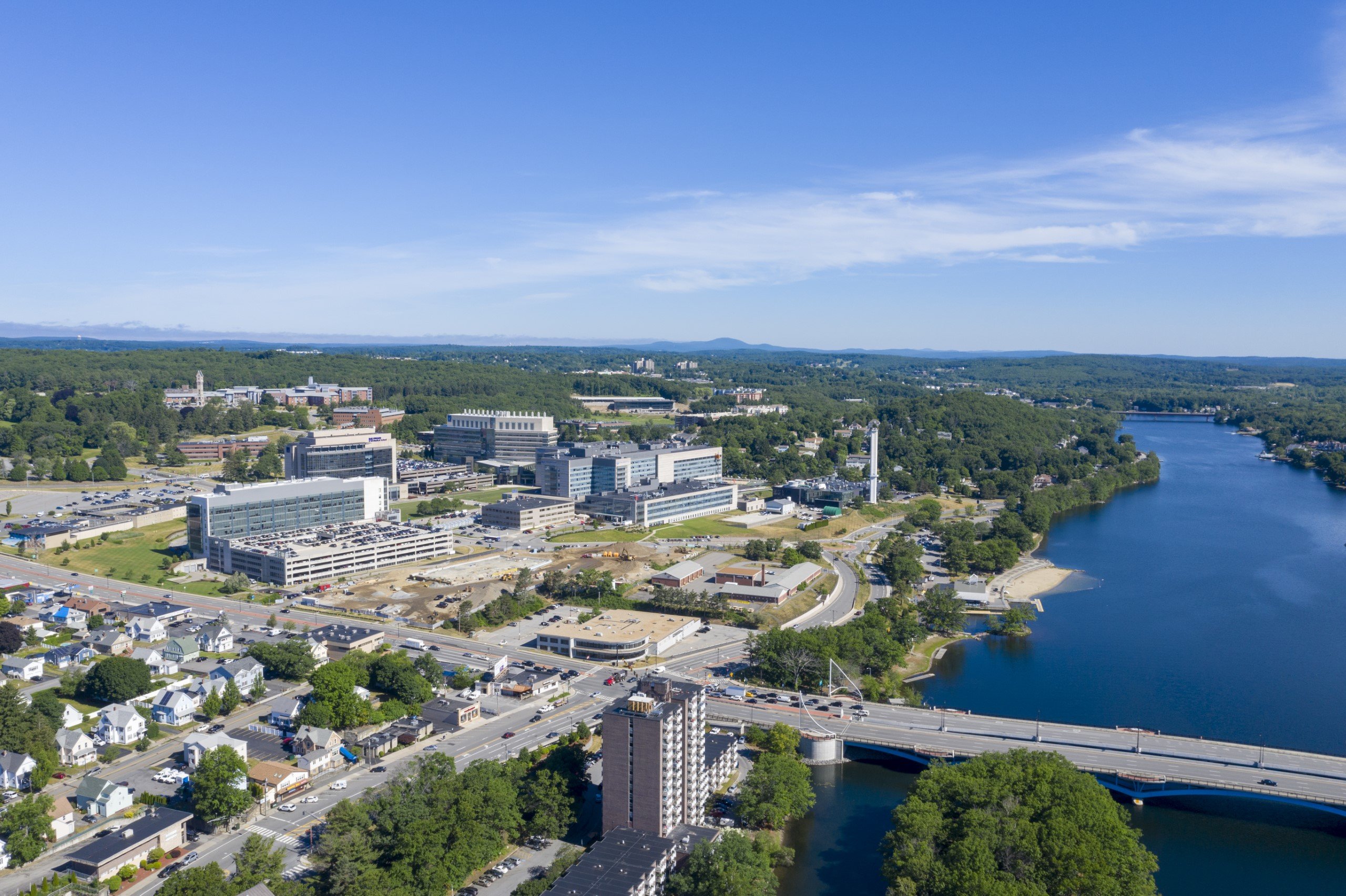
The University of Massachusetts Chan Medical School (UMass Chan) campus consists of the University of Massachusetts Chan Medical School and the UMass Memorial Health Care teaching hospital, community clinics, and outpatient services. About forty doctoral-level psychologists are on the UMass Chan staff, many of whom have a role in the Training Program.
Worcester Recovery Center and Hospital (WRCH) is located on the site of a developing health and research biotechnology park. Formerly named Worcester State Hospital, the current facility provides a state-of-the-art, high quality, safe and respectful environment for patients, promoting active rehabilitation as a key component of therapeutic care. The building's plan reflects the stages of recovery: by using familiar environments, ranging from “house” to “neighborhood” to “downtown.” There about ten psychologists on staff. Between 50 and 70% of this population has a co-occurring substance use disorder and significant medical co-morbidities. In addition to the adult admission and continuing care psychiatric units, the hospital has two adolescent long-term treatment units. A forensic service (composed of evaluators from UMass Chan and the Department of Mental Health) provides forensic evaluation services to the hospital. The UMass Chan and WRCH campuses are located within walking distance of each other.
Community
The University of Massachusetts Chan Medical School and Worcester Recovery Center and Hospital provide services to people living across Massachusetts and nearby states, but also nationally and internationally. The ethnic and cultural populations in central Massachusetts are diverse. As public-sector institutions, the client populations tend to be from lower socioeconomic groups. Census information for Worcester (2020) indicated the community is approximately 54% White, 23% Hispanic or Latinx, 13% Black or African American, and 7% Asian.
Diversity Statement
We are making diversity, equity, inclusion and belonging essential components of the missions of UMass Chan Medical School and UMass Memorial Health to advance the health and wellness of our diverse communities throughout Massachusetts and across the world by leading and innovating in education, research, health care delivery and public service.
An important part of preparing tomorrow’s physicians, nurses, and scientists to provide care, cure diseases and, indeed, change the world is to help them learn and grow as active members of a multicultural society. We do this in part by strengthening the cultural competence and empathy of our faculty, staff, students, and caregivers; by committing to an inclusive and welcoming campus where all may thrive; and by fostering an environment where everything we do is strengthened by the richness of understanding that comes from a truly diverse and inclusive environment
Land Acknowledgment Statement:
To recognize the land is an expression of gratitude and appreciation to those whose territory we reside or build learning communities on, and a way of honoring the Indigenous people who have been living and working on the land from time immemorial. University of Massachusetts Chan Medical School is a community of learners situated within a network of historical and contemporary relationships with Native American tribes, communities, parents, students, and alumni. Worcester Recovery Center and the University of Massachusetts Chan Medical School campus sits on the ancestral lands of the Nipmuc people. Recognized in 1976 by the Commonwealth of Massachusetts, the Nipmuc Nation, like all the indigenous tribes of the United States, has dealt with the history and trauma of their lands taken through violence and their personhood denied for generations. The nation was once concentrated on a three-acre plot in Grafton, but the last person to live on that reservation died in 2006. Today, many Nipmuc live and work throughout Central Massachusetts.
The Application Process
Admission Policy
Post-doctoral candidates must complete all graduate coursework, including their dissertation project, by the start of the fellowship.
Specific application directions are determined by the fellowship track. Please follow these directions carefully as applications need to be received by the appropriate office in order to be considered for review.
- Three Letters of Reference:
- Letter from your DCT or dissertation chair/advisor indicating your dissertation is either defended or on track to be defended by the start of the fellowship
- A letter from your internship director indicating your good standing in the program
- A third letter of reference from a faculty member at either your internship or graduate program.
- Curriculum vitae
- Graduate Transcripts (Official)*
- Cover letter stating your interest in SMI psychology; a summary of your relevant preparation, particularly in assessment and intervention; and your career objectives, including a projection of what you would like to be doing professionally during the years following the fellowship. Additionally, if applicable, please describe the emphasis area in which you would like to pursue additional training (e.g., Addictions, Transitional Age Youth, etc.).
- Writing sample of a psychodiagnostic evaluation with psychological testing (deidentified)
- Please submit all Inpatient-SMI Fellowship Track Application materials electronically to: Dr. Heidi.Putney at heidi.putney@umassmed.edu
*Additionally, Inpatient- SMI Fellowship Track applicants must submit graduate transcripts. Please request that an official copy of your graduate school transcript be mailed or emailed to Dr. Heidi Putney at the following address:
Heidi Putney, Ph.D.
WCRH
361 Plantation Street
Worcester, MA 01605
Heidi.Putney@umassmed.edu
Applicant Interviews
One goal of the Fellowship Selection Committee is to match the training needs of the applicant with what our program has to offer. The Selection Committee will thoroughly review each completed application and identify those applicants where there is a “goodness of fit.” These applicants will then be contacted and invited to interview with members of the training staff on one of several interview dates in January and February. The interview day typically runs from about 10:00am to 3:00pm EST, and will include contact with current post-docs to give the applicant a fellow’s perspective on the program.
SMI-General Track applicants will be interviewed virtually. The dates of interviews are TBD.
Additional important information for all applicants: As of August 10, 2021, all faculty and staff employees of UMass Chan Medical School must be fully vaccinated against COVID-19 as a condition of employment; this applies to psychology fellows, who are considered UMass Chan employees. (Employees of WRCH are also required to be fully vaccinated). UMass Chan allows certain exemptions for individuals with approved medical or religious accommodations. If you have questions or would like to learn more about this policy, please contact the UMass Chan-WRCH Training Director. Further, UMass Chan requires all of their employees to receive the annual flu shot. All vaccines are provided free of charge by UMass. If you have received these vaccinations elsewhere, you will be asked to provide proof of vaccination to the Human Resources Department before The Fellowship Year.
Benefits
Fellows in Psychology are employees of UMass Chan Medical School. Interns receive a stipend of $56,484, a choice of employee health insurance plans (cost varies), and paid vacation and holidays. All fellows are provided with 80 hours (10 days) of vacation time, two personal days, and sick time. Additionally, all three fellows are provided a professional stipend TBD to use toward EPPP costs, educational materials, conference travel, or other approved professional needs.
Cover Letter Information and the paragraph:
One factor to which we pay close attention is whether the training experiences that we provide are consistent with the needs and interests of the candidate, insofar as those needs and interests are expressed in the application. The match between candidates’ interests and the aims of the fellowship are examined carefully. Therefore, in the cover letter, applicants should clearly explain how their goals align with the public sector/severe mental illness mission of the fellowship, and applicants should identify or list their population of interest. Please include your preference for adult and/or adolescent experiences if you have one. If it is clear to us that the nature or quantity of certain experiences that a candidate seeks are unlikely to be provided on fellowship, we inform the candidate of this and suggest that their training needs would be better met at a different facility. Frequently this decision is not based on the candidates’ qualifications but rather on their stated professional goals and needs.
Thank you for considering our fellowship in Serious Mental Illness! Please reach out with any further questions or concerns.