


Mason Tarpley: Bioinformatician
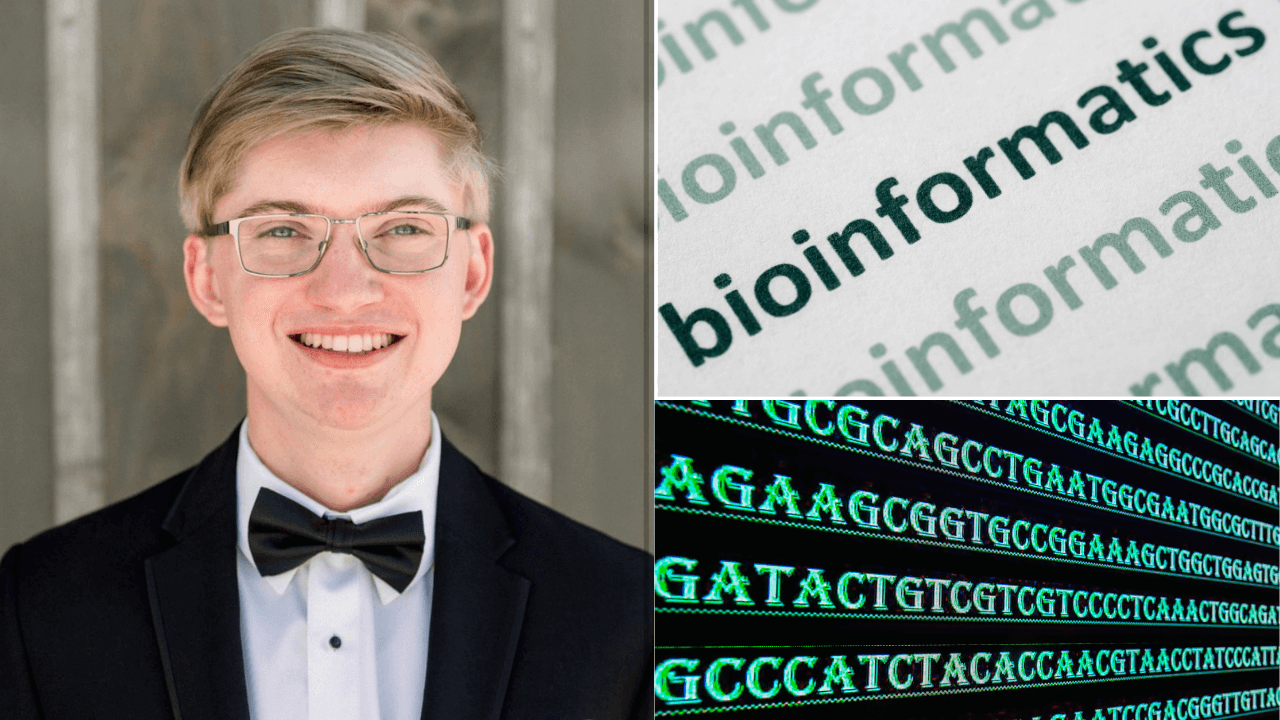
As a bioinformatician, Mason Tarpley analyzes the immense amount of data generated in the laboratories of David Harlan, MD; Sally Kent, PhD; and Jennifer Wang, MD.
Bioinformatics combines molecular biology, genetics, computer science, mathematics, and statistics to explore, manage, and interpret complex biological data. In Mason’s role, that means deciphering and categorizing relevant information from large datasets so scientists can better understand what the data reveal.
Mason has long been interested in science. While studying biology at Truman State University in Missouri, he took a genetics course that sparked his interest in the field and introduced him to RNA-sequencing analysis. He went on to earn a bachelor’s degree in biology before completing a master’s degree in molecular genetics and cell biology at the University of Nebraska Medical Center.
The research labs Mason supports generate a wide variety of data, but they share a common goal: to better understand the root causes of type 1 diabetes. For Mason, the field is especially compelling because type 1 diabetes research brings together immunology and genetics in the study of a complex disease that still has many unanswered questions.
The Harlan lab studies the biology of insulin-producing pancreatic beta cells and why they are destroyed in people with type 1 diabetes. Sambra Redick, PhD, a senior research scientist in the Harlan lab, has developed techniques to isolate individual islets from pancreas samples donated by deceased human donors. She then separates individual cells within those islets and performs single-cell RNA sequencing to determine the transcriptome of each cell. The transcriptome is the complete collection of RNA sequences in a cell. Mason analyzes the vast amount of data produced through RNA sequencing to identify patterns of gene expression in each cell.
The Kent lab investigates the autoimmune response in type 1 diabetes, with a focus on why and how specific immune cells, called T cells, attack beta cells.
The Wang lab uses a unique rat model to study how innate immune responses contribute to autoimmune disease processes, including type 1 diabetes.
By identifying, defining, categorizing, and comparing different cell types within the pancreatic islets of people with and without type 1 diabetes, researchers can examine gene expression data to look for meaningful patterns and insights. In addition to managing, processing, and analyzing genomic and molecular data, Mason also helps scientists access and use existing scientific databases to compare with and strengthen their own findings.
Mason's Favorites
Hobbies/Activities: Golf, soccer and traveling. Mason and his wife backpacked through Europe for their honeymoon. Growing up in the Midwest he’s been to the Rocky Mountains several times. His goal is to visit all 50 states.
TV Shows: Big Bang Theory - “I can relate to the nerdiness”
Movies: Marvel and DC comics films
Music: Enjoys all music, depending on his mood. Will listen to anything from rock to rap “and of course country, being from the Midwest.”
Book/Author: Non-fiction books about U.S. history and military, particularly the Revolutionary War, Civil War and World War II. Favorite book growing up was Johnny Tremain
Food: BBQ "Kansas City style of course"