


Batu Yenilmez, PhD
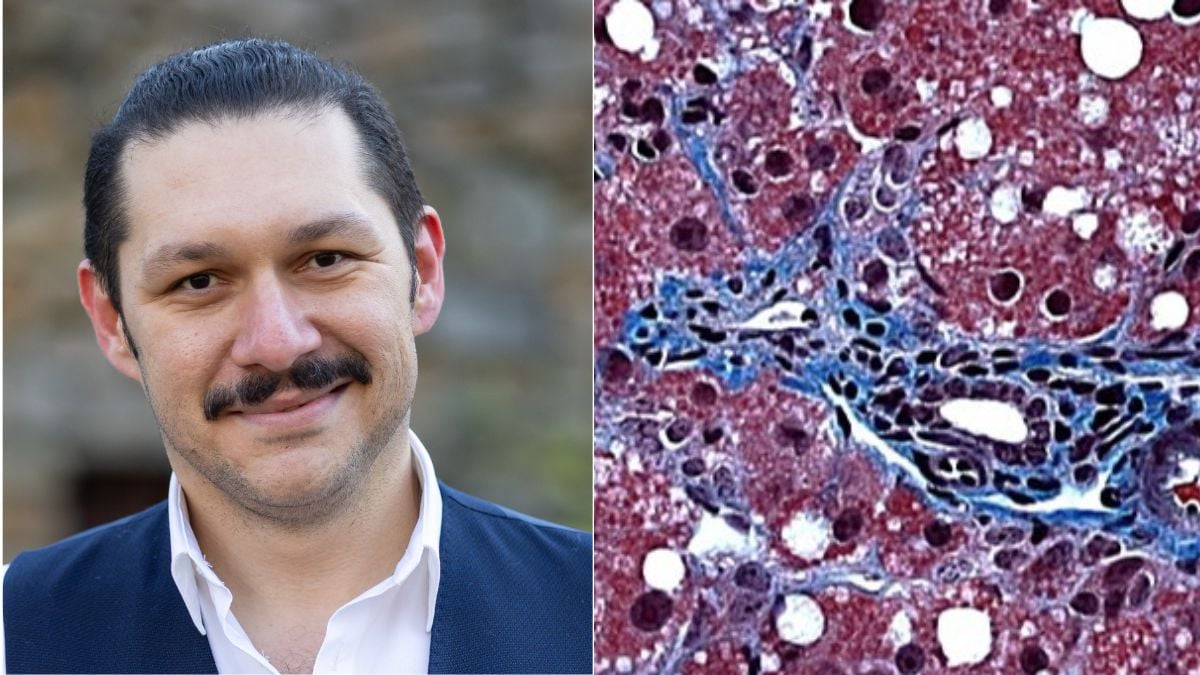
Batu Yenilmez, PhD, is advancing a new generation of RNA interference (RNAi)-based therapies aimed at tackling obesity, type 2 diabetes, and liver disease.
An Assistant Professor at UMass Chan, Dr. Yenilmez leads a lab focused on engineering tissue-selective RNAi molecules to silence disease-driving genes with precision. His research integrates metabolic disease and fibrosis, with a particular focus on metabolic dysfunction-associated steatohepatitis (MASH), a severe and progressive liver condition linked to type 2 diabetes.
Many people with type 2 diabetes also develop excess fat accumulation in the liver, which can progress to MASH—marked by inflammation, fibrosis, and, in advanced cases, cirrhosis requiring transplantation. The current FDA-approved therapies against MASH are only partially effective.
Dr. Yenilmez earned his bachelor’s and master’s degrees in bioengineering from Sabanci University in Istanbul, where he also worked as a visiting scholar and research assistant at University of Pennsylvania. He completed his PhD at UMass Chan in the laboratory of Michael Czech, PhD, before launching his own research program.
Rethinking Liver Fat Production
While working in the Czech lab, Dr. Yenilmez contributed to research that challenged conventional thinking about how the liver produces fat.
- Blocking a key enzyme involved in converting glucose to fat unexpectedly increased fat production
- The liver activated an alternative pathway, revealing a new insight on the how we think about liver fat production. This paradoxical finding was published in Journal of Biological Chemistry.
Paradoxical activation of transcription factor SREBP1c and de novo lipogenesis by hepatocyte-selective ATP-citrate lyase depletion in obese mice
Batuhan Yenilmez 1, Mark Kelly 1, Guofang Zhang 2, Nicole Wetoska 1, Olga R Ilkayeva 2, Kyounghee Min 1, Leslie Rowland 1, Chloe DiMarzio 1, Wentao He 2, Naideline Raymond 1, Lawrence Lifshitz 1, Meixia Pan 3, Xianlin Han 3, Jun Xie 4, Randall H Friedline 1, Jason K Kim 1, Guangping Gao 4, Mark A Herman 2, Christopher B Newgard 5, Michael P Czech 6 PMID: 35988648 DOI: 10.1016/j.jbc.2022.102401
RNAi Therapy Shows Long-Lasting Gene Silencing
In a second study published in Molecular Therapy, Dr. Yenilmez led research using RNAi to target genes that drive fatty liver and inflammation.
- Discovered a regulatory pathway within liver fat metabolism
- Developed a therapeutic siRNA and tested in humanized mouse models of MASH
- Resulted in significant reductions in liver fat
However, while fat levels improved, inflammation and fibrosis did not fully resolve, highlighting the need for combination therapies targeting multiple pathways.
An RNAi therapeutic targeting hepatic DGAT2 in a genetically obese mouse model of nonalcoholic steatohepatitis
Batuhan Yenilmez, Nicole Wetoska, Mark Kelly, Dimas Echeverria, Kyounghee Min, Lawrence Lifshitz, Julia Alterman, Matthew Hassler, Samuel Hildebrand, Chloe DiMarzio, Nicholas McHugh, Lorenc Vangjeli, Jacquelyn Sousa, Meixia Pan, Xianlin Han, Michael A Bre, Anastasia Khvorova, Michael Czech PMID: 34774753 PMCID: PMC8899521 DOI: 10.1016/j.ymthe.2021.11.007
Current Research in the Yenilmez Lab
- Designing adipose-specific RNAi therapies to improve metabolic outcomes
- Engineering anti-fibrotic microRNAs for translational use
- Developing dual-targeting RNAi approaches for MASH
- Investigating metabolic drivers of pulmonary fibrosis
These efforts leverage cutting-edge advances in RNA chemistry that enable long-lasting effects from simple, injection-based treatments.
His research is helping to redefine how metabolic and liver diseases can be treated, moving toward precise, gene-silencing therapies that may transform care for patients with obesity, diabetes, and MASH.
Related Articles
Re-engineering “Bad Fat” into “Good Fat” as a Therapeutic Approach to Type 2 Diabetes