




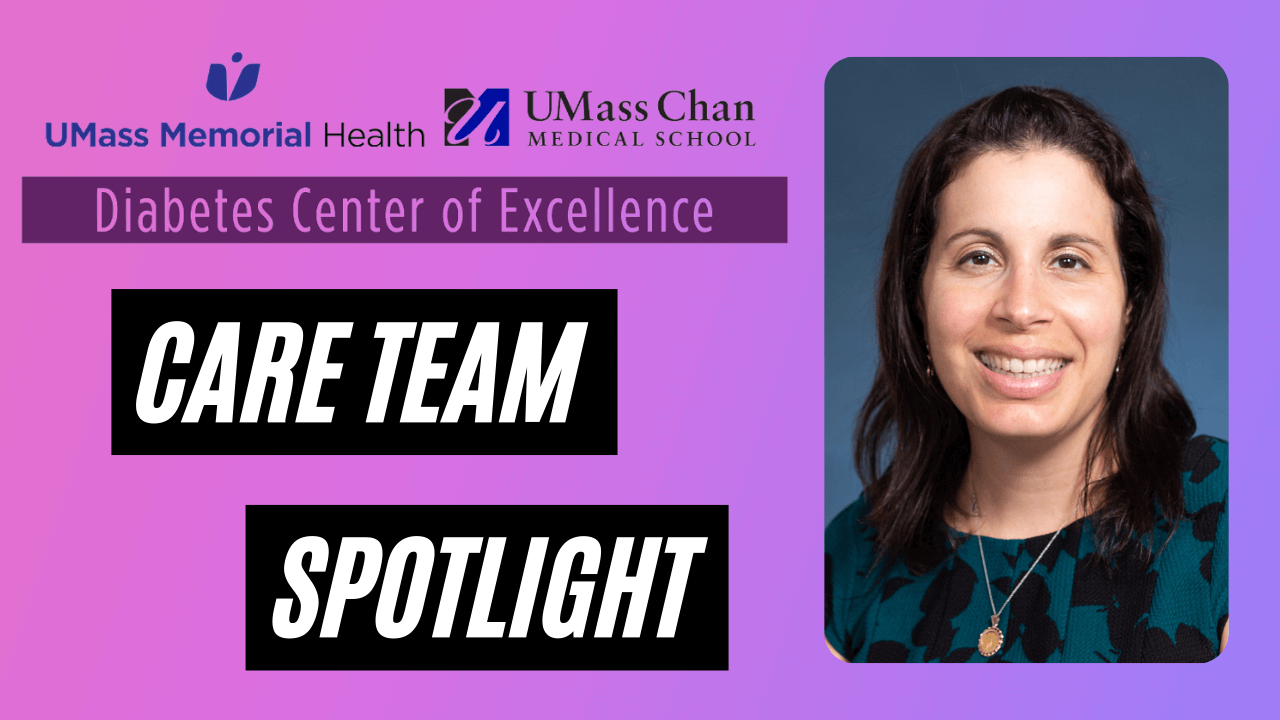
Christine Hoogasian, DNP, ACNP-BC, MSN, MS
- BS in Biology from Framingham State
- BS in Nursing from Fitchburg State
- Master’s in Animal Science from the University of New Hampshire
- Master’s in Nursing from the Tan Chingfen Graduate School of Nursing
- DNP (Doctor of Nursing Practice) from UMass Amherst
Christine began working at UMass Memorial Health Care in 2008 as a staff nurse at Memorial Hospital. She enjoys helping people manage diabetes because it allows her to treat a multitude of health complications. Christine continues to educate herself by taking classes to broaden her knowledge of healthcare and health problems across the world. She's interested in the medical needs of people from various cultures.
Misconceptions about Nurse Practitioners in Diabetes Care
Many patients don't understand the role and capabilities of a nurse practitioner. "NPs are taught two models of care, both the medical model and the nursing model," said Christine.
The role of a nurse practitioner varies from state to state. Massachusetts has one of the largest NP workforces in the country, according to the U.S. Bureau of Labor Statistics. The state is one of 27 in the country that provides Full Practice Authority to an NP to diagnose and treat patients. That includes prescribing medication, insulin pumps and continuous glucose monitors.
Nurse practitioners in Massachusetts provide health care services, including health promotion, disease prevention, health education, counseling, and making referrals to specialists as needed. They may also diagnose and manage chronic illness and disease. An NP fills multiple roles in diabetes care, as they diagnose, educate, counsel, and treat this growing patient population.
Team Approach to Diabetes Care
The team-based model of diabetes care at UMass Memorial has endocrinologists working together with nurse practitioners, certified diabetes care and education specialists (CDCES), registered dietitians (RD), licensed practical nurses (LPN), and primary care assistants (PCA). The providers work closely with other specialty clinics, including diabetic eye specialists, behavioral health, kidney care, and weight management.
The care team works closely with primary care physicians (PCPs) to ensure patients receive the best, most up-to-date, and most consistent diabetes care possible. After each office visit, the physician or NP enters appointment notes not only to communicate with one another but also to send the notes to the patient’s PCP. Communication is essential for quality diabetes care. If a PCP finds an A1c to be high, they'll recommend an earlier appointment to the diabetes clinic.
Nurse practitioners provide complete patient assessments. In addition to prescribing, changing, and/or regulating medications, they can also screen for and diagnose diabetes-related complications and make appropriate specialist referrals. They can diagnose neuropathy, high cholesterol, and hypertension, check for retinal changes, check kidney urine test results, and determine whether a blood glucose level is acceptable for surgery.
Many patients see their endocrinologist once a year and their NP & CDCES for the other quarterly appointments. Diabetes care requires a trusting relationship among the health care provider, the patient, and the patient’s support system. It's important to establish a rapport with your health care provider.
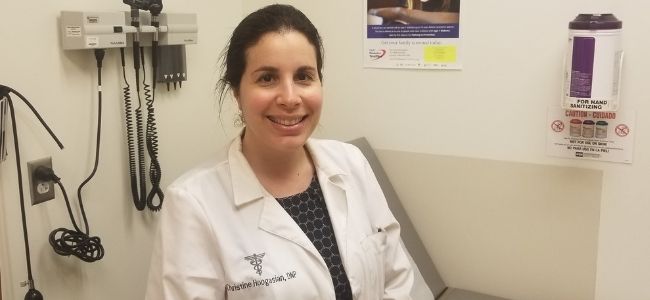
In addition to working as a nurse practitioner (NP) at UMass Memorial, Christine is an adjunct nursing professor at Massachusetts College of Pharmacy and Health Sciences (MCPHS) in Worcester, MA, and Rivier University in Nashua, NH. She also precepts students from MCPHS and UMass Chan Medical School.
Care Team Provider Spotlights
Victoria Andersen - Clinical Nutritionist & Diabetes Educator
Cheryl Barry - Certified Diabetes Care and Education Specialist
Jamee Bresee - Physician Assistant
Ashley Bustos - Diabetes Educator
Julie Carrier - Child Life Specialist
Fernanda Costa - Certified Diabetes Care and Education Specialist
Clare Foley - Nurse Practitioner
Sarah Franklin - Nurse Practitioner
Lindsey Gurry - Nurse Practitioner
Christine Hoogasian - Nurse Practitioner
Maritza Jerome - Obesity Medicine
Susan Kim - Nurse Practitioner
Nancy Morris - Nurse Practitioner
Mark O'Connor - Endocrinologist
Prateek Shukla - Endocrinologist
Nancy Sidhom - Nurse Practitioner & Certified Diabetes Care and Education Specialist