




Analyzing the Benefits of Continuous Glucose Monitors to Reduce Hospitalizations and Diabetic Complications
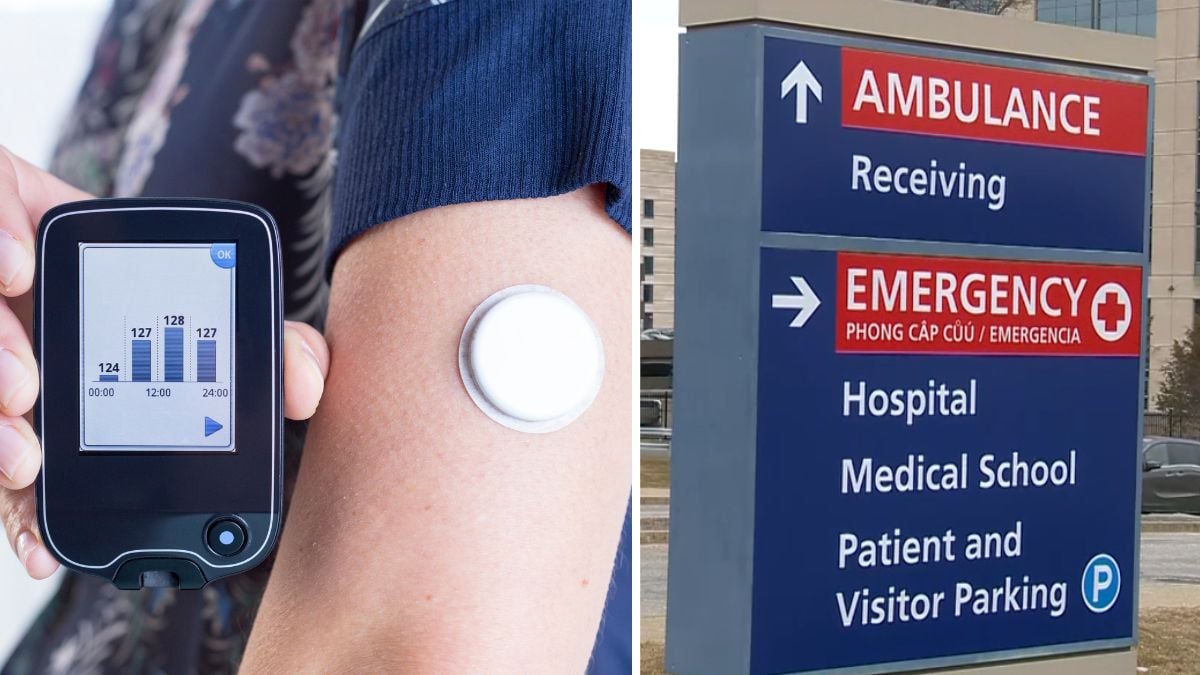
A clinical trial provided continuous glucose monitors to people living with diabetes who are currently not using one and arrived at Worcester's UMass Memorial Hospital Emergency Room with high or low blood sugar, or other diabetes related complications. Those who met the criteria and agreed to participate in the study received a Freestyle Libre to wear for 2 weeks to monitor their blood sugar, and they shared the data with their diabetes care team. Their physician could then prescribe the device through insurance. Once the patient experienced the benefits, further action could be taken.
Half of the participants received a Freestyle Libre to wear for 2 weeks to monitor their blood sugar levels. The other half was a control group that did not receive a CGM. The study investigated whether CGM could successfully prevent people from returning to the ER for diabetes-related issues, compared with the control group, which did not wear a device to monitor their blood sugar. The study led by endocrinologist Mark O’Connor, MD, and emergency physician Laurel O'Connor, MD, was the first to evaluate the benefits of CGM for ER patients.
Dr. O'Connor presented data at the American Diabetes Association's Scientific Sessions in San Diego. The study was published (November 2023) in Endocrine Practice, the official journal of the American Association of Clinical Endocrinology
Herman G. Berkman Diabetes Clinical Innovation Fund Recipients
On-Demand Diabetes Education Videos for Patients and Families
A series of short, on-demand videos addressing common diabetes topics, will be created, including blood glucose monitoring, insulin use, sick-day management and diabetes technology. The evidence-based videos are designed to reinforce, not replace, education provided by Certified Diabetes Care and Education Specialists. Patients, families and caregivers will be able to watch, pause and replay the videos as needed, providing convenient online access to reliable diabetes information. The project, led by nurse practitioner Clare Foley, DNP, and Adam Edelstein, also aims to make the videos available broadly throughout UMass Memorial Health so providers can easily share them electronically.
Using Artificial Intelligence to Improve Diabetes Medication Safety After Hospital Discharge
This project will develop and test an artificial intelligence tool designed to help patients better understand changes to their diabetes medications when leaving the hospital. The goal is to reduce misunderstandings and help patients return home with greater knowledge and confidence to safely manage their diabetes medications. The team consisting of Alok Kapoor, MD, Adrian Zai, MD, PhD, and Alexandra Albert, MD, PhD, will evaluate the tool's accuracy, safety and usability with patients starting new diabetes medications or whose medications changed during hospitalization.
Clinical Study on Diabetes Management During Pregnancy
A clinical study at UMass Memorial Medical Center is comparing continuous glucose monitoring (CGM) to multiple daily fingersticks for pregnant women with type 2 diabetes. The randomized study, led by Gianna Wilkie, MD, Assistant Professor of Obstetrics and Gynecology, was awarded funds to conduct includes maternal blood glucose control, patient satisfaction, and other perinatal outcomes.
Implementing a Liver Disease Screening Process in the Adult Diabetes Clinic
Liver disease is strongly associated with type 2 diabetes and obesity. It remains underdiagnosed and undertreated, and many people living with T2D are unaware they have it. This project, led by endocrinologist Madona Azar, MD, implemented a new process in the UMass Memorial diabetes clinic that uses a screening tool to analyze clinically available data to determine patients' risk of liver fibrosis.
AI Diabetic Retinopathy Screening in Primary Care
This project implemented an artificial intelligence (AI)- based diabetic retinopathy screening program in Family Medicine clinics to detect eye disease and improve comprehensive care for people living with diabetes. Recent studies have identified AI-based algorithms as promising tools for screening and early detection of diabetic retinopathy, helping those at risk. This study, led by optometrist Juan Ding, OD, PhD, tested the diagnostic accuracy of a hand-held AI-assisted camera used by primary care physicians to screen at-risk individuals for retinal changes indicative of diabetic retinopathy.
Analyzing the Benefits of Continuous Glucose Monitors to Reduce Hospitalizations and Diabetic Complications
This randomized clinical trial provided continuous glucose monitors (CGM) to people with diabetes who were currently not using one and arrived at the Emergency Room with high or low blood sugar, or other diabetes-related complications. The recently completed study, led by endocrinologist Dr. Mark O’Connor, analyzes whether CGM successfully prevents people from returning to the ER with diabetes-related issues, compared with the control group who do not wear a device to monitor their blood sugar.
Improving Inpatient Blood Glucose Management
This project aimed to implement a carbohydrate-counting system for hospitalized inpatients with diabetes across the UMass Memorial Health system. Endocrinologist Leslie Domalik, MD, evaluated whether adopting a flexible meal dosing option based on carb counting would improve the outcomes of hospitalized patients with diabetes. By coordinating the timing of blood glucose testing, insulin dosing, and the administration of rapid-acting mealtime insulin, she wanted to ensure carbohydrate counts are listed for all food served to hospitalized patients and to better coordinate insulin delivery with meal delivery.
Improving Care Access for the Highest Risk Diabetes Patients
The inaugural Herman Berkman Diabetes Clinical Innovation funding was awarded to Daniel Amante, PhD, and Adarsha Bajracharya, MD, in 2019. It led to Dr. Amante receiving a three-year KL2 Mentored Career Development Training grant to develop a Diabetes Mellitus program using Behavioral economics to Optimize Outreach and Self-management support with Technology (DM-BOOST).
ID PLUS Care was a multidisciplinary, collaborative approach to improve care access, quality, and management for at-risk patients with diabetes. The program monitored Electronic Health Record data to identify UMass Medicare Accountable Care Organization patients at risk for negative outcomes and proactively contacted them to nudge them toward recommended services.