

By DoM Communications | Date published: May 15, 2026
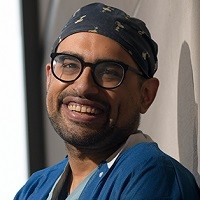 Neil Marya Leads Human Trial Using Real-Time Artificial Intelligence System to Diagnose Cancer in the Digestive System
Neil Marya, MD, assistant professor of medicine in the Division of Gastroenterology, co-director of the Program in Digital Medicine, and director of the Digital Medicine Fellowship at UMass Chan Medical School, led a study that highlights findings from the first-ever in-human trial using a special real-time artificial intelligence system to diagnose cancer in the digestive system. The SMART-AI trial showed that using AI was better at diagnosing cholangiocarcinoma, or bile duct cancer, than biopsy.
In the study, Dr. Marya and his colleagues used a tiny camera called a cholangioscope to view the biliary strictures, which are narrowings in the bile ducts that carry bile from the liver and gallbladder to the small intestine. They then uploaded an AI that Dr. Marya developed into a computer that analyzed the video stream during real-time procedures for suspected cholangiocarcinoma.
The trial results showed that in a total of 41 patients enrolled, AI had greater accuracy in classifying the strictures than both standard sampling techniques and by visual appearance from experienced endoscopists.
“What we’ve seen in other studies is that when physicians look at images or videos, they’re actually very good at telling us if it’s cancer or not just based on the visual appearance,” Dr. Marya said. “Our idea was if we could train an AI that could mimic our ability to make a visual impression, maybe we could develop a quantitative tool that could tell us the likelihood that somebody may have cancer just based on a visual appearance. So that’s what we did.”