

By DoM Communications | Date published: February 4, 2026
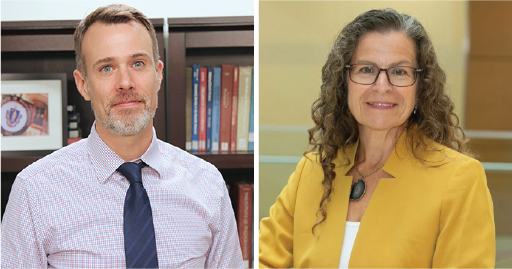 David McManus and Melissa Fischer Discuss the Future of AI in Healthcare with UMass Chan’s New AI Assurance Lab
As artificial intelligence (AI) becomes more common throughout our daily lives, it is also making significant breakthroughs in the world of health care. In a recent article published in the Worcester Business Journal, David McManus, MD, ScM, EMBA, the Richard M. Haidack Professor of Medicine, chair, and professor of medicine in the Department of Medicine, discussed the new UMass Chan AI Assurance Lab, an initiative established in April to test the ethical use of AI in health care. As co-lead of the lab, Dr. McManus shared that AI has the potential to assist with diagnosing, predicting health outcomes, hospital triage, and more, while remaining free of bias and discriminatory practices.
“We wanted to ensure that in trying to do something good, we didn’t exacerbate health disparities further by training a model that might, without realizing it, be prejudiced in some way,” said Dr. McManus.
Dr. McManus and the Assurance Lab are actively working to add the human back into artificial intelligence by studying the impact of AI tools across different healthcare providers and patient subgroups. The lab looks for safety, reliability, and the potential for errors causing patient harm by testing, evaluating performance, and capabilities under hypothetical and extreme conditions. To test the ability of AI, the Assurance Lab runs tests through UMass Chan’s interprofessional Center for Experiential Learning and Simulation lab (iCELS), a center focused on simulating real-life scenarios to train students, professionals, and technologies.
“AI is impacting how providers deliver care, how patients receive care, and how both interact,” said Melissa Fischer, MD, iCELS executive director and professor of medicine in the Division of General Internal Medicine. “Anytime you make a change in a complex system like a healthcare system, it’s best to study it from multiple perspectives and say, ‘What might the intended and unintended outcomes be?’”
Currently, iCELS is testing a new AI app designed to assess whether less invasive technology can be used in predictive testing.
To learn more about the AI Assurance Lab and the work of iCELS, read the full article.