

By: DoM Communications
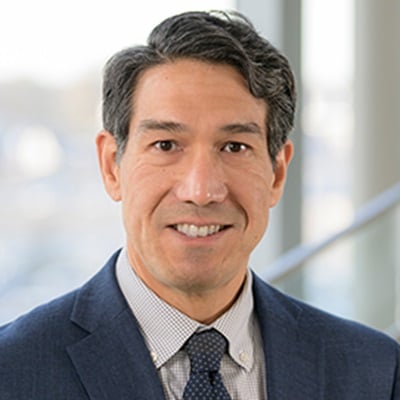 For Amin Sabet, MD, assistant professor of medicine in the Division of Endocrinology, Diabetes, and Metabolism, an interest in endocrinology, specifically obesity medicine, developed through curiosity about the physiology of weight regulation, and the impact it had on patients.
“When I was an endocrine fellow, we didn't know nearly as much about the pathophysiology of obesity. We weren't taught about how hormone signaling regulates body weight and how abnormal hormone signaling results in abnormal regulation of body weight,” said Dr. Sabet. “Seeing the profound impact that treating obesity made on the lives of my patients, especially those with type 2 diabetes, along with the excitement of learning new science and new physiology—unlocking a whole new field to learn about after practicing general endocrinology for many years—brought me to this subspecialty of obesity medicine.”
Dr. Sabet earned his MD from Howard University College of Medicine in Washington, DC. He completed his internal medicine residency and fellowship in endocrinology and metabolism at Johns Hopkins Hospital in Baltimore, Maryland. He additionally completed a fellowship in medical education at the Academy at Harvard Medical School. With a passion for medical education, Dr. Sabet then went on to serve as a clinician educator and staff physician at Beth Israel Deaconess Medical Center in Boston, Massachusetts. Before he arrived at UMass Chan in 2023, Dr. Sabet served as the Chief of Endocrinology at St. Elizabeth’s Medical Center in Boston.
Among his many roles at UMass Chan, Dr. Sabet currently serves as the program director of the Obesity Medicine Fellowship. The fellowship is a one-year clinical training program that provides advanced subspecialty training in the field of obesity medicine. “There has been unbelievable institutional support from the chair, Dr. McManus, and our chiefs, Dr. Aronin and Dr. Malkani, for this fellowship training program,” said Dr. Sabet. “They really embraced this from the beginning because it's important to the mission of the medical school and to our patients, and that's been unbelievable.” With support from the Division of Endocrinology, Diabetes, and Metabolism and school leadership, the program has accepted its first fellow, who began in early July of this year. Additionally, Dr. Sabet and his team received a development grant from the Obesity Medicine Fellowship Council that provides three years of support for the program.
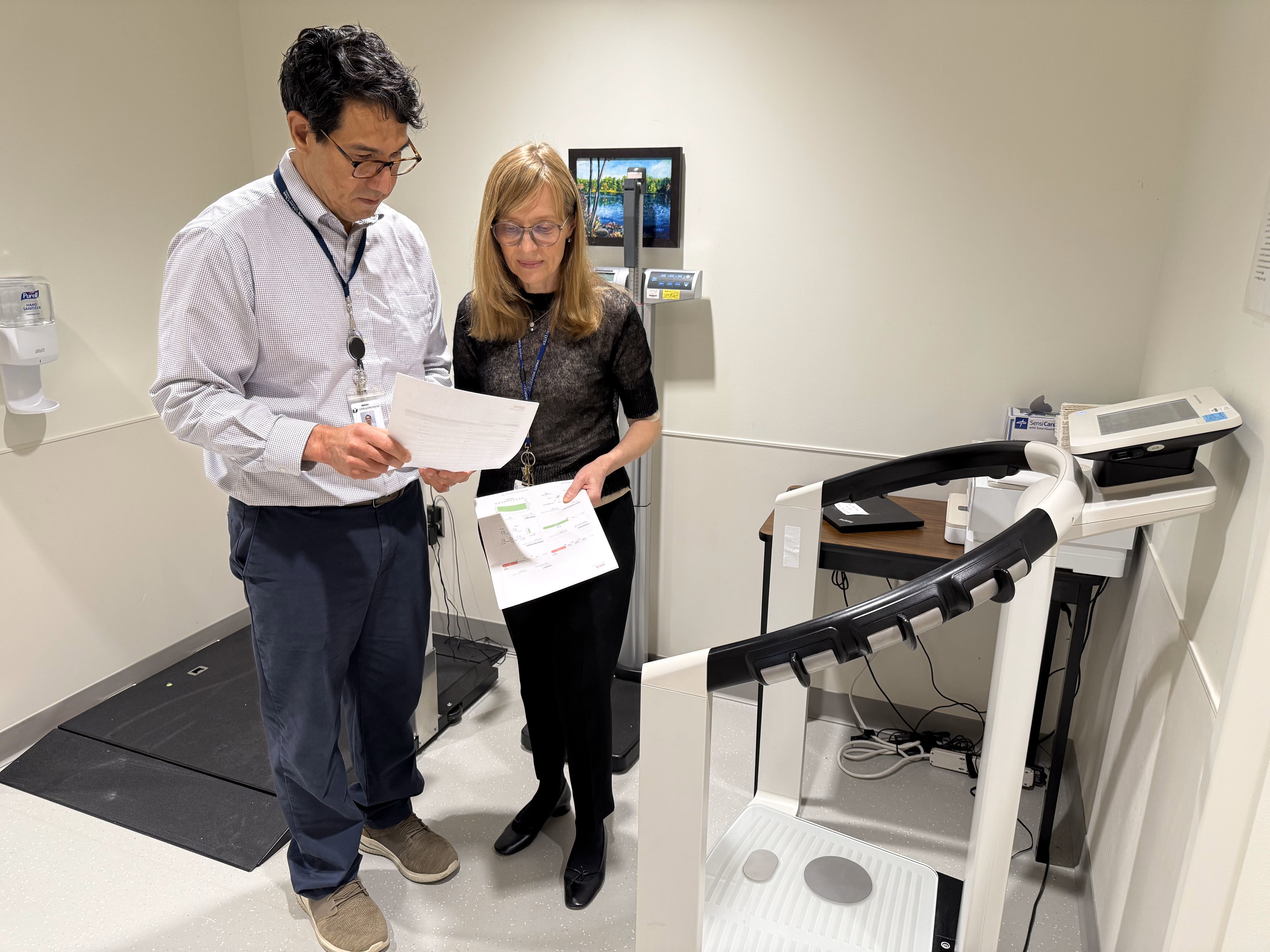 With the fellowship officially launched, Dr. Sabet praises the collaboration and leadership of his colleagues, particularly Nina Rosano, MD, associate professor of medicine in the Division of Endocrinology, Diabetes, and Metabolism, director of the Metabolic Weight Loss Program, and associate program director of the Obesity Medicine Fellowship at UMass. “Dr. Rosano has been a leader in obesity medicine at UMass for many years. She established UMass as a center for evidence-based, comprehensive medical care for patients with complex obesity and laid the groundwork for the fellowship program. Dr. Rosano provides outstanding clinical leadership for our section and has strongly supported our educational mission as well.”
Dr. Sabet also credits the successful creation of the fellowship to the efforts of other faculty members and collaborators, including Beth Mazyck, MD, Jeannette L. Ryan Alkasab, MD, Richard Perugini, MD, and many others. “Our program has incredible faculty from all of the varied disciplines impacted by obesity, who have contributed greatly through clinical preceptorship and formal didactics,” said Dr. Sabet. In addition to his role in the Obesity Medicine Fellowship, Dr. Sabet further serves as associate program director for the Endocrinology Fellowship at UMass Chan. “I greatly enjoy working with the endocrinology fellows as well; it’s very rewarding and inspires me to stay current with the latest developments in endocrinology beyond obesity medicine,” said Dr. Sabet.
Outside of his fellowship roles, Dr. Sabet also serves as a core small group facilitator for the Vista Curriculum at UMass Chan. Each year, he works with roughly 12 medical students per class and facilitates small group sessions for the 18-month Discovery Phase. “I have the privilege of working closely with groups of students throughout their foundational training, guiding them as they build the knowledge and skills that will support their careers,” said Dr. Sabet. He additionally teaches within the endocrinology block for the medical student curriculum.
Beginning last year, Dr. Sabet was a Health Education Academy for Leadership and Learning (HEALL) fellow at UMass Chan, which he highlighted as an invaluable opportunity to gain educational expertise under the teaching and guidance of director David Hatem, MD, and other HEALL faculty. In his role as a HEALL fellow, he focused on creating a standardized process for training subspecialty fellows in obesity medicine and evaluating their competence throughout training. As part of the initiative, Dr. Sabet is leading an interinstitutional and intersociety project to develop entrustable professional activities (EPAs) to define the essential tasks of an obesity medicine subspecialist as a foundation for assessing trainee abilities. “I’ll be presenting our work at Obesity Week, which is an international conference for obesity researchers and clinicians in November,” shared Dr. Sabet.
In addition to working on training standards as a HEALL fellow, Dr. Sabet also serves as co-chair for a working group for the Obesity Medicine Fellowship Council, working alongside the American Board of Obesity Medicine to develop standards for obesity medicine fellowships in the United States. “Within the past seven years, the number of obesity medicine fellowship programs in the US and Canada has increased from 6 to 33. All of these new programs are doing fellowship training the best way they know how, but the educational experiences can vary widely between programs,” said Dr. Sabet. “We are not trying to make them all identical, but we are all working to develop standards in the same way that there are program requirements for all of our ACGME fellowships.”
Dr. Sabet is also a member of an ACGME-International working group focused on developing milestones for international fellowships in obesity medicine. “These milestones are essentially a description of abilities that fellows should be achieving, along a developmental continuum, as they progress through their training,” said Dr. Sabet. “The EPA project, milestones development, and adoption of program requirements are interrelated efforts to improve the educational experience and assessment of trainee competence in our subspecialty.”
Since joining UMass Chan over two years ago, Dr. Sabet has praised the institution for its collegiality and opportunities for growth. “UMass is a very kind place with tremendous collegiality and opportunities to help us follow our passion,” shared Dr. Sabet. “In less than two years of being here, there was an opportunity for me to do an educational fellowship to become a better educator and to become a core small group facilitator in the medical school. UMass is unique in those aspects.”
Outside of his clinical and educational work, Dr. Sabet is also an associate editor for a clinical obesity journal titled Obesity Pillars.
We thank Dr. Sabet for his continuous dedication to our patients and to the Obesity Medicine Fellowship!