




Advancing Cell Replacement and New Therapies to Cure Type 1 Diabetes
Date Posted: Wednesday, August 26, 2026
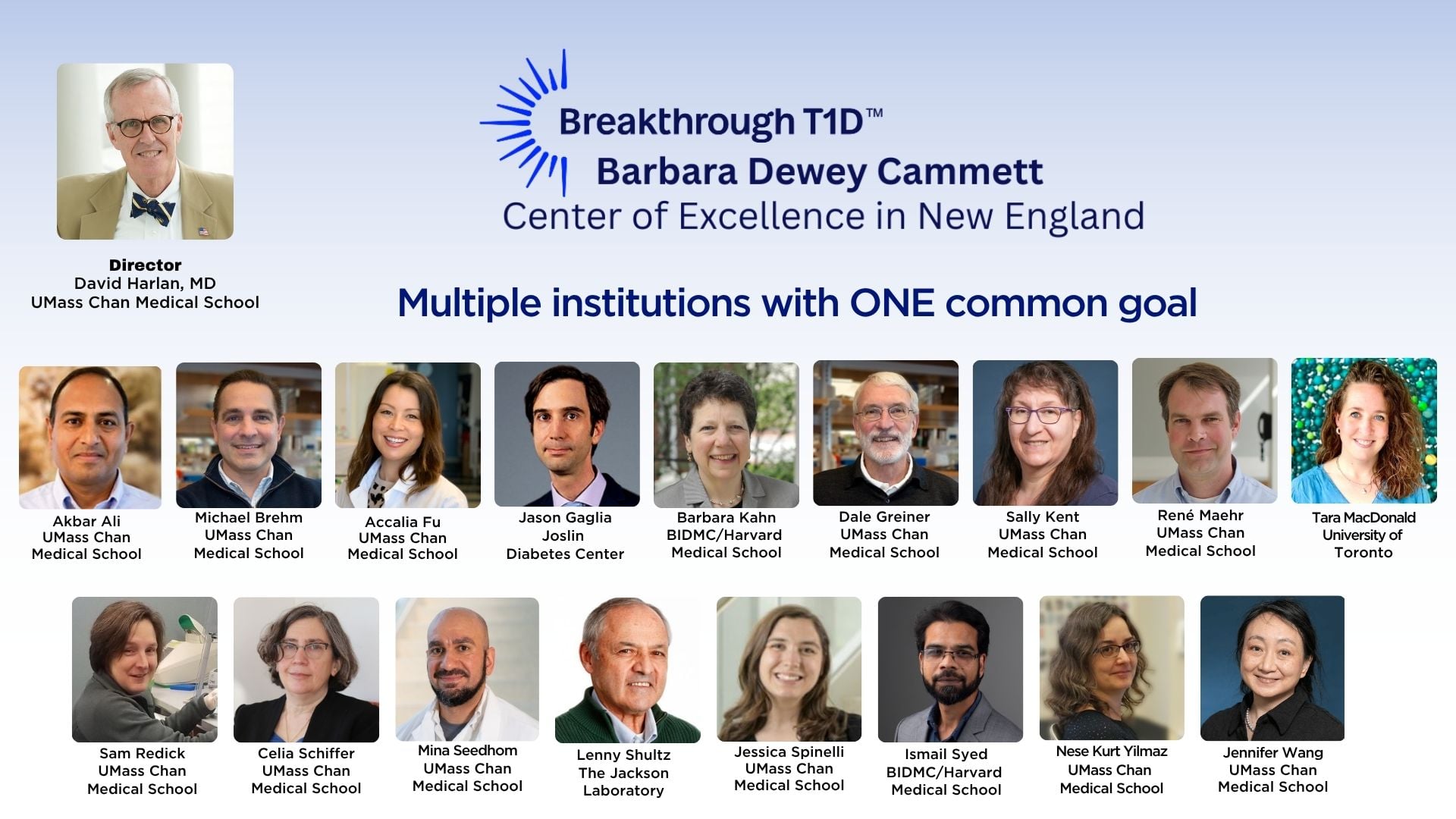
Breakthrough T1D Barbara Cammett Center of Excellence in New England
Researchers from UMass Chan Medical School and collaborating institutions are working together through the Breakthrough T1D Barbara Cammett Center of Excellence in New England to develop new approaches to prevent, treat and ultimately cure type 1 diabetes (T1D).
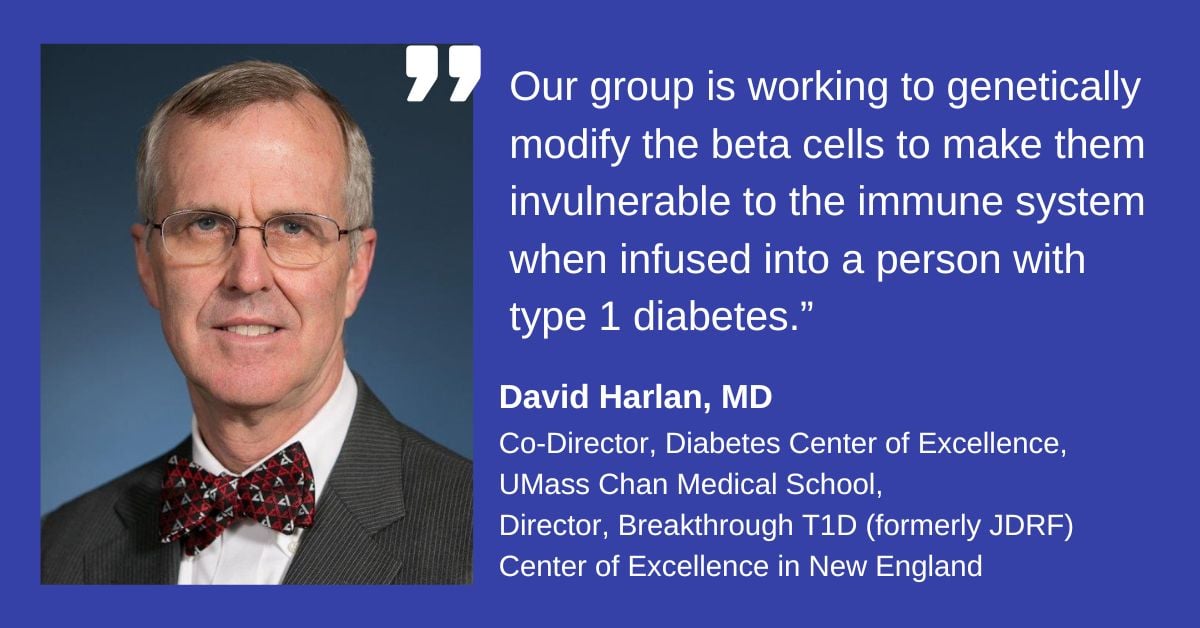
Led by UMass Chan Diabetes Center of Excellence Co-Director David Harlan, MD, the Center was established in 2022 with support from Breakthrough T1D and generous seed funding from John Cammett. The focus was to develop a cell replacement therapy using stem cell-derived islets that can restore insulin production while evading immune attack without requiring lifelong immunosuppressive therapy.
That remains a major goal, but the research has expanded to investigate multiple ways to make insulin-producing beta cells more resilient to the stresses they face in type 1 diabetes. Scientists are studying genetic engineering, immune responses, metabolism and small-molecule therapies, while developing sophisticated humanized mouse models and laboratory tests to determine which approaches are most promising.
More than two decades ago, Douglas Melton, PhD, pioneered the creation of insulin-producing pancreatic cells from stem cells. Clinical trials have since demonstrated that these manufactured cells can restore insulin production in people with T1D. However, protecting transplanted cells from immune attack without requiring immunosuppressive drugs remains a major challenge.
"The holy grail of this research collaboration will be a cell replacement therapy that eliminates the need for immunosuppressant drugs," said Dr. Harlan
The team meets regularly to update each other about experiments and progress. They enjoy collaborative science and are less concerned with individual credit, instead focusing on the ultimate goal.
Producing the cells that power the research
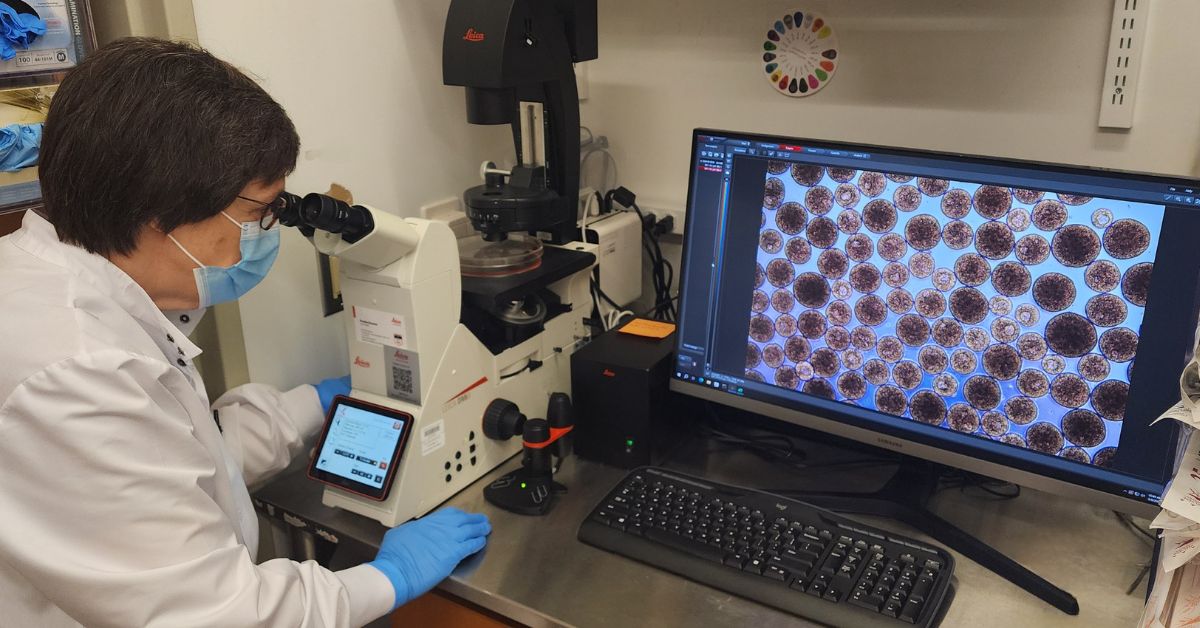
The Pappas Stem Cell Differentiation Core (SCDC) at UMass Chan led by Sam Redick, PhD, produces stem cell-derived islets used throughout many of the Center's collaborative research projects. The team creates cells from donors with and without type 1 diabetes, evaluates their function and provides investigators with consistent cell populations for experiments ranging from immune-recognition studies to transplantation in humanized mice.
During the latest reporting period, the Pappas SCDC produced 8.93 billion cells across 23 differentiations while continuing to identify reliable benchmark cell lines for future studies.
Engineering and protecting insulin-producing cells
René Maehr, PhD, uses advanced genetic engineering tools to explore more effective methods for protecting transplanted islets. His lab is testing genetic modifications and comparing modified and unmodified cells to determine which approaches provide meaningful protection.
Sally Kent, PhD, studies the autoimmune T cells that recognize and attack beta cells. Her lab is working on assays to measure how human immune cells respond to stem cell-derived islets, providing an important way to evaluate potential protective strategies.
Jason Gaglia, MD, of Joslin Diabetes Center, is analyzing stem cell-derived islets before and after transplantation, helping determine how the cells function, how they change and how the immune system responds to them.
Testing potential therapies in humanized models
Michael Brehm, PhD, Co-Director of the UMass Chan Diabetes Center of Excellence, and Dale Greiner, PhD, collaborate with Leonard Shultz, PhD, of The Jackson Laboratory, to develop and use specialized humanized mouse models.
These models allow researchers to study human immune cells and transplanted human stem cell-derived islets together in a living system. Scientists can observe how the cells mature and function, whether the immune system attacks them and whether experimental therapies provide protection.
They continue to develop and utilize increasingly sophisticated models, including mice engineered to respond more effectively to human insulin and models designed to investigate the roles of specific immune cells.
“When Lenny and I were developing the first ‘humanized’ mice in the 1980s, we only dreamed that one day they’d be optimized to where we have them now,” said Dr. Greiner.

Understanding metabolic, viral and inflammatory stress
Accalia Fu, PhD, studies the metabolism of pancreatic islets and the environment surrounding transplanted cells. Her laboratory uses technologies including metabolomics to identify pathways that may make beta cells more resilient.
Jennifer Wang, MD, a physician-scientist at UMass Chan and UMass Memorial Health, studies how viruses, infections and inflammation affect beta cells and activate immune responses. Her laboratory is developing and utilizing models to better understand how these stresses may contribute to T1D and affect potential replacement cells.
Finding new ways to make beta cells more resilient
Jessica Spinelli, PhD, is investigating how cells produce and use energy during metabolic stress. Her laboratory is studying rhodoquinone analogs to determine whether reprogramming cellular metabolism can improve cell survival or reduce insulin dependence when insulin availability is limited.
Barbara Kahn, MD, and Ismail Syed, PhD, of Beth Israel Deaconess Medical Center, are investigating naturally occurring lipids called fatty acid hydroxy fatty acids (FAHFAs) for their potential to improve beta-cell survival and function. These lipids are being tested in our preclinical humanized mouse models to determine whether they can protect insulin-producing cells.
Tara MacDonald, PhD (University of Toronto); Akbar Ali, PhD; Nese Kurt Yilmaz, PhD; and Celia Schiffer, PhD, bring expertise in beta-cell biology, medicinal chemistry, structural biology and drug design to a collaborative project investigating renalase as a potential therapeutic target. The team has developed small-molecule renalase inhibitors that have protected human beta cells under laboratory conditions designed to mimic T1D-related stress. Several additional compounds are in the testing pipeline, and the discoveries contributed to a patent application for renalase inhibitors designed to protect beta cells in diabetes.
One collaborative research pipeline
The strength of the BT1D Center in New England is how these areas of expertise work together. Stem cell-derived islets produced by the Pappas SCDC can be genetically modified, exposed to immune and metabolic stresses, evaluated using laboratory assays and ultimately transplanted into humanized mouse models. Results from each stage help investigators determine which cells, compounds and therapeutic strategies should move forward.
John Cammett, whose generous philanthropy provided seed funding for the collaboration, is motivated by his family's experience with type 1 diabetes.