




Harlan and Kent Labs Help Resolve Long-Standing Question About Beta Cells and HLA Class II in Type 1 Diabetes
The central theme of the Diabetes Center of Excellence (DCOE) at UMass Chan Medical School is that the sought-after type 1 diabetes (T1D) cure will require a thorough understanding of the processes causing the disease.
Published studies led by UMass Chan DCOE and University of Exeter investigators, in collaboration with Oslo University Hospital, Vanderbilt, and Carnegie Mellon, shed light on a long-standing enigma. That is, by far the greatest genetic risk for T1D is driven by the expression of important immune genes called “human leukocyte antigen class II” (HLA Class II), and yet human beta cells were not thought to be capable of expressing HLA Class II and other important genes supporting HLA Class II function.
The HLA Class II and related gene products are usually expressed only in “professional immune cells.” Research published in Diabetes, the American Diabetes Association journal, definitively shows that beta cells from individuals with T1D express these essential gene products, resolving a three-decade-long debate.
Study Overview
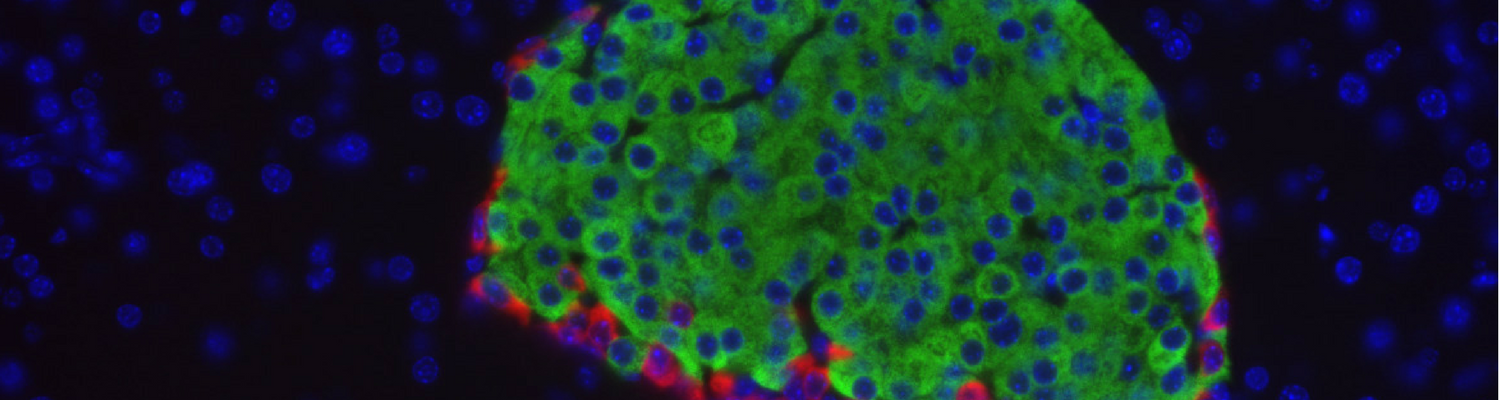
Type 1 diabetes studies consistently generate data showing beta-cell dysfunction and T-cell-mediated autoimmunity against beta cells. To explore the pathogenesis, we used bulk-sorted and single beta cells to interrogate the beta cell transcriptomes from donors with and without T1D. Consistent with immuno-histological studies, beta cells from donors with T1D displayed increased Class I transcripts and associated mRNA species. These beta cells also expressed mRNA for Class II and Class II antigen presentation pathway components, but lacked the macrophage marker CD68. An immunohistochemical study of three independent recent-onset type 1 diabetic donor cohorts showed that Class II protein and its transcriptional regulator, the Class II major histocompatibility complex transactivator (CIITA), were expressed by a subset of insulin+ CD68- beta cells, specifically in islets with lymphocytic infiltrates. Beta cell surface expression of HLA Class II was detected on a portion of CD45-insulin+ beta cells from donors with type 1 diabetes by immunofluorescence and flow cytometry.
The data demonstrate that pancreatic beta cells from donors with T1D express Class II molecules on selected cells, along with other key genes in those pathways and inflammation-associated genes. Beta cell expression of Class II molecules suggests that beta cells may interact directly with islet-infiltrating CD4+ T-cells and may play an immunopathogenic role.
Building on These Findings
Still to be understood is precisely how the HLA Class II pathway gene product expression may play a role in the loss of beta cells underlying T1D. The Harlan and Kent labs have developed techniques to study the next piece of the puzzle, thus providing a data-driven game plan to prevent the disease. Ongoing work in UMass Chan DCOE continues to build on these findings by studying human beta-cell biology, islet-infiltrating immune cells, and strategies to protect or replace insulin-producing cells in type 1 diabetes.