



Herman G. Berkman Diabetes Clinical Innovation Grant
Herman Berkman, PhD, believed in the mission and care model of the UMass Memorial Diabetes Center of Excellence. Through a generous gift from the late Dr. Berkman, UMass Memorial Health established the Herman G. Berkman Diabetes Clinical Innovation Fund to support innovative projects that may not be covered by traditional research or operational budgets, with the goal of accelerating patient-centered improvements in care.
A biannual cycle now provides increased opportunities for the academic community to engage with the Fund to establish promising new innovations in diabetes care.
Spring 2026 Funding Cycle
- Abstracts due: April 1
- Full proposals (by invitation): May 1
- Award decisions to be announced by the end of May
Eligibility
Proposals requesting between $50,000 and $150,000 will be considered.
Special consideration is given to proposals including:
- Innovative approaches intended to directly improve the lives of people living with diabetes
- Multidisciplinary approaches that foster inter-departmental and/or inter-institutional collaborations
- Support for individuals, groups, and communities that are economically or educationally disadvantaged or underrepresented
- Specific connection to the UMass Memorial Health mission in the fields of diabetes education and patient care
Application Process
Faculty and staff from UMass Memorial Health and UMass Chan Medical School are encouraged to apply.
- Submit a brief abstract outlining project aims, significance, and feasibility
- Selected applicants will be invited to submit a full proposal (5-10 pages, including budget and timeline)
The committee will consider funding proposals with the greatest likelihood of uniquely achieving the objectives as mentioned above. Awards are competitive and not guaranteed each cycle. Funding decisions are based on merit and alignment with the Fund’s mission.
Abstracts are currently being accepted through April 1, 2026
Abstract Application
DOWNLOAD & SAVE THE FORM BEFORE COMPLETING IT
Email the completed application with your CV to lisa.hubacz@umassmed.edu
Questions? Email: michael.thompson@umassmemorial.org or call Lisa Hubacz at (774) 445-3654.
E-mail submissions only. No hard copies will be accepted.
Previous Awarded Projects
Clinical study on diabetes management during pregnancy
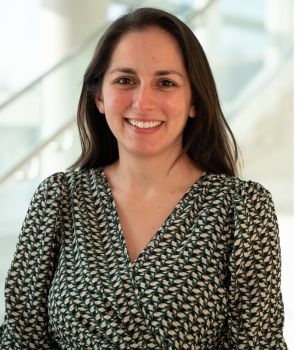
Metabolically-dysfunction-associated steatotic liver disease (MASLD) screening in the diabetes clinic
 Metabolically-dysfunction-associated steatotic liver disease (MASLD), formerly called non-alcoholic fatty liver disease (NAFLD), includes a range of conditions caused by a build-up of fat in the liver. It is strongly associated with type 2 diabetes (T2D) and obesity. MASLD remains underdiagnosed and undertreated. Many people living with T2D are unaware they have it. This project, led by endocrinologist Madona Azar, MD, aims to implement a screening tool at the UMass Memorial diabetes clinic using clinically available data to determine risk.
Implementing AI diabetic retinopathy screening in family medicine clinics

This project, led by optometrist Juan Ding, OD, PhD, and co-investigator James Ledwith, MD, offers a path to improve screening methods for diabetic retinopathy and facilitates widespread access. UMass Memorial Health is partnering with digital health company AEYE Health to test the diagnostic accuracy of a hand-held AI-assisted camera used by primary care physicians to screen at-risk individuals for retinal changes indicative of diabetic retinopathy. These screenings will provide efficient retinal imaging at primary care locations. The project will also support analyzing the impact of offering primary care screening and its sustainability.
Helping to navigate between the Emergency Department and subspecialty diabetes care

This study was the first of its kind to evaluate the benefits of continuous glucose monitoring (CGM) for Emergency Room patients. Endocrinologist Mark O’Connor, MD, and Emergency Department physician Laurel O'Connor, MD, analyzed whether CGM would help prevent people with diabetes from returning to the hospital with diabetes-related issues after discharge from the ER. Participants included people with pre-existing diabetes as well as those who arrived at the ER undiagnosed.
Improving the Inpatient Blood Glucose Management Program

Developed on the premise that adopting a flexible meal dosing option based on carbohydrate counting will improve the outcomes of hospitalized patients, the goal is to improve blood glucose control for all patients admitted to UMass Memorial hospitals who are living with diabetes. Endocrinologists Leslie Domalik, MD, and Asem Ali, MD, aimed to coordinate the appropriate timing of blood glucose testing, insulin dosing, and the administration of rapid-acting mealtime insulin, as well as provide carbohydrate counts for all food within the hospitals. They also wanted better coordination of insulin delivery with meal delivery to patients.
Improving care access for at-risk diabetes patients
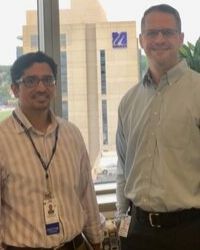 The inaugural Herman G. Berkman Diabetes Clinical Innovation Award was presented to Daniel Amante, PhD, and Adarsha Bajracharya, MD, in 2019. It led to Dr. Amante receiving a three-year KL2 Mentored Career Development Training grant to develop a Diabetes Mellitus program using Behavioral economics to Optimize Outreach and Self-management support with Technology (DM-BOOST).
ID PLUS Care was a multidisciplinary, collaborative approach to improve care access, quality, and management for at-risk patients with diabetes. The program monitored Electronic Health Record data to identify UMass Medicare Accountable Care Organization patients at risk for negative outcomes and proactively contacted them to nudge them toward recommended services.