



Smaller Pancreas Size in People with Type 1 Diabetes Suggests It's Not Simply a Beta Cell Problem
 David Harlan, MD, UMass Chan Diabetes Center of Excellence and Alvin Powers, MD, Vanderbilt Diabetes Center, co-chairing a session at the Network for Pancreatic Organ Donors with Diabetes annual meeting
Several recent studies using X-ray techniques or autopsy samples have reported that individuals with type 1 diabetes (T1D) generally have a smaller pancreas than those without T1D. David Harlan, MD, co-director of the UMass Chan Diabetes Center of Excellence, collaborated with fellow diabetes experts from Vanderbilt University on a study published in Diabetologia that found pancreases from people with both longstanding and recent-onset type 1 diabetes were approximately 45% smaller than pancreases from donors without diabetes.
“In science, it's dangerous and humbling ever to assume anything without data," said Dr. Harlan. "For decades, the leading hypothesis to explain what goes wrong in individuals destined to develop T1D assumed they started with the same number of pancreatic insulin-producing cells as others."
Dr. Harlan pointed out other longstanding assumptions, including how "it was thought that their [people with type 1 diabetes] pancreas was otherwise normal, in other words, that T1D was a beta cell-specific disease."
Beta cells are the pancreatic cells that produce and secrete insulin, but they represent only a tiny portion of the pancreas, accounting for approximately 1% of its volume. A healthy adult pancreas is composed primarily of so-called “exocrine tissue” (i.e., cells that make enzymes and fluids essential for digestion) and the ducts to deliver those things to the gut.
This study shows that humans with T1D have significantly less exocrine tissue than individuals without diabetes, that the exocrine tissue appears to be fibrotic (“scarred”), and that these changes are evident even in the early stages after T1D develops. The actual exocrine cells were not smaller in size; there were fewer of them.
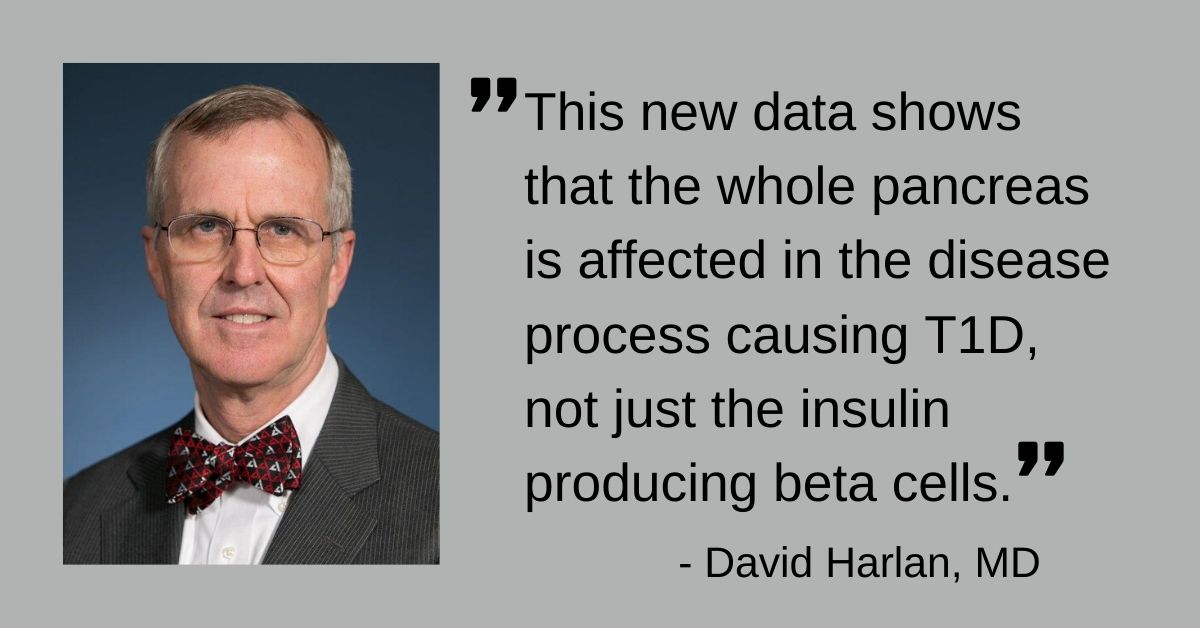
“This data shows that the entire pancreas is affected in the disease process, causing T1D, not just the insulin-producing beta cells. We know that the immune system attacks the beta cells in individuals destined to develop T1D, but these data raise the possibility that other pancreatic abnormalities are involved. Further, we speculate that those abnormalities may play a role in triggering that anti-beta cell immune response,“ added Dr. Harlan.
Decreased pancreatic acinar cell number in type 1 diabetes
Diabetologia. May 2020
Wright JJ, Saunders DC, Dai C, Poffenberger G, Cairns B, Serreze DV, Harlan DM, Bottino R, Brissova M, Powers AC.
March 2023 Update
Dr. Harlan has served in a mentoring role to Drs. Wright & Virostko, who significantly extended earlier observations as published by the Endocrine Society.