First installed in the 2010-2012 expansion project, and updated in 2024, this jet turbine is the heart of the combined heat and power (CHP) system.
The gas-fired combustion turbine was instrumental in supporting the growth of the campus built environment with the addition of the Albert Sherman Center followed by the Paul J. DiMare Center.
The expansion program increased the CHP maximum electric output to 17.8 megawatts. Since natural gas burns cleaner than oil, and the new jet turbine is highly efficient, the expanded power plant actually has lower greenhouse gas emissions, despite its added energy capacity.
Exhaust heat from the turbine is captured in a Heat Recovery Steam Generator (HRSG) that delivers high-pressure steam to heath the campus and drive other equipment.
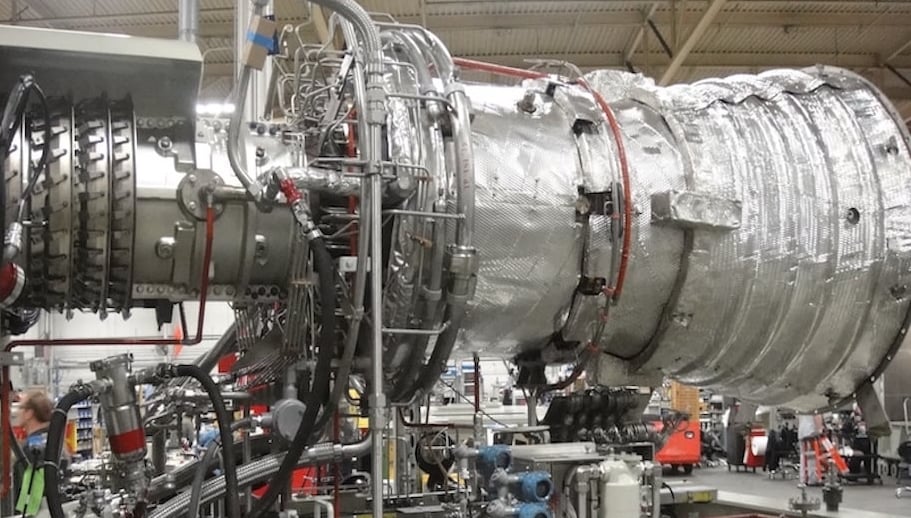
Gas-fired combustion turbine
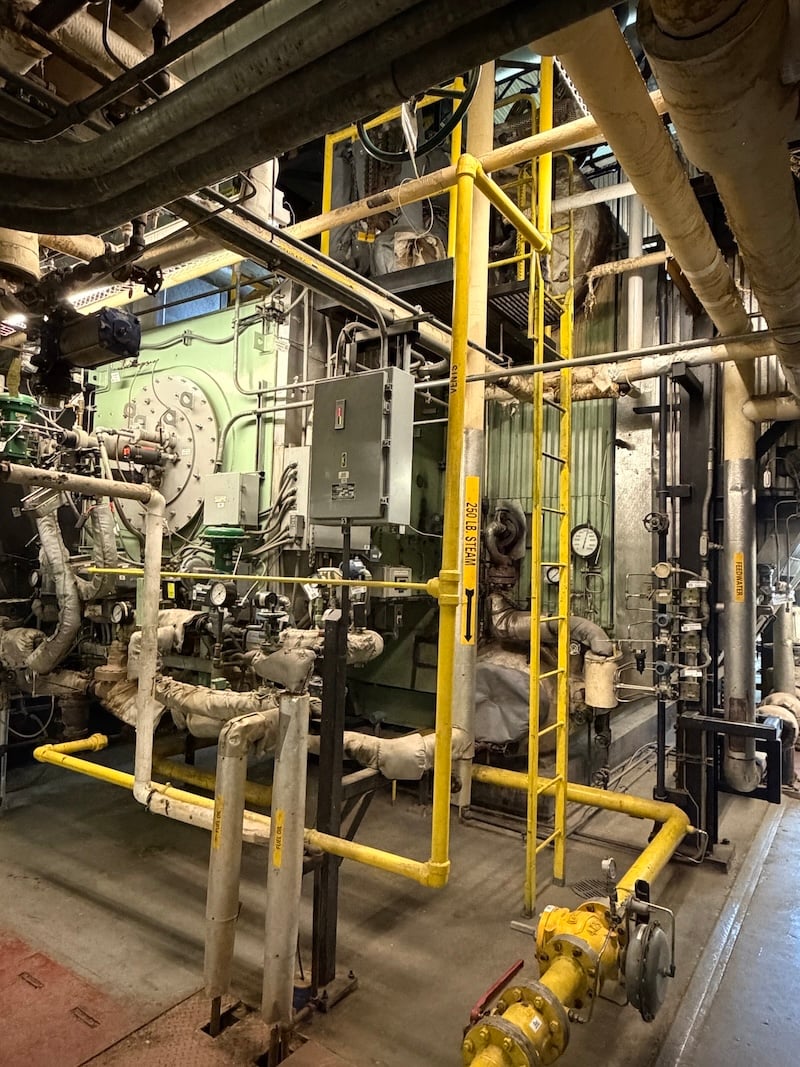 Conventional steam boiler
The Combined Heat & Power plant is enrolled in the Alternative Energy Program. Learn more about AEC's here.
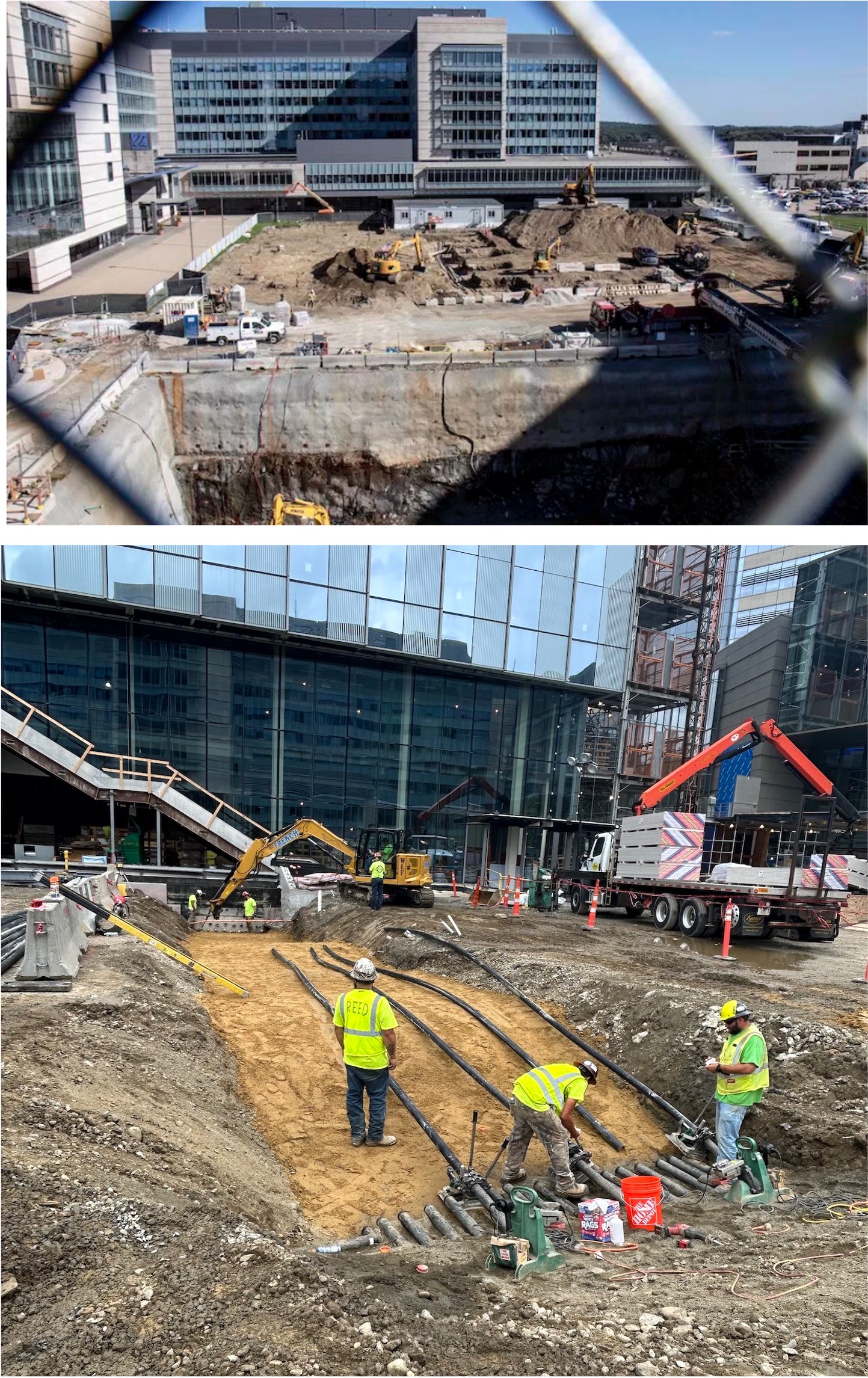
Part of the LEED Gold Paul J. DiMare Center construciton project, a geothermal system consisting of an array of 75 boreholes, each six inches in diameter and 500 feet deep, was drilled into the bedrock below the campus quad.
Water circulating through a closed-loop system of pipes in those holes will help to heat and cool the building.
Over the course of a year, the geothermal system will provide 88 percent of the heat for offices, laboratories, educational and public spaces, and 50 percent of the cooling needs for the building.
Steam and chilled water from the existing campus power plant will help meet peak demands for heating and cooling. The power plant also supplies electricity to the new building.
If the new building were served exclusively by the campus power plant, it would generate approximately 5,800 tons of greenhouse gas emissions annually. The geothermal system will cut that carbon footprint by approximately 2,400 tons per year, according to an energy analysis of the building conducted by engineering consultants BR+A.
That’s a 42 percent reduction in greenhouse gas emissions. The savings are equivalent to emissions from driving an average gas-powered car 5.5 million miles, or the emissions from using 100,000 tanks of propane in back-yard grills. It is also the equivalent of carbon sequestered by 36,000 tree seedlings growing for 10 year