

Research
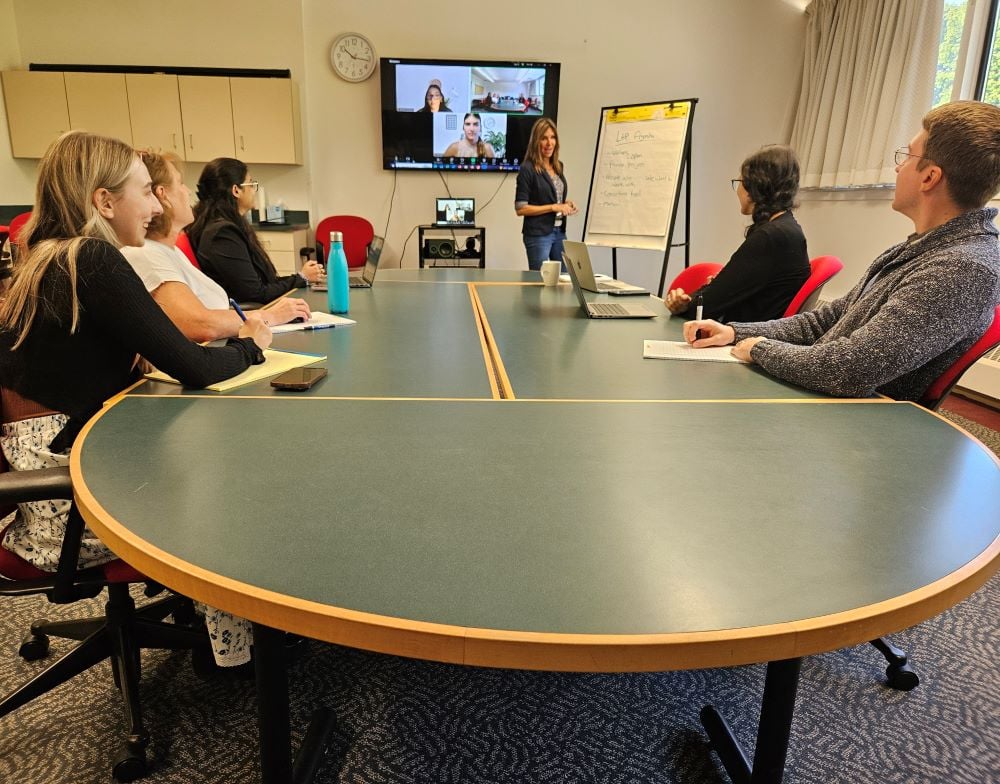
The Law & Psychiatry research mission is to identify and address the needs, drivers of reoffending, protective factors, and successful service matching of legally involved youth and adults, particularly emerging adults. We respond to system-level needs within criminal justice & juvenile justice settings by addressing critical issues at the intersection of behavioral health and the law. We use implementation science, psychometric methods, and other research designs best suited to the areas of inquiry. We study valid risk and behavioral health screening and assessment strategies, as well as approaches to promoting positive youth development. Our work also focuses on forensic assessment, diversion and reentry practices, and advancing equity in behavioral health and legal outcomes.
For more information about these projects, contact us at lawpsych@umassmed.edu.
Selected Research Projects
Youth Protective Factors and Recidivism Study
Implementation of Positive Youth Development and valid protective factor measures, service effectiveness
Study: Youth Protective Factors and Recidivism Study (funder: National Institute of Justice)
- A multi-state study of risk and protective factors associated with serious reoffending among youth and young adults. The study also explored the influence of strengths-based factors on reoffending.
Learn more about the study here
Detention Screening: Tool Validation & Implementation
Detention risk tool development, validation & implementation
Study: Development and Validation of a Youth Detention Screening Tool for Risk for Violence (funder: Colorado Division of Youth Services)
- Development and validation of an innovative detention screening tool to detect substantial risk of serious harm (violence) among youth considered for short-term, pre-trial detention. Data suggested proper use of the tool would decrease unwarranted detention and increase equity across Colorado.
Diversion screening
Diversion risk tool development and validation; mental health screening; implementation
Study: Validation of a Risk Screen for Prosecutorial Diversion (funder: Colorado Department of Public Safety)
- A partnership with juvenile prosecutor’s offices across eight Colorado judicial districts to implement and validate the Arizona Risk-Needs Assessment (ARNA) adapted for Colorado. Predictive validity for new charges (recidivism), including violent charges across sex and race, was excellent and the ARNA is now used for prosecutorial diversion statewide
Correctional classification
Classification tool validation for prisons, jails, and juvenile detention centers
Study: Validation of Prison Classification Instruments(funder: National Institute of Justice)
- A partnership with the MA Department of Correction assessing the predictive accuracy and neutrality of its prison classification system, resulting in a practical validation toolkit for correctional agencies.
Implementation studies of evidence-based or best practices
Implementation of risk-needs assessment, case management & planning, Risk-Need-Responsivity, mental health screening, and organizational policy and procedures
Study: Risk-Need-Responsivity and Service Accessibility for Justice-Involved Youth with Serious Mental Health Conditions (Funder: National Institute on Disability, Independent Living, and Rehabilitation Research)
- Implementation study of the Risk-Need-Responsivity model within state-supported initiatives serving emerging adults with mental health concerns and prior justice involvement. The study will result in practical solutions to implementation barriers across the rural-urban continuum.
Settings We Support
We collaborate with individuals with lived experience and personnel in the legal systems and settings that impact youth and adults, including:
- Forensic mental health
- Mental health and public health agencies
- Law enforcement
- Judges and attorneys
- Diversion
- Pretrial detention
- Reentry
- Parole
- Probation
Our research has been funded by
Our research has been supported by federal agencies such as: