
At a glance |
|---|
|
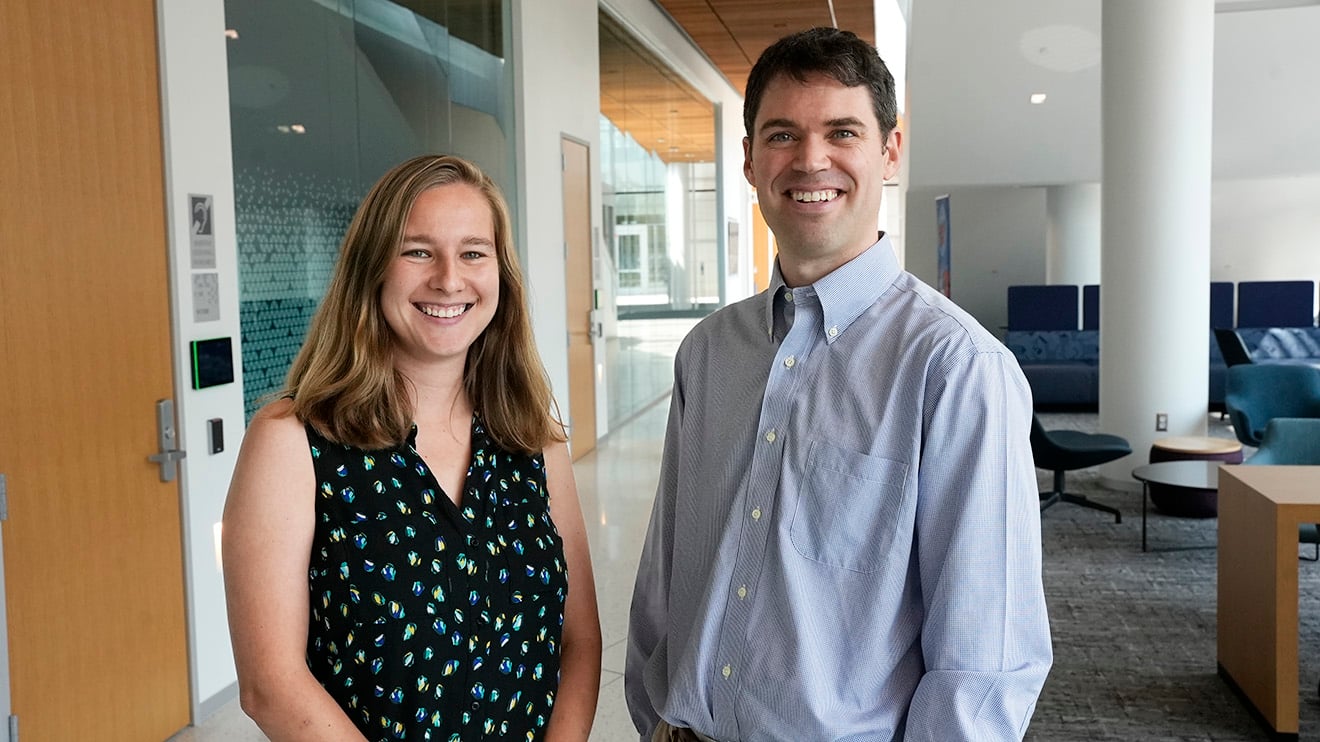
Photo: Pat Sargent
Two early-career scientists from UMass Chan Medical School have been named recipients of a Brain & Behavior Research Foundation (BBRF) Young Investigator Grant supporting their research in neuroscience.
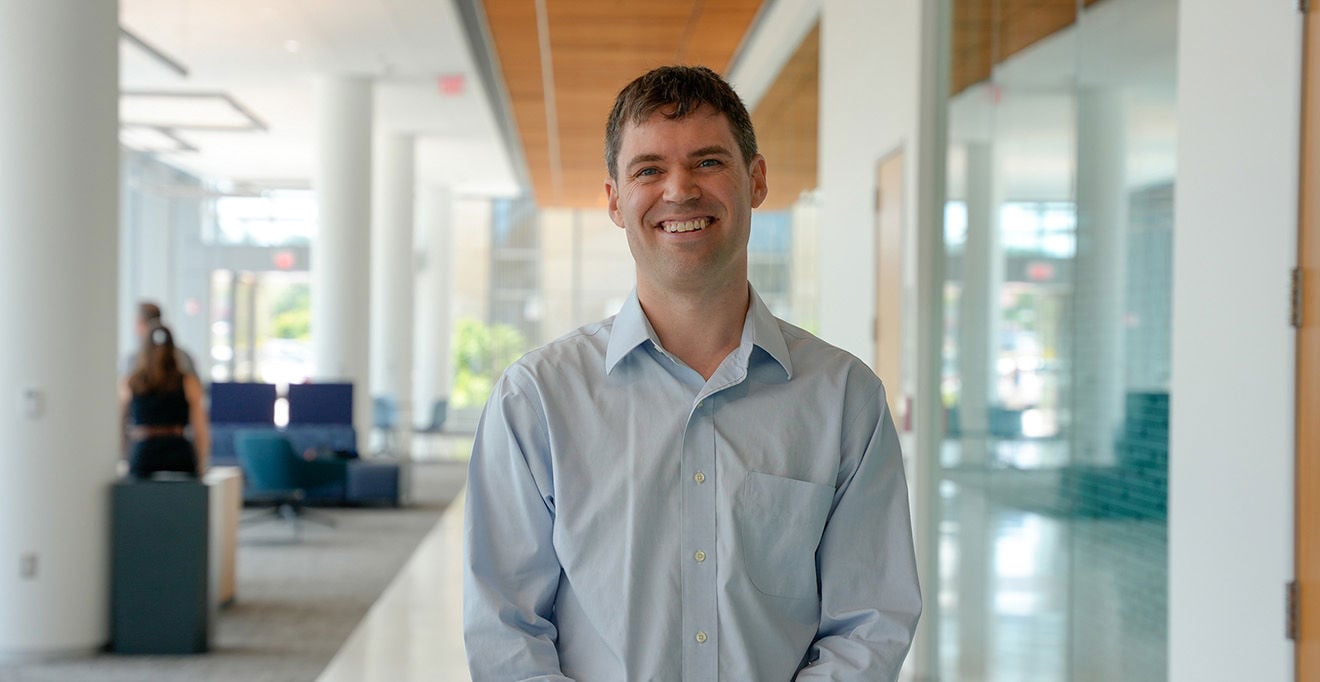
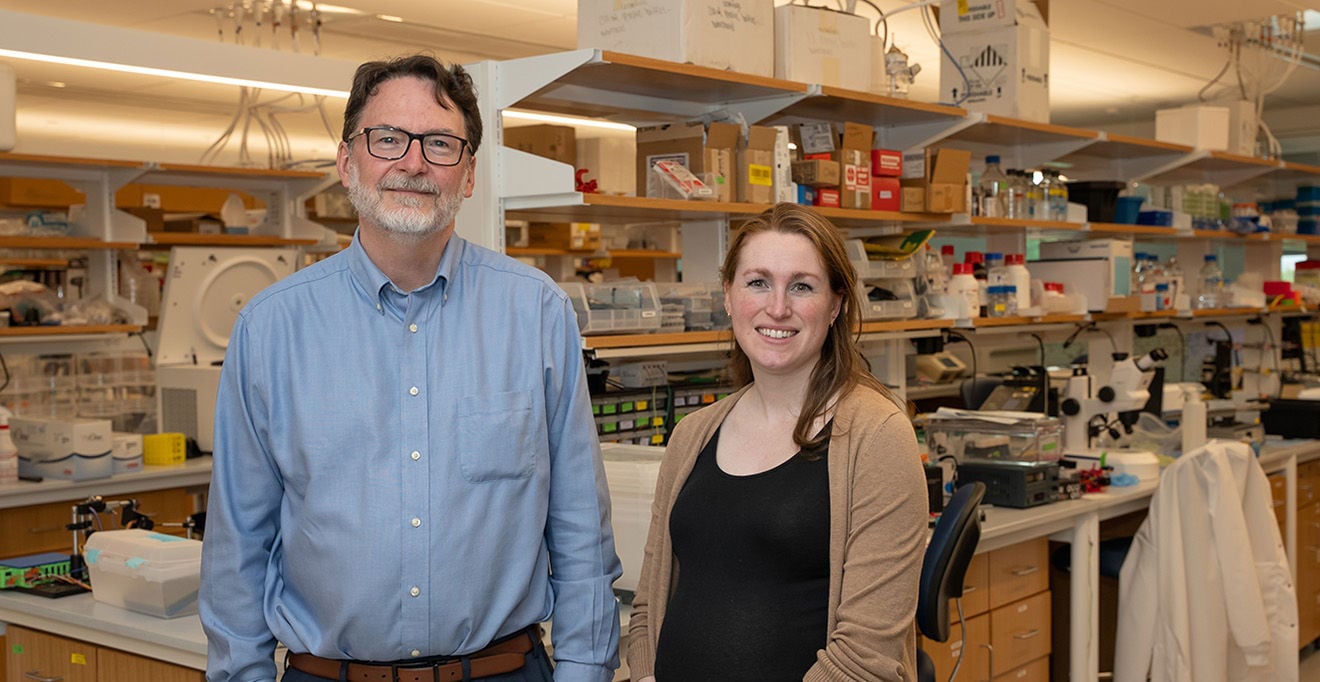
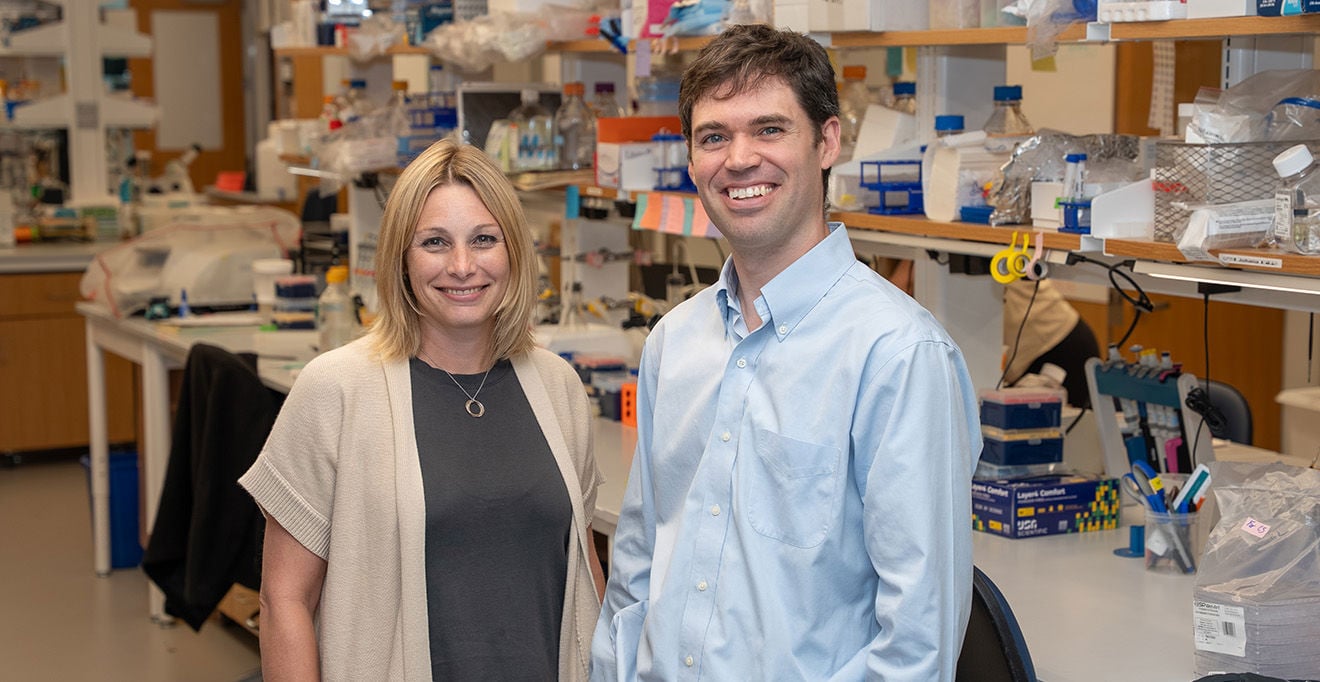
Caitlyn Edwards, PhD, a postdoctoral fellow in the lab of Danny G. Winder, PhD, the Worcester Foundation for Biomedical Research Chair I and chair and professor of neurobiology; and Travis E. Faust, PhD, instructor in neurobiology conducting research in the lab of Dorothy P. Schafer, PhD, the Molly McGovern Chair in Biomedical Research and professor of neurobiology; were named 2026 BBRF Young Investigator grantees.
The $70,000, two-year award is designed to assist talented young investigators as they extend their research training or begin careers as independent research faculty.
“This is a big deal in our field and to have two of us from the same department win it is really special. It’s a great example of the exciting research we’re doing in neurobiology at UMass Chan,” Dr. Edwards said.
How are gut-responsive brain neurons linked to stress and anxiety?
Edwards is studying a novel neuropeptide produced by gut-responsive brain neurons and how it may be linked to stress responses and anxiety-related behavior. The focus of the research is on the anatomy of the peptide system and examining its role in stress to see if it could be a potential therapeutic target for helping people with stress-related disorders.
“We were noticing some interesting changes with stress responses and anxiety-like behaviors in animal models, where these neuropeptide neurons seem to be changed,” Edwards said. “What exactly is the peptide doing in these neurons? We don't know, and that's what we’re trying to find out.”
Working in the Winder lab, Edwards is also researching the peptide system in the context of alcohol and whole-brain signaling during abstinence, hoping to find a novel target that could play a role in withdrawal symptoms like stress and anxiety during abstinence.
Originally from Buffalo, Edwards earned her undergraduate degree in psychology at SUNY Geneseo and her PhD in neuroscience at Florida State University. She spent two years as a postdoctoral researcher at Vanderbilt University with Dr. Winder before moving with the lab to UMass Chan in 2024.
Grant to support research on non-neuronal brain cells and schizophrenia
Dr. Faust’s BBRF award will support his research on the interactions between astrocytes and microglia—two types of non-neuronal brain cells that help maintain and remodel neural circuits—and their role in shaping synapse development, as well as how disruptions in these processes may contribute to schizophrenia.
“We’re examining how the density of synapses changes as the brain develops. In schizophrenia, differences in synapse numbers and overall brain connectivity arise during adolescence and early adulthood, which is often when symptoms first appear. We often think of brain development as something that happens during childhood, but the brain is still undergoing substantial changes during adolescence and early adulthood,” Faust said.
“This prestigious award will help me launch and expand this line of research over the next two years, establishing a foundation for further understanding how glial cells shape circuit development and vulnerability to psychiatric illness.”
Faust received his undergraduate degree in molecular biology from Princeton University and earned his PhD in neuroscience from the Johns Hopkins University School of Medicine. He joined UMass Chan in 2018. Earlier this year, Faust was also named a recipient of an early-career scientist award from the Simons Foundation Fellows-to-Faculty program.