
Photo: Hallie Leo
At a glance |
|---|
|
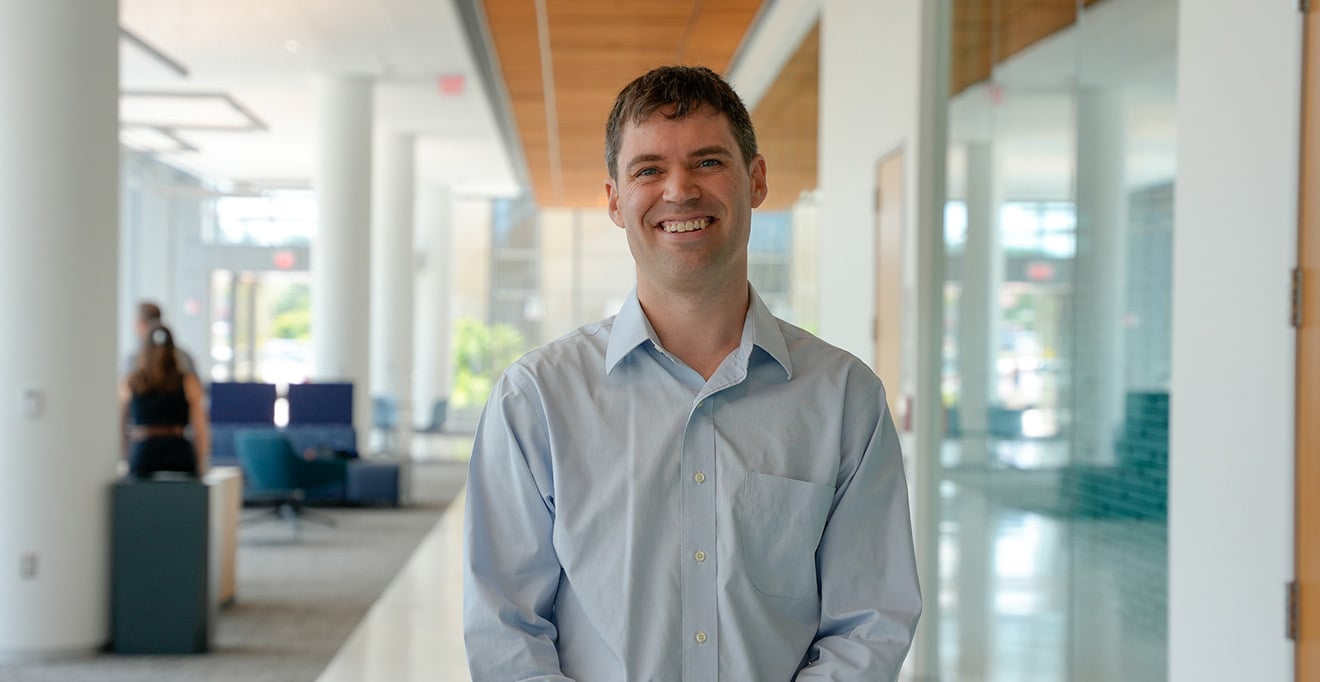
Travis E. Faust, PhD, instructor in neurobiology, is one of 15 early-career scientists named to the 2026 class of the Simons Foundation Fellows-to-Faculty Award program.
The award will support Dr. Faust’s transition to an independent faculty position and provide funding for his research. He will investigate how interactions between astrocytes and microglia–two types of non-neuronal brain cells that help maintain and remodel neural circuits–shape synapse development and plasticity, and how disruptions in these processes may contribute to autism spectrum disorder.
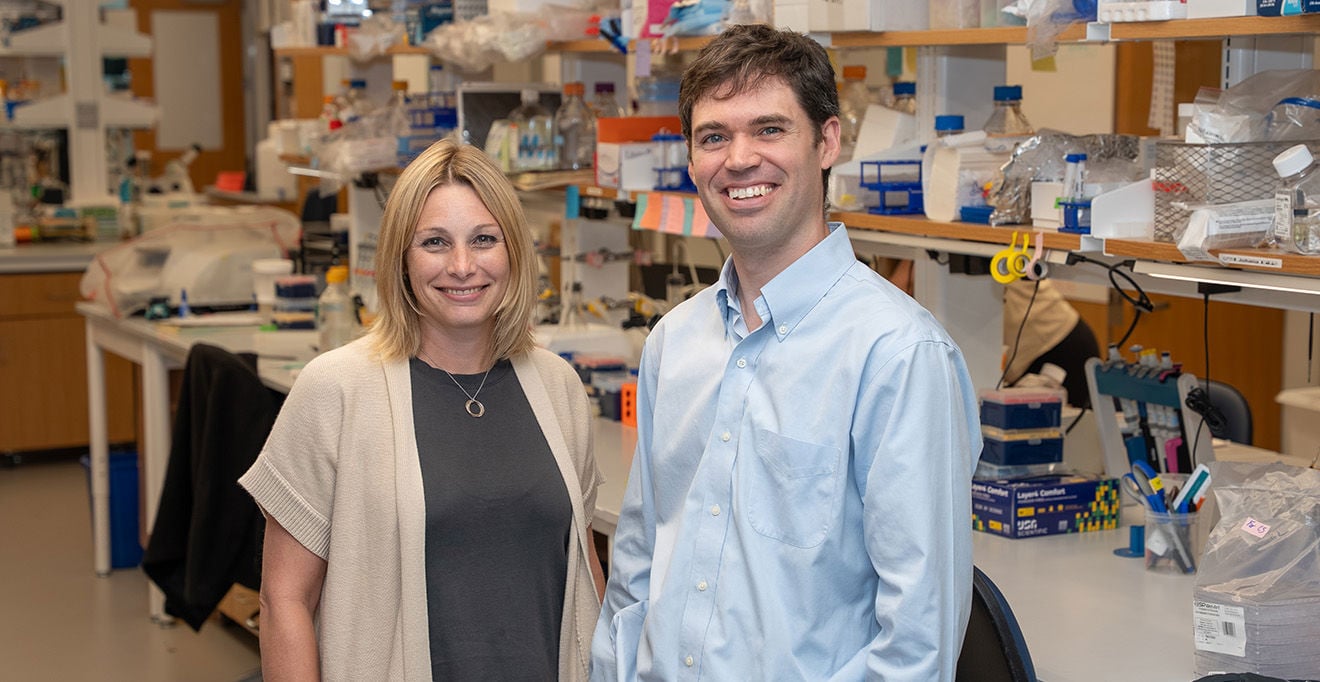
Faust conducts research in the lab of Dorothy P. Schafer, PhD, the Molly McGovern Chair in Biomedical Research and professor of neurobiology, where his work has revealed how astrocytes and microglia communicate and coordinate to remove synapses, the connections through which neurons communicate.
“A lot of research in Dr. Schafer’s lab has focused on how microglia remove synapses during development and in disease. My work has shown that when microglia remove synapses, they also cue astrocytes to retract from synapses, essentially telling them to get out of the way,” Faust said. “We think communication between astrocytes and microglia may help determine when synapses can be remodeled and when those connections become more stable as the brain develops.”
“Altered synapse number and connectivity have been implicated in autism spectrum disorder,” Faust added. “We want to understand whether changing the way astrocytes and microglia communicate can influence that process and promote appropriate circuit balance.”
The Fellows-to-Faculty award supports early-career scientists as they transition into tenure-track faculty positions in areas of science supported by the Simons Foundation’s Autism & Neuroscience division. Upon beginning an independent faculty position, Faust will receive $600,000 over three years to establish his research program. The awards are funded by the Simons Foundation Autism Research Initiative (SFARI) and the Simons Collaboration on Plasticity and the Aging Brain. Faust is one of 10 fellows whose research is supported by SFARI.