Photo: Office of Massachusetts Attorney General
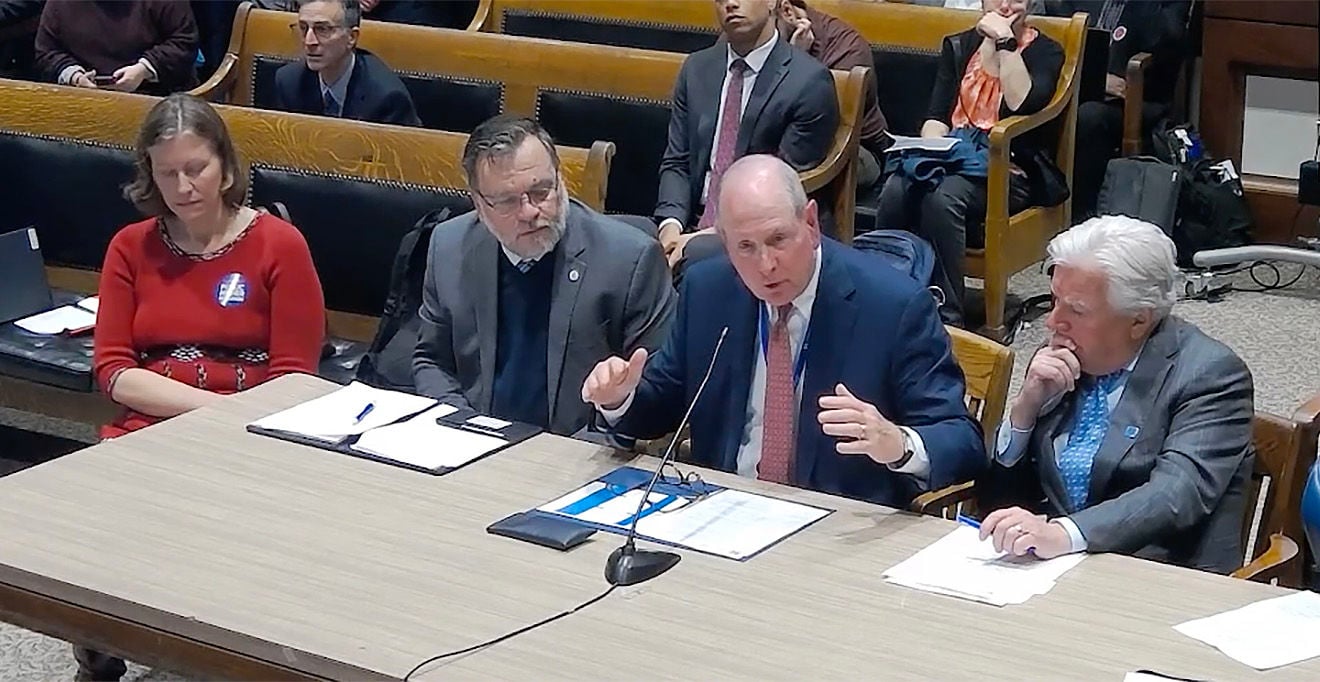
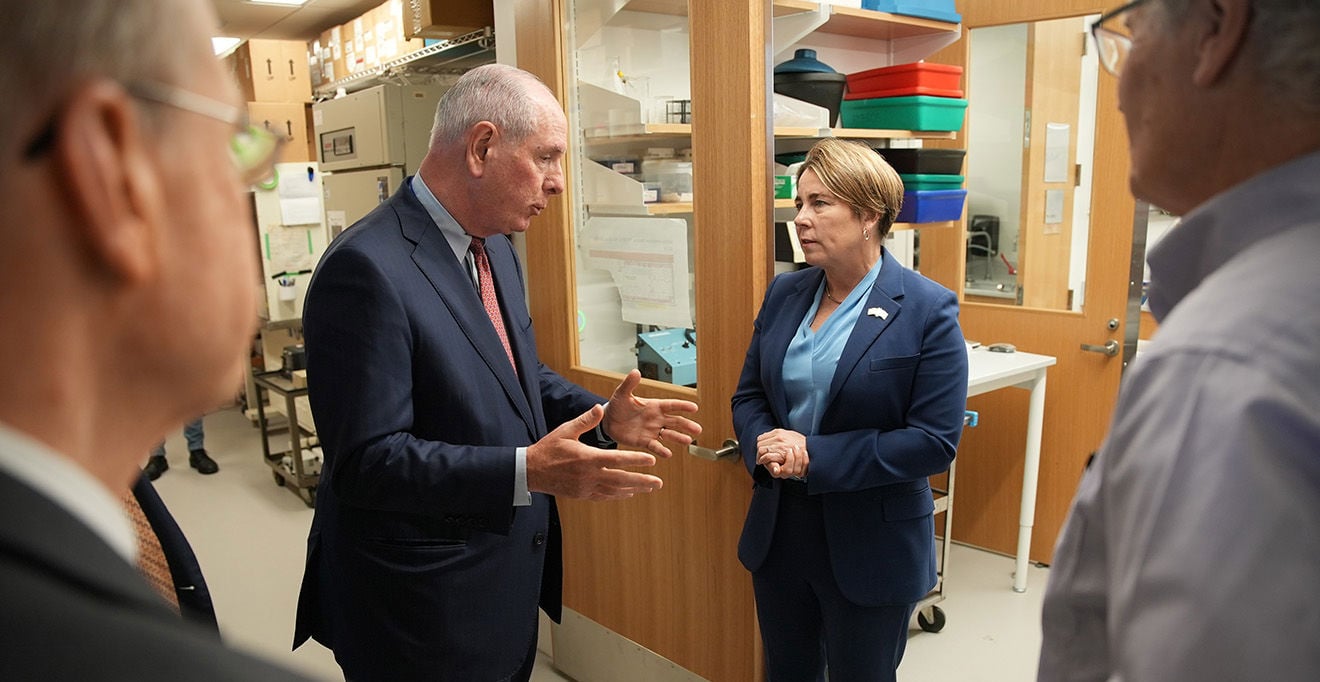
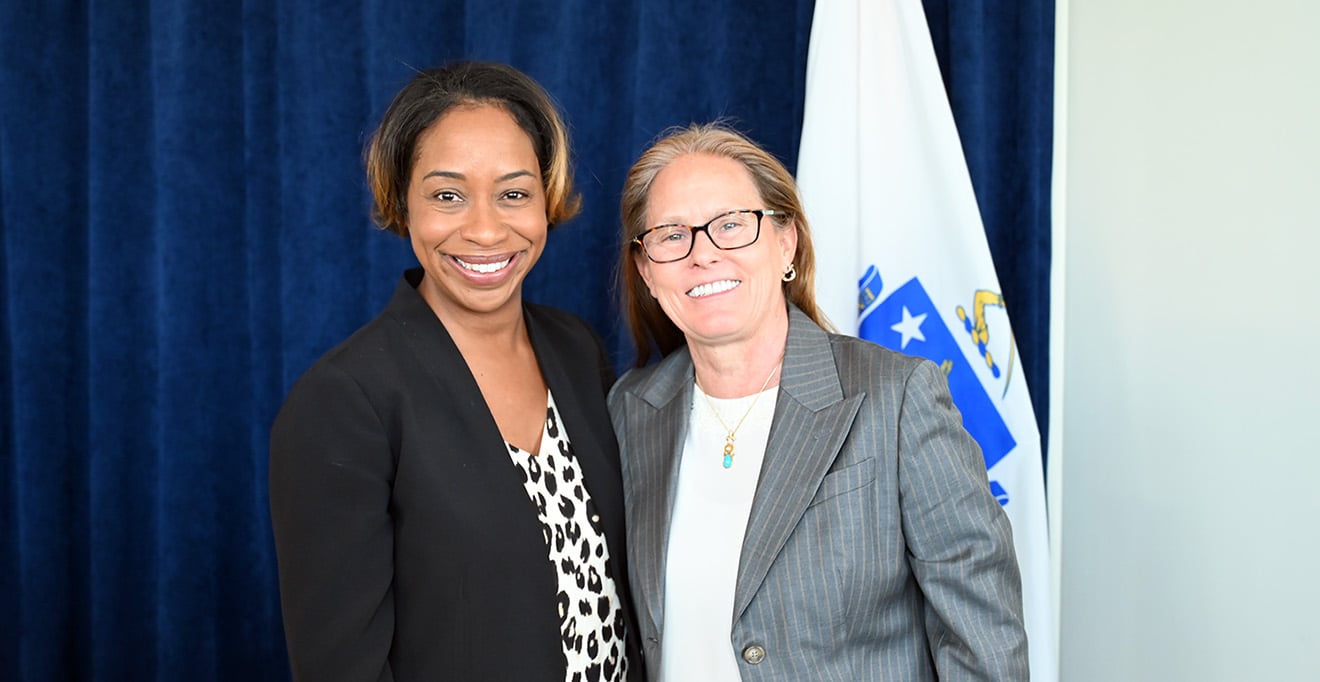
UMass Chan Medical School scientist Beth McCormick, PhD, was joined by representatives from nonprofits, human services, higher education and municipalities at the Office of Massachusetts Attorney General Andrea Joy Campbell on Tuesday, Jan. 20, to talk about the impact the Trump administration’s disruptions to federal funding and policy changes are having on the people of the commonwealth.
“Despite the appearance that federal funding for biomedical science has returned to normal, it has not,” said Dr. McCormick, the Worcester Foundation for Biomedical Research Chair II and chair and professor of microbiology. “From the outside everything looks to be back on track but if you look beyond that façade, the current changes to funding policies by the National Institutes of Health are slowly eroding the bricks from the foundation of the biomedical research infrastructure.”
Last summer, the NIH instituted a new policy called forward funding, which has slowed the pace of scientific funding by decreasing the total number of scientists and research projects receiving federal grants.
In the past, when an investigator got a five-year grant award, the NIH paid for that grant one year at a time. The cost of each year would come from each successive budget cycle over that five-year period. With forward funding, however, the NIH pays for the entirety of the same five-year grant out of the current fiscal year, with the successive years held in escrow from the institution.
On paper, it appears that NIH grant dollars are being deployed at a similar rate as in the past, but because those resources are now being expended faster than previously through forward funding, the reality is that fewer projects are getting funded, which adversely impacts scientists and research institutions. As a result, projects that would normally move ahead are being discontinued. This reduction in the number of scientific projects funded reduces the number of scientists making research discoveries happen, which, in the end, negatively impacts patients.
“As the NIH moves away from a merit-based process of awarding grants, the entire arc—from basic scientific discovery to clinical treatment— has been upended.”
For example, McCormick had three grants totaling roughly $6 million that have been continuously funded since 1996 go unfunded last year. Discoveries made from these grants have generated a start-up company and clinical trials for a therapeutic to treat ulcerative colitis. One of these grants was scheduled and in the process of being funded when the NIH abruptly told McCormick that the project wouldn’t continue because of lack of money due to forward funding.
“Awards that would historically be funded are now being shelved,” McCormick said. “The science hasn’t changed, the needs haven’t stopped, but the project has come to a screeching halt.”
McCormick has been forced to either furlough or lay off half a dozen people with very specialized skills and expertise as a result. Even if funding is eventually restored, the research can’t be picked up where it left off. Rehiring, retraining and replacing skills and expertise takes time and money, she said.
“These six months have put back my research by at least three years,” said McCormick. “As the NIH moves away from a merit-based process of awarding grants, the entire arc—from basic scientific discovery to clinical treatment—has been upended.”
McCormick’s experience was one of a number of examples shared of how the confusion and chaos of the Trump administration has disrupted and harmed the lives of Massachusetts residents. Other examples were shared by Liz Hamilton, CEO of Boys & Girls Club Worcester; Liliana Patino, MEd, senior director of community impact and development at Eliot Community Human Services; Khara Shearrion, Project Bread’s senior director of SNAP outreach; and Fidel Maltez, Chelsea city manager
“Behind every policy change are real people feeling the consequences of the Trump administration’s reckless actions,” said Massachusetts Attorney General Andrea Campbell. “I am entering year two of this administration with the same urgency and fearlessness, because I know what is at stake for working families, consumers, underserved communities and our children.”
Attorney Campbell’s office has sued the Trump administration 47 times in the past years over federal funding and policy changes made by executive order.