

Photo: Hallie Leo
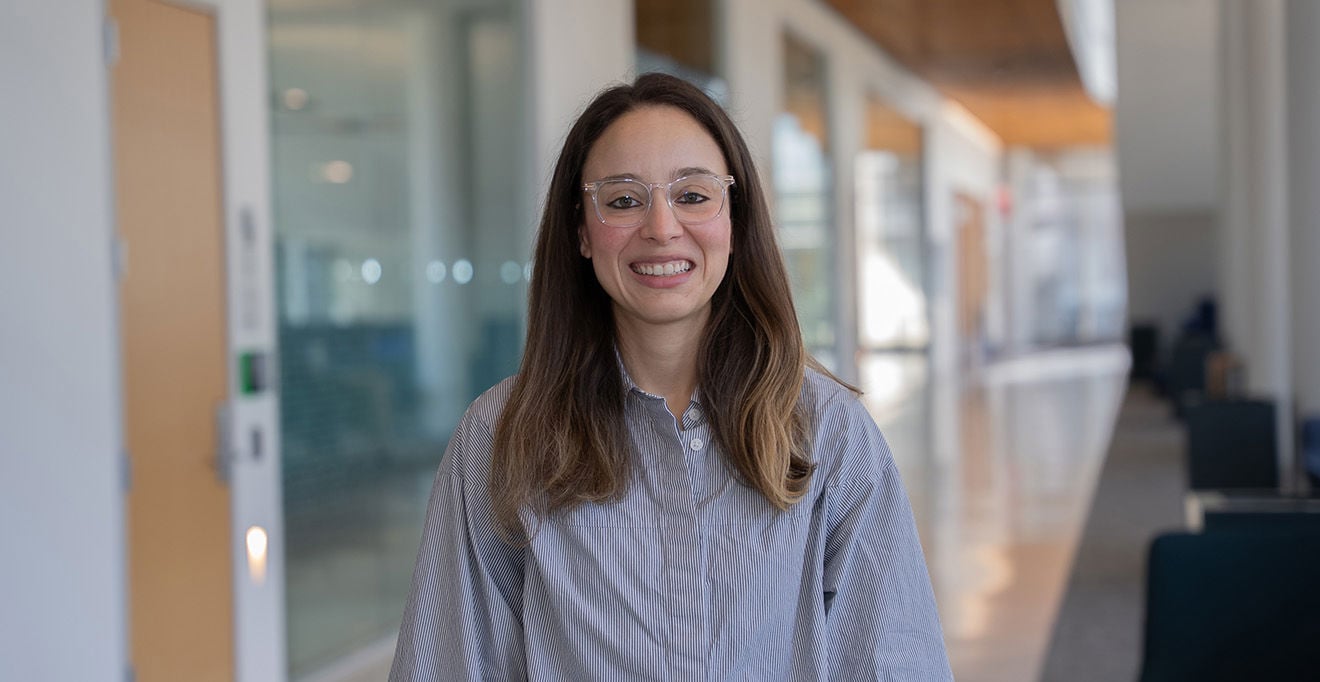
Morningside Graduate School of Biomedical Sciences PhD candidate Hannah Rogers has received a prestigious Ruth L. Kirschstein National Research Service Award Individual Predoctoral Fellowship from the National Institute for Neurological Disorders and Stroke to research how the nervous system employs a class of signaling molecules called neuromodulatory neuropeptides to encode information about food availability, and then translates this information into appropriate behaviors.
“Given current funding uncertainties, this grant provides a reliable source of support for expanded opportunities to advance my graduate training through conference attendance, mentorship and additional resources to further my thesis project,” she said.
Rogers studies in the lab of Michael Francis, PhD, professor of neurobiology. Her research focuses on how neurons use neuropeptide signaling to process information about food availability and control behavior, and how impairments in this and related forms of sensory processing may contribute to neuropsychiatric diseases including anxiety and depressive disorders as well as autism spectrum disorders.
“My work examines how multisensory cues about food availability regulate neuromodulatory neuropeptide release to drive food-search behavior,” Rogers explained.
She uses C. elegans—the microscopic nematode behind four Nobel prizes, including two received by UMass Chan scientists—in her research because it has a simple and well-mapped nervous system. The goal is to advance understanding of the mechanisms that the nervous system uses to translate sensory information into behavioral responses, information that will be critical for developing targeted therapies in humans.
“Hannah’s studies seek to uncover how individual neurons control the release of multiple chemical signals and how these composite signals work together across groups of cells to shape behavior. Addressing these questions will advance our understanding of how a healthy brain functions and learn about how neuronal signaling may be impacted during disease,” Dr. Francis said. “This knowledge may inform the development of future treatments for psychiatric and neurological disorders, many of which are thought to involve disruptions in neuropeptide signaling. Hannah is exceptionally enthusiastic and curious about science, and I feel very fortunate to have the opportunity to help guide her training.”
Rogers, who grew up in Dalton, Massachusetts, studied psychology in the neuroscience track at UMass Amherst and chose to attend UMass Chan Medical School because of its emphasis on collaboration and rigorous training environment.
“When I’m engaging in discussions with students and faculty, it’s evident that everyone here values each other’s scientific input and is eager to support trainees,” said Rogers. “UMass Chan’s collaborative environment encourages students to expand the scope of their research, accelerating scientific and career growth.”
The Student Spotlight series features UMass Chan Medical School students in the Tan Chingfen Graduate School of Nursing, Morningside Graduate School of Biomedical Sciences and T.H. Chan School of Medicine. For more information about UMass Chan Medical School and how to apply, visit the Prospective Students page.