At a glance |
|---|
|
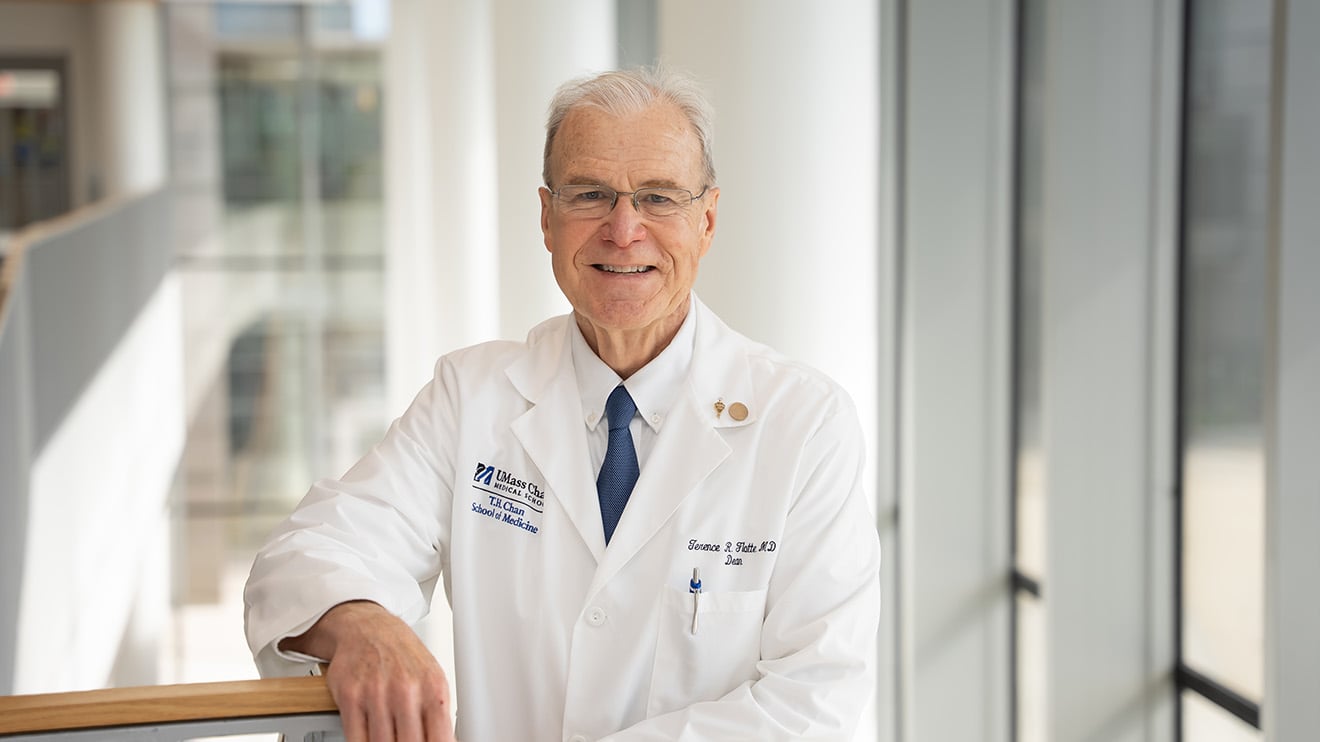
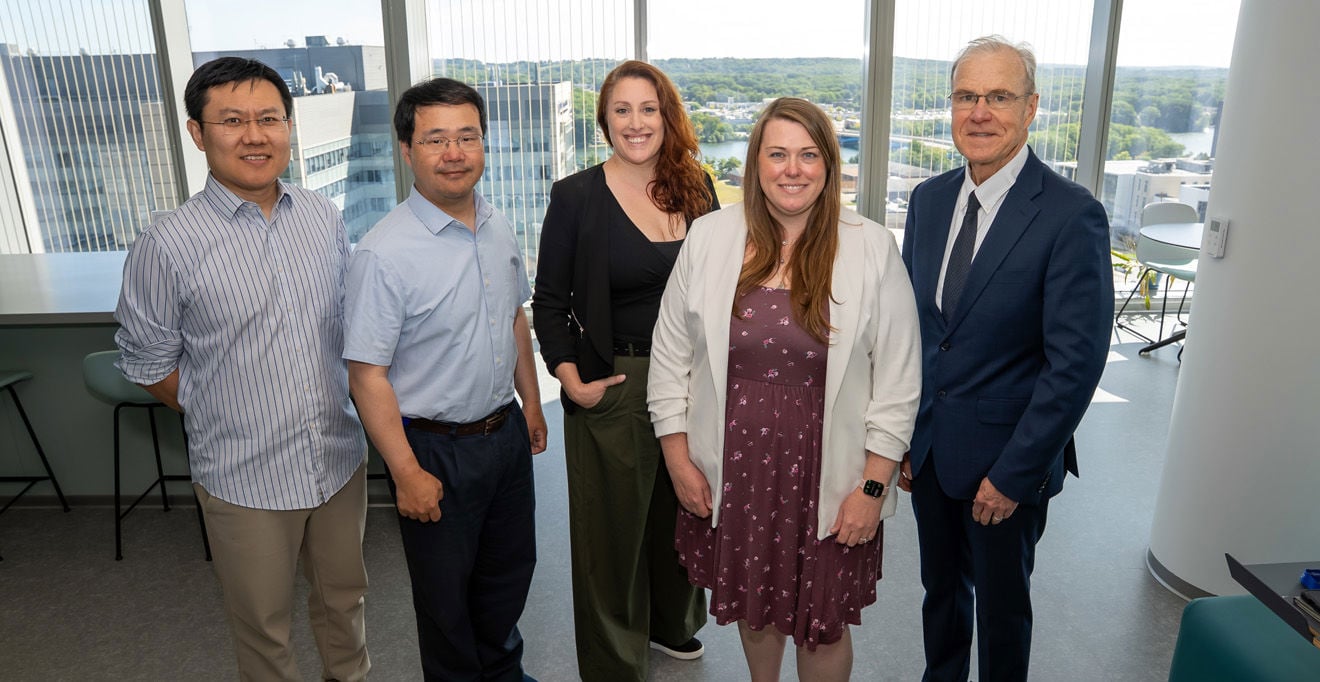
Photo: Bryan Goodchild
Terence R. Flotte, MD, the Elisabeth Chair for the Dean of Medicine, executive deputy chancellor, provost and dean of the T.H. Chan School of Medicine at UMass Chan Medical School, has been selected as a member of the National Academy of Medicine (NAM) for his significant contributions to medicine and science.
“One of the areas I’ve been recognized for is the work I’ve done to develop gene therapies for children and families with rare genetic diseases. The struggles they endure, the bravery and grit that they show, has been an inspiration to me,” Dr. Flotte said. “I hope that over time my work will have more impact in helping them directly.”
An internationally recognized pioneer in gene therapy, Flotte focuses on treatments for rare genetic diseases such as cystic fibrosis, alpha-1 antitrypsin deficiency and Tay-Sachs disease. In 1993, he published the first successful use of an adeno-associated virus (AAV) vector to deliver the CFTR gene in vivo and, in 1995, delivered the first AAV vector in a human trial in patients with cystic fibrosis. In later years, he performed the first human gene therapy trials for alpha-1 antitrypsin deficiency, a genetic form of emphysema, and for Tay-Sachs disease, a severe neurodegenerative disease. He is editor-in-chief of Human Gene Therapy, the field’s longest-running journal family, and previously served as president of the American Society of Cell and Gene Therapy.
New members to the National Academy of Medicine are elected by current members through a process that recognizes individuals who have made major contributions to the advancement of the medical sciences, healthcare and public health.
Current UMass Chan faculty members elected to the National Academy of Medicine include Robert H. Brown Jr., DPhil, MD, the Donna M. and Robert J. Manning Chair in Neuroscience and professor of neurology; Roger J. Davis, PhD, FRS, the H. Arthur Smith Chair in Cancer Research and chair and professor of molecular medicine; Job Dekker, PhD, Howard Hughes Medical Institute Investigator, the Joseph J. Byrne Chair in Biomedical Research and professor of systems biology; Katherine A. Fitzgerald, PhD, the Worcester Foundation for Biomedical Research Chair III, executive vice chancellor for research, chief research officer, professor of medicine and chief of the Division of Innate Immunity; and Philip Zamore, PhD, Howard Hughes Medical Institute Investigator, the Gretchen Stone Cook Chair in Biomedical Sciences, and chair and professor of RNA therapeutics.
“Being elected to the National Academy of Medicine is a culmination of my career and the impact of my research. I feel incredibly honored to be in the same grouping with the other UMass Chan faculty elected to the academy,” Flotte said. “I always thought of Dr. Brown as the prototypical member of the National Academy of Medicine. I have tried to emulate him, in terms of humility, devotion to patients and intense focus on research to overcome the terrible disease that is ALS. Being elected reflects my efforts to live up to those ideals.”
Flotte will be formally welcomed to the NAM during the academy’s annual meeting in October 2027.
"Well before this announcement, Provost Flotte served as a role model as a physician, scientist and scientific leader. Despite his many accolades, Dr. Flotte remains curious and optimistic about what science and medicine can do. I can think of no one more deserved of this career defining honor,” said Chancellor David D. McManus, MD’02, ScM’12, MBA. “Awards like this mean a tremendous amount to our health sciences university as they validate our standing as a top-notch place for innovators. I'd like to thank Terry for bringing this positive recognition to UMass Chan.”
The National Academy of Medicine, formerly the Institute of Medicine, was established in 1970 under the charter of the National Academy of Sciences to advise the nation on medical and health issues.
The National Academy of Medicine works together with the National Academy of Sciences and National Academy of Engineering to provide independent, objective analysis and advice to the nation and conduct other activities to solve complex problems and inform public policy decisions. The academies also encourage education and research, recognize outstanding contributions to knowledge, and increase public understanding in matters of science, engineering and medicine.
The late Michael Green, MD, PhD, former chair and professor of molecular, cell, & cancer biology, professor of molecular medicine and director of the UMass Medical School Cancer Center, was elected to the National Academy of Medicine in 2015. John E. Ware, PhD, professor emeritus of population & quantitative health sciences, was elected in 1996.