

Photo: Bryan Goodchild
At a glance |
|---|
|
Scientists at UMass Chan Medical School have received $14.7 million from the National Heart, Lung and Blood Institute to develop new models and gene therapies for alpha-1 antitrypsin (AAT) deficiency, a chronic, debilitating genetic lung disease that shortens lifespan.
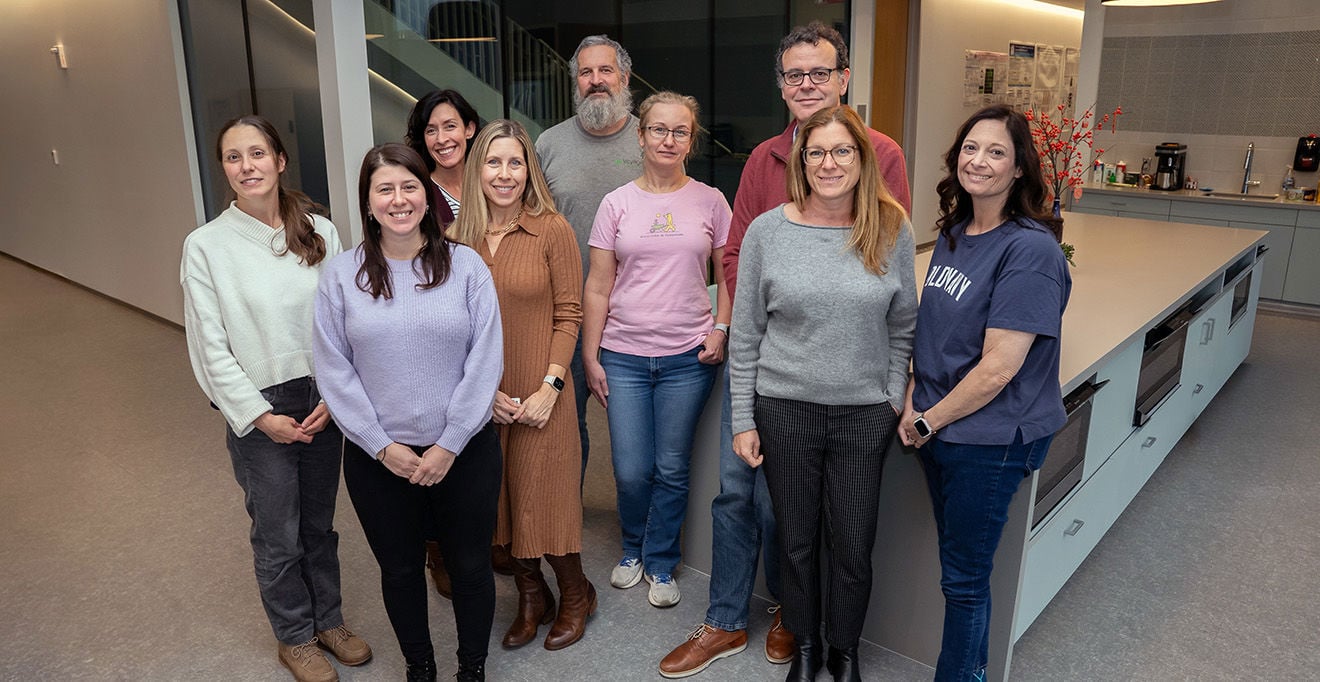
Led by Terence R. Flotte, MD, the Elisabeth Chair for the Dean of Medicine, executive deputy chancellor, provost and dean of the T.H. Chan School of Medicine, a multidisciplinary team of researchers will seek to improve the vector design and potency of adeno-associated viral vectors (AAV) to treat AAT deficiency.
What is AAT deficiency?
AAT deficiency is an inherited genetic defect which causes severe loss of lung function, making individuals especially vulnerable to infections or irritants in the air. As a result, they often develop life-threatening diseases such as emphysema or chronic obstructive pulmonary disease. The mutant gene that causes AAT deficiency has also been linked to cirrhosis of the liver. There is no cure for AAT deficiency and the only therapy currently available involves weekly intravenous infusions and has only modest effects. It’s estimated that 250,000 people worldwide suffer from AAT deficiency.
The disease results from low alpha-1 antitrypsin protein levels in the blood stream caused when individuals inherit two mutant copies of SERPINA1 gene, one from each parent. These mutations cause the alpha-1 antitrypsin protein to misfold and get caught inside liver cells instead of entering the blood stream. This prevents the protein from reaching the lungs where it does its job while also creating a toxic buildup that harms liver cells.
The promise and challenges of gene therapy
Gene therapy and gene editing interventions are designed to deliver a healthy copy of the SERPINA1 gene to liver cells or correct the mutated copy of the gene that they already possess, so the body can produce a normally functioning AAT protein on its own. While gene therapy approaches have been used to treat other single-gene loss-of-function diseases, treatment of AAT deficiency has been hampered by the extremely high dosing levels needed to achieve therapeutic benefits.
“High doses of AAV have been shown to trigger acute, severe toxicity in some patients,” said Dr. Flotte. “Yet the mechanisms for this have not been established.” His hope is that a deeper understanding of the toxicity and how it damages fragile capillaries in the lungs of gene therapy patients could lead to improved vector designs. The Flotte lab has received National Institutes of Health funding to develop therapies for AAT deficiency and other genetic diseases affecting the lungs continuously since 1993.
Improving gene therapy vectors
Another limitation of high dose IV AAV gene therapy is the need for massive amounts of vector manufacturing; an issue dealt with by a project within the program led by Dan Wang, PhD, assistant professor of genetic & cellular medicine. Dr. Wang will be introducing innovative new manufacturing schemes to allow for higher titers of the vector to be produced. Wang is also trying to lower the needed doses by improving the potency of the vector itself through innovations in vector design.
Targeting the liver
The liver has become an accessible target for gene editing technologies, as well. The project developed by Wen Xue, PhD, professor of RNA Therapeutics, and his collaborators uses some of the most innovative approaches available to correct mutant AAT genes within the liver of affected patients. This approach, in the long run, could function more as a true cure for the condition, enabling the normal regulation of the gene to remain in place.
Moderating immune responses
Finally, many gene therapies are hitting an additional obstacle as they move forward in the clinic. Immune responses that arise specifically to the newly corrected antitrypsin protein or to the vector capsid can cause additional toxicities, limit the duration of the effect of the gene therapy, or both. As part of the program, Allison Keeler, PhD, assistant professor of genetic & cellular medicine, will study immune responses to vectors, the corrected genes and to the components of the CRISPR system required for gene editing.
“A multi-disciplinary approach to this challenge will help potentially find ways to mitigate this acute toxicity as well as more chronic, adaptive immune responses,” said Dr. Flotte. “It will also create opportunities to improve basic vector design and potency, lowering the total vector dose required. These findings can be used not only in gene therapies for AAT deficiency but for other diseases that require high dosing levels as well.”
Other investigators who are part of this program project grant include Alisha M. Gruntman, DVM, PhD, assistant professor of genetic & cellular medicine; and Guangping Gao, PhD, the Penelope Booth Rockwell Chair in Biomedical Research, chair and professor of genetic & cellular medicine, and director of the Horae Gene Therapy Center and the Li Weibo Institute for Rare Diseases Research.