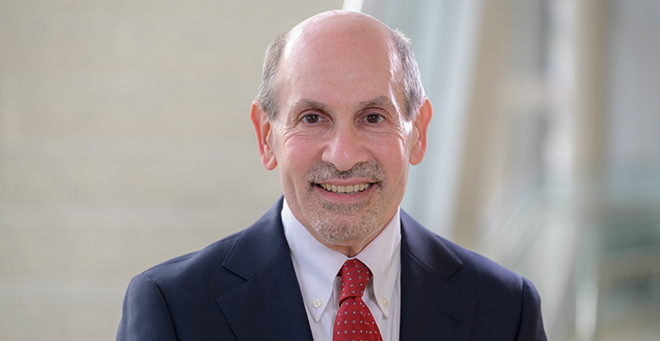

Photo: Faith Ninivaggi
Cannabis use is rising among older adults, fueled by expanded legalization and people increasingly turning to cannabinoid-containing products to manage pain, sleep problems and other chronic issues.
A new study, published in the Journal of General Internal Medicine, led by Jerry H. Gurwitz, MD’83, the Dr. John Meyers Professor of Primary Care Medicine, professor of medicine and a researcher in the Division of Geriatric Medicine and the Division of Health Systems Science, suggests that many of these users are ending up in hospital emergency departments, often for serious adverse effects.
Dr. Gurwitz and colleagues at the Centers for Disease Control and Prevention conducted a national study from 2016 to 2023, analyzing emergency department visits among U.S. adults aged 50 and older that were linked to medical use of cannabinoid-containing products, including medical marijuana, CBD and hemp-derived products.
The estimated number of emergency department visits for adverse events attributed to these products jumped from 4,408 during 2020-2021 to 7,490 during 2022-2023.
“We’re only describing the tip of the iceberg because we only captured ED visits. We’re not including urgent care visits, calls to doctors’ offices or adverse events where the person never sought medical attention,” Gurwitz said.
Why is the trend rising?
Part of what’s driving this surge is access. Medical cannabis is legally available in the majority of states, and cannabis for recreational use is available in nearly half of all states plus the District of Columbia. Gurwitz warned that greater availability doesn’t necessarily equate to safety.
“While these products have become widely available, we don’t always know what’s in them, and they haven’t been adequately evaluated by the FDA,” he said.
The complexity of cannabis makes things even murkier.
“A lot of these products contain multiple active compounds, and often nobody can be certain what’s in them,” he explained.
Gurwitz became interested in the issue when he learned that a relative in her 90s had been using a cannabis product for back pain. “She eventually stopped because of side effects, but it was a real wake-up call for me to realize that many of my own patients had probably been using cannabis, and I just never asked them about it.”
What is the real risk?
Many adults assume cannabis is “natural” and therefore safe. But the study found a troubling spectrum of adverse effects including confusion, psychiatric symptoms (anxiety, paranoia), syncope (fainting), gastrointestinal symptoms, falls and injuries.
“These things are not trivial. In fact, these are precisely the types of potentially preventable events that geriatricians focus on in caring for older patients,” said Dr. Gurwitz.
He also emphasized that older adults are often more sensitive to the effects of many kinds of medications leading to an increased risk of adverse events. “Our study suggests strongly that this is something older patients need to be warned about if they want to use cannabis,” he explained.
Who is using it and why?
According to Gurwitz, recent national survey data indicate that about 12 percent of U.S. adults between ages 50 and 80 report using cannabis. He suggests that many of these older users are seeking alternatives to prescription medications, for example, as an alternative to pain medications or sedatives. But in doing so, some may be placing themselves at risk.
Complicating matters further, his study focused only on legal, medically used products, and not recreational cannabis. “There are a lot of older people using recreational cannabis, and even more concerning, when combined with alcohol, the risks for adverse events may be even greater,’’ he said.
What to ask your doctor and how to stay safer |
|---|
|
If you’re over 50 or caring for someone who is and you’re considering cannabis use, Gurwitz recommends having a clear, honest conversation with your doctor. He suggested asking the following questions:
|
“My general principle as a geriatrician is to prescribe medications only when I know they’re efficacious and where we’re pretty sure that the benefits in a particular patient will outweigh the risks. I can’t say that with any certainty in this case,” he said.
A call to action for clinicians
Gurwitz urged his professional colleagues to make sure to ask about cannabis use with their patients. He said patients should be screened in routine visits, especially for older adults with chronic pain, sleep disturbances or other conditions for which a patient may choose to try these products. And if an older person develops a new symptom, like mental status changes, their physicians should ask about cannabis use. In the care of any older patient, the goal is always to try to avoid preventable morbidity.
Moreover, he said, this research suggests the need for further evaluation of these products by the FDA; more accurate product labeling; and improved patient and health care provider education. “Until we have a better understanding of what’s in these products and how they affect older adults, we need to approach their use with great caution.”