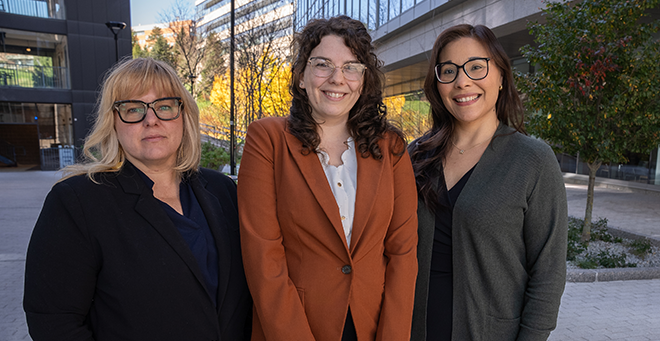


Photo: Pat Sargent
Plans for the environmental justice program at UMass Chan Medical School to raise awareness of the social justice issue and highlight the disproportionate impact of climate change on marginalized communities are moving forward. Listening sessions organized by Tionge Nakazwe, environmental justice intern, were held in October to engage the campus community in conversations on the topic, exploring faculty, staff and students’ definitions of environmental justice and the issues they see as most pressing.
The Diversity and Inclusion Office, the Office of Sustainability and the Lamar Soutter Library secured a $7,500 Catalyst Grant from Second Nature, a climate action advocacy organization in higher education, to host an intern in environmental justice.
Nakazwe researched qualitative methods, developed questions, created promotional materials and organized sessions in which participants shared their perspectives and priorities. Afterward, she analyzed the responses using thematic analysis, identifying common themes and patterns across sessions.
From these discussions, Nakazwe crafted a working definition of environmental justice at UMass Chan.
“Environmental justice to the UMass Chan community means the social and environmental protection and uplifting of local communities disproportionately affected by climate change and discriminatory environmental policy,” she said.
Her analysis revealed several key themes: clean air and energy, community engagement, environmental justice education, health, policy, technology, and waste.
Here are some of the reflections shared by participants during the listening sessions:
- Clean air and energy
Investing in clean energy technology on campus and nationwide is a crucial step to ushering in a cleaner environment for all.
- Community engagement
UMass Chan should be more involved in the community it serves and find ways to implement environmental justice principles in every aspect of the hospital and school. As UMass Chan continues to grow, community consultation should be at the forefront of early planning.
- Environmental justice education
UMass Chan should be a hub for environmental justice education, not just for the campus community, but the whole of Worcester.
- Health
Human health is being affected negatively by climate change and that impact is felt more greatly by people from marginalized communities and/or with pre-existing conditions such as asthma. It is important for medical professionals and students to be educated on these issues to improve patient care.
The impact of environmental burdens such as pollution can have generational impacts on the health of individuals.
- Policy
UMass Chan should use its influence to oppose regressive environmental policy.
Environmental policy should balance its benefits for the average citizen and corporations to promote local investment in sustainability.
- Technology
UMass Chan should consider the social and environmental impacts of technological innovations such as AI as they continue to be implemented.
- Waste
There should be efforts made within every department to reduce waste in their operations.
These insights will guide the development of a comprehensive environmental justice program that supports UMass Chan’s mission to advance health equity and promote community well-being, and help position UMass Chan as a hub for environmental justice research, education and community partnership in socially responsible practices.