

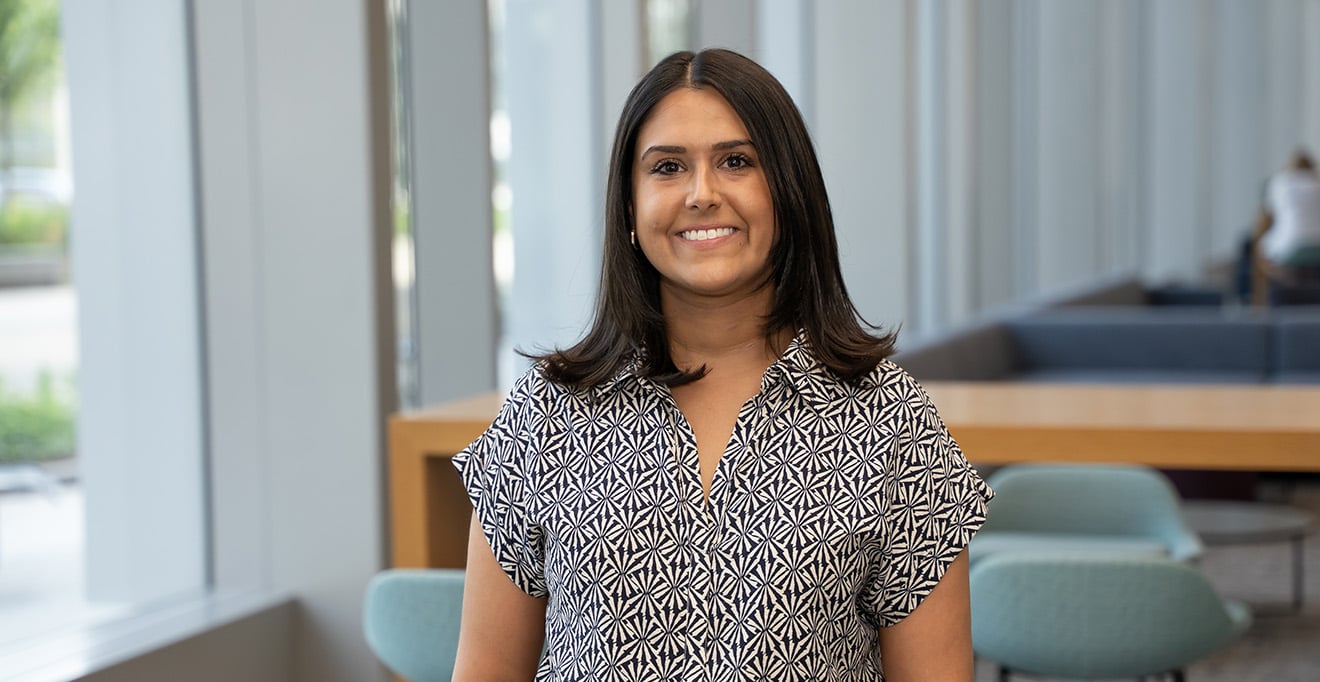
Photo: Bryan Goodchild
Researchers at UMass Chan Medical School are studying whether digital tools for infant feeding, sleep and other early parenting challenges can improve health outcomes and expand access to support for families.
Among them is Nisha Fahey, DO, MSc’21, assistant professor of pediatrics, principal investigator on research that examines how digital health interventions can support families during the critical first year of a child's life. Dr. Fahey has led two pilot studies evaluating virtual lactation support and an artificial intelligence-powered infant sleep application through a collaboration with the Department of Medicine’s Program in Digital Medicine, led by Apurv Soni, MD, PhD’21, assistant professor of medicine and director of the program, who serves as multiprincipal investigator.
As a pediatrician, Fahey hears the same questions from new parents every day: Is my baby feeding enough? Are they sleeping enough? And where can I turn for help when I need it?
“These technologies already exist. Families are accessing them and using them,” said Fahey. “As researchers and healthcare providers, it's our responsibility to understand their impact and think about how they can be integrated into healthcare in a way that is equitable and reaches all families.”
One study examined SimpliFed, a virtual infant-feeding support platform that provides families with on-demand access to certified lactation consultants and feeding specialists. Researchers enrolled 200 pregnant and postpartum individuals through UMass Memorial Health’s obstetrics clinics and followed them through the first year of their infant's life.
The study evaluated infant growth and development, maternal mental health, healthcare utilization and feeding practices. Researchers found that participants who completed three or more visits with SimpliFed provided breast milk for nearly 16 weeks longer than participants who did not use the service.
The findings also highlighted important equity considerations. Uptake was lower among Spanish-speaking families and publicly insured participants, underscoring the need to ensure digital health interventions are accessible to populations that have historically faced barriers to care.
“If health systems are going to deploy these tools broadly, we need to pay special attention to making sure all patients and families can access them,” Fahey said. “The goal is to close gaps in care, not widen them.”
A second pilot study evaluated Huckleberry, a mobile app that allows parents to track infant sleep and uses artificial intelligence to predict optimal nap and bedtime schedules. This study was funded by the NIH grant focused on point-of-care technologies for heart, lung, blood, and sleep disorders.
The study enrolled approximately 80 families with infants under 12 months who are beneficiaries of UMass Memorial’s MassHealth Accountable Care Organization. Participants used the app for three months while researchers tracked engagement and measured infant sleep, parental sleep and parental mental health.
Among families who engaged most actively with the app, infants experienced longer consolidated overnight sleep. Researchers found that infants in the high-engagement group slept approximately 90 minutes longer during their longest stretch of overnight sleep compared with participants who used the app less frequently.
Researchers also found that families in a population often underrepresented in digital health research were willing and able to engage with the technology. About half of participants were classified as highly engaged users, and most reported that they found the app useful and would recommend it to other families.
The studies also revealed some limitations. While many families reported positive experiences, others described challenges associated with tracking data consistently or navigating app features while caring for a young infant.
For Fahey, those findings reinforce the importance of viewing digital health as a complement to, not a replacement of, traditional care.
“Digital technologies offer an on-demand pathway for information and support,” she said. “The goal is to make both digital and in-person care as accessible as possible and empower families to choose what works best for them.”
The research was made possible through collaborations across UMass Chan, including faculty in the Program in Digital Medicine; the Department of Obstetrics & Gynecology; the Department of Psychiatry & Behavioral Sciences; and the Department of Pediatrics.
“Parents are seeking out digital health apps on their own,” Fahey said. “Building evidence around their benefits and understanding their limitations helps us determine whether they can become trusted parts of care in the future.”