
Photo: Bryan Goodchild
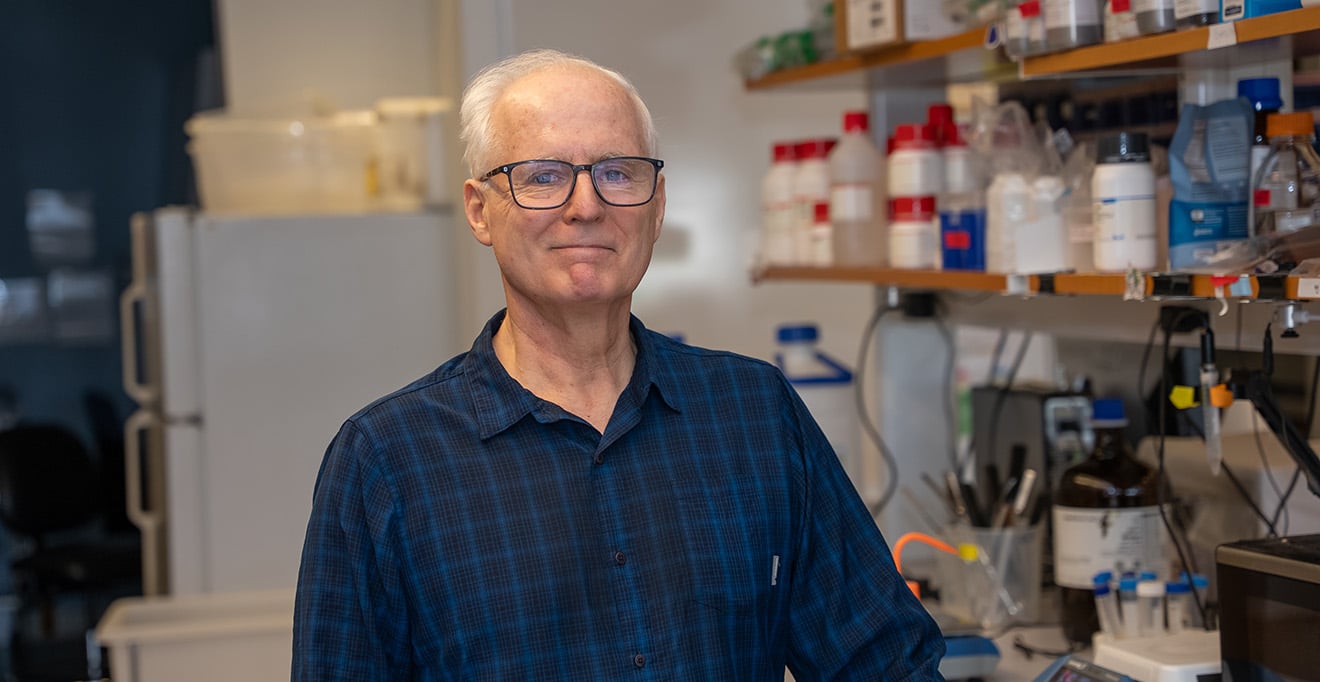
Louis M. Messina, MD, the Johnnie Ray Cox Term Chair in Biomedical Research and professor of surgery, recently received a five-year, $3 million R01 grant from the National Institutes of Health to investigate why aging slows wound healing, particularly in older adults, and develop ways to restore more youthful healing responses.
“Without a doubt, this is the most important work that I’ve ever done,” said Dr. Messina, who has studied this topic for more than 30 years, nearly 20 at UMass Chan Medical School. “At its core, the research is about understanding how aging impairs our immune response. It is central to so many different conditions. We know that immune aging precedes and drives organ aging. So theoretically, understanding the mechanism of immune aging may be a door to reversing organ or person aging.”
Earlier studies by Messina discovered that common risk factors, such as the presence of high levels of “bad” cholesterol in the blood, which is called hypercholesterolemia, and type 2 diabetes, don’t directly change immune cell expression. Instead, they create a specific oxidative stress that changes immune cell gene expressions within the bone marrow that make immune cells, called hematopoietic stem cells. Hypercholesterolemia, a widely recognized risk factor for atherosclerosis, also increases the incidence of colorectal cancer. In a mouse model, hypercholesterolemic mice developed nearly two to three times more tumors than wild-type mice.
The breakthrough finding was that when wild-type mice received hematopoietic stem cells from hypercholesterolemic mice, they also developed two to three times more tumors, even in the absence of hypercholesterolemia. This is consistent with a change in hematopoietic stem cells that impairs their ability to detect and suppress precancerous cells.
Building on this finding, Messina is currently focusing his research on how aging, the most powerful risk factor, impairs the response to tissue injury. Messina theorizes that if aging also induces epigenetic reprogramming of immune cell gene expression within hematopoietic stem cells, it may be possible to directly modify or normalize gene expression in aged mice to improve healing.
Working alongside Thomas Fazzio, PhD, professor of molecular, cell & cancer biology; and Manuel Garber, PhD, professor of genomics & computational biology, Messina previously compared how long it takes for wounds to heal in young versus aged animal models and found that healing takes roughly twice as long in aged models. They found that transplanting hematopoietic stems cells from aged animal models into young animal models causes the young models to heal more slowly, indicating impaired wound healing with age is largely driven by changes in immune cell responses controlled by hematopoietic stem cells.
In addition to his faculty role at UMass Chan, Messina is a vascular surgeon at UMass Memorial Medical Center and a member of the UMass Diabetes Center of Excellence.