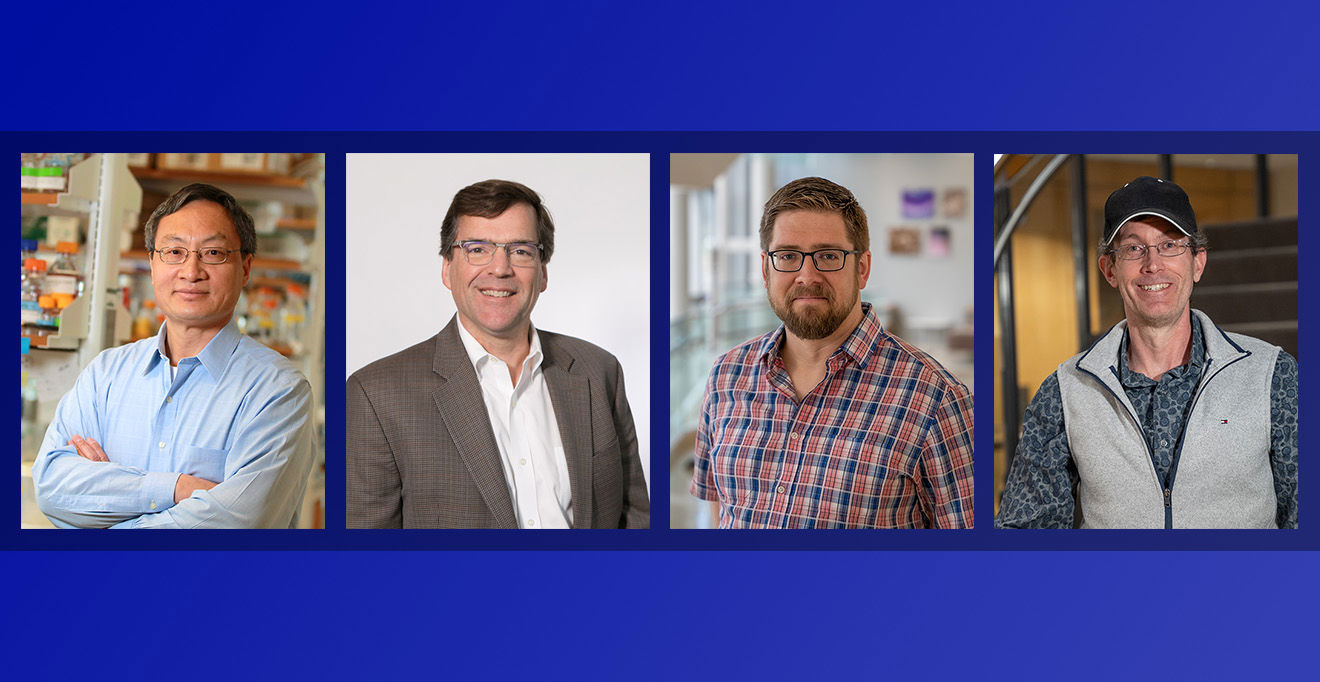
Photo: Bryan Goodchild
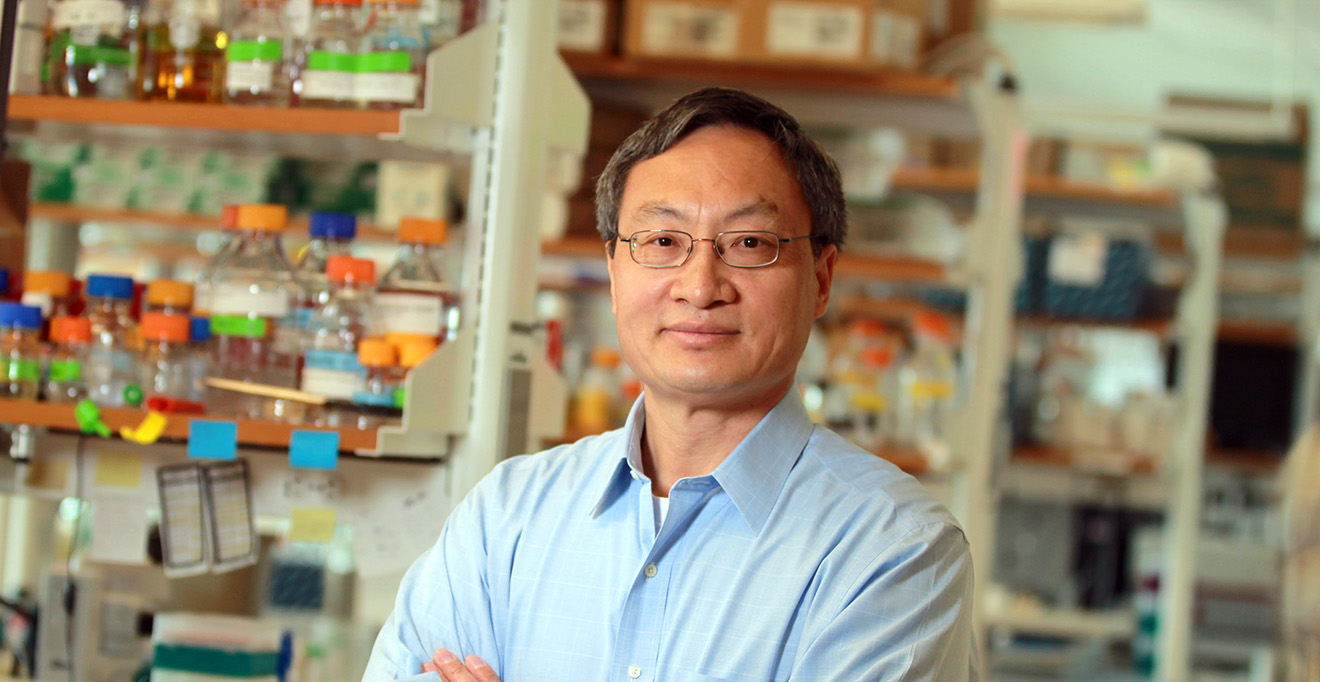
Fen-Biao Gao, PhD, the Governor Paul Cellucci Chair in Neuroscience Research, professor of RNA therapeutics and director of the Frontotemporal Dementia (FTD) Research Center at UMass Chan Medical School, has been named a fellow of the American Association for the Advancement of Science (AAAS).
Dr. Gao was elected for his “distinguished contributions to the field of disease-oriented neuroscience, particularly for advancing our understanding of disease pathogenesis in frontotemporal dementia,” according to the AAAS.
“It’s a great honor to be named among so many highly distinguished scientists,” said Gao. “UMass Chan fosters an amazing collaborative environment for investigators focused on moving basic science from the lab into the clinic. I have the privilege and honor of working alongside some of the best scientists in the world. I receive this recognition, in large part, because of the colleagues and trainees that I have had the opportunity to work with over the years.”
Gao is an influential researcher in FTD, an age-dependent neurodegenerative condition associated with focal atrophy of the frontal or temporal lobes and the most common form of dementia before the age of 60, and in FTD-related disorders such as amyotrophic lateral sclerosis (ALS), another neurodegenerative disease that affects nerve cells in the brain and the spinal cord. His lab began to study FTD caused by a mutation in the gene CHMP2B more than 20 years ago and then generated the first induced pluripotent stem cell (iPSC) models of FTD with Granulin mutations and FTD/ALS with C9ORF72 mutations.
Since joining UMass Chan in 2010, Gao’s lab has elucidated some molecular mechanisms underlying neurodegeneration in both FTD and ALS. His research employs a combination of molecular, cellular, genetic and behavioral approaches to dissect pathogenic mechanisms of both disorders. Using Drosophila, mouse models and patient-specific iPSCs, his lab has revealed several key underlying pathogenic pathways as potential targets for therapeutic interventions.
A graduate of Peking University and Tsinghua University, Gao received his PhD in genetics from Duke University in 1995, where he studied neuronal RNA-binding proteins. After postdoctoral trainings at the University College London and the University of California San Francisco (UCSF), he established his own lab at the Gladstone Institute of Neurological Disease at UCSF in 2000 and was promoted to associate professor in 2006.
In 2017, Gao was named the inaugural Governor Paul Cellucci Chair in Neuroscience Research at UMass Chan. In 2018, he was one of eight neuroscientists who received a prestigious Javits Neuroscience Investigator Award, a seven-year, $4.16 million grant from the National Institute of Neurological Disorders and Stroke (NINDS), to advance understanding of molecular pathogenic mechanisms in FTD and ALS. Having co-organized several international meetings, Gao served as a founding chair for the Gordon Research Conference on Frontotemporal Dementia and Related Rare Dementias in February 2026. He was previously a Sloan Research Fellow in Neuroscience and a Klingenstein Fellow in Neuroscience and a received a McKnight Neuroscience of Brain Disorders Award.
Last year, Gao and three world-renowned gene editing scientists at UMass Chan received a $6.6 million grant from the NINDS to evaluate potential gene editing technologies to correct Granulin mutations, one of the major genetic causes of FTD, with the hope that one will potentially advance to a clinical trial. Last month, Gao successfully renewed his $3.3 million grant from the NINDS to further investigate pathogenic mechanisms common to different forms of familial and sporadic FTD and ALS.
Gao is among nearly 500 AAAS scientists, engineers and inventors elected this year. New fellows have been invited to the annual Fellows Forum, which will be held in Washington, D.C. in May.
AAAS was founded in 1848 and includes nearly 250 affiliated societies and academies of science, serving 10 million individuals. The tradition of electing AAAS fellows began in 1874 and is among the most distinguished honors in the scientific community.