Search Close Search
Search Close Search
Page Menu

Grants, Honors, Awards & Recognitions

  • Nov 21, 2025

    MCCB students lead in science communication at UMass Chan’s 2025 3MT event

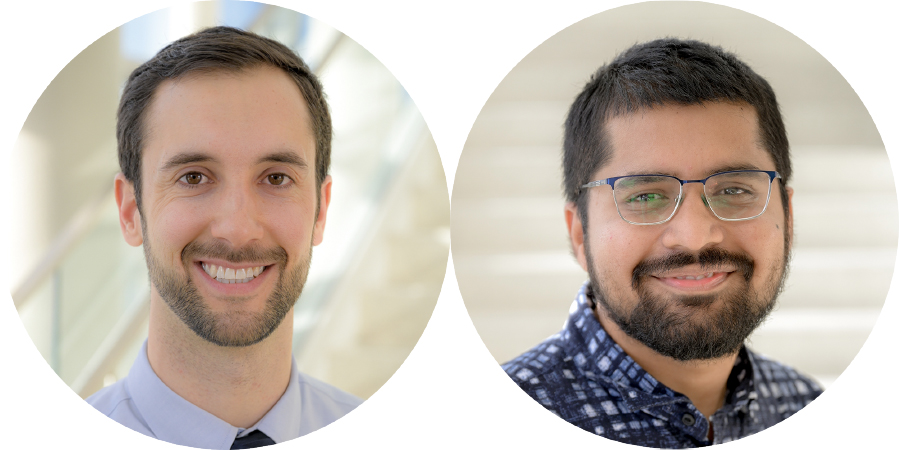
    Headshots of Michael Lero and Chaitanya ParikhCongratulations to MCCB students Michael Lero and Chaitanya Parikh for taking top honors at the UMass Chan Morningside GSBS Three Minute Thesis Competition!

    Founded by the University of Queensland, Australia, the 3MT event has grown to include more than 900 universities worldwide. This is the second year UMass Chan has hosted the event.

    What’s involved? PhD students are challenged to present their dissertation research—geared toward a non-specialist audience—in three minutes or less, using only a single static slide. To enter the competition, students submitted a pre-recorded video for an initial round of judging. Finalists were then selected to advance to the final live round and received feedback to help refine their presentations. At the finals, presentations were evaluated by a panel of judges on two criteria: comprehension and content, and engagement and communication.

    Michael, a student in the Shaw Lab, was awarded First Prize for his talk “Making Treatment for Aggressive Breast Cancer More Effective.” In his presentation, he outlined a promising strategy to make PI3K-targeted chemotherapies more effective, potentially allowing the drugs to be given at a lower dose to minimize harmful side effects. Michael received $1,000 and a chance to compete at a regional 3MT competition in the spring.

    Chaitanya, a student in the Ruscetti Lab, captured the audience’s vote for the People’s Choice Award for his talk “Rewriting Cancer’s Code: Using mRNA to Unmask Pancreatic Cancer.” In his talk he discussed how his mRNA-based approach has dramatically improved survival in mouse model of pancreatic cancer. His presentation earned him a $750 award.

    Congratulations once again to both students for their outstanding work and compelling research storytelling!

    Learn more about the event by visiting UMass Chan’s posts on LinkedIn and Instagram.

  • Nov 7, 2025

    Heidi Tissenbaum featured on the Longevity Roadmap podcast

    Headshot of Heidi Tissenbaum, PhDHeidi Tissenbaum, PhD, recently appeared on Longevity Roadmap, a podcast hosted by Dr. Buck Joffrey, MD, that features conversations with leading scientists in the field of aging research.

    In the episode, “Molecular Secrets of Aging Told Through Worms,” Dr. Tissenbaum discusses why the tiny nematode Caenorhabditis elegans is such a powerful model organism for studying longevity, and how seminal research in C. elegans uncovered an evolutionarily conserved biological pathway—the insulin/IGF-1 signaling pathway—that ultimately led to the identification of a key gene associated with human longevity. She also emphasizes the importance of measuring healthspan (healthy aging), not just lifespan, and shares her perspective as a basic scientist on the future of aging research.

    Listen to the episode of Longevity Roadmap on Spotify or Apple Podcast to hear more about Dr. Tissenbaum’s insights into the science of aging.

  • Oct 31, 2025

    Craig Ceol receives grant to investigate treatment for immunotherapy-resistant melanoma

    Headshot of Craig Ceol, PhDCraig Ceol, PhD, has received a two-year Established Investigator Award from the Melanoma Research Foundation to investigate inhibiting ligand-driven bone morphogenetic protein (BMP) signaling to overcome immunotherapy resistance.

    This work builds on previous findings from the Ceol Lab identifying GDF6, a BMP ligand, as a melanoma oncoprotein. GDF6 is highly expressed in 75–80% of melanomas and drives tumor formation by suppressing cell differentiation and apoptosis. Blocking GDF6 disrupts BMP signaling, causing melanoma cells to differentiate and die, highlighting its potential as a therapeutic target. Importantly, GDF6 is not expressed in normal melanocytes or in adult tissues, making it a selective and attractive target for treatment.

    The proposed research aims to determine whether targeting GDF6 could provide an effective therapy for immunotherapy-resistant melanoma, a persistent and major clinical challenge. To advance this work, Dr. Ceol is collaborating with Michael Brehm, PhD, Professor of Molecular Medicine and Co-Director of the UMass Chan Humanized Mouse Core. Together, they will investigate whether therapeutic monoclonal antibodies targeting GDF6, developed by the Ceol Lab in partnership with MassBiologics, can both directly attack immunotherapy-resistant tumor cells and enhance the effectiveness of existing immunotherapies. If successful, this two-pronged approach could deliver a powerful new treatment for patients with immunotherapy-resistant melanoma.

  • Oct 7, 2025

    New research from the Lodato Lab featured in The Scientist

    Headshot of Michael LodatoGroundbreaking work from the laboratory of Michael Lodato, PhD, has been spotlighted in The Scientist. The article highlights Lodato’s recent study, published in Nature, that offers new insights into the genomic and transcriptomic changes that occur in the human brain during the normal aging process. The study, conducted in collaboration with UMass Chan researcher and computational biologist Zhiping Weng, PhD, sheds light on how these changes may impact neuron function and cognitive health, even in the absence of disease.

    Read the story in The Scientist.

  • Oct 1, 2025

    Cantor Lab uncovers new vulnerability in BRCA1-deficient cancers

    Headshot of Sharon CantorNew research from the lab of Sharon Cantor, PhD, has identified a targetable vulnerability in BRCA1-deficient cells—a finding with potential implications for the treatment of inherited breast and ovarian cancers.

    The study builds upon the lab’s prior work demonstrating that single-stranded DNA replication gaps, rather than double-stranded DNA breaks, are the key cytotoxic lesions underlying BRCA1 deficiency. In their latest findings, published in Molecular Cell, Cantor’s group shows that these single-stranded gaps are enriched for RAD51, a DNA-binding protein involved in genome maintenance, and that RAD51 plays an essential protective function at these sites—rendering BRCA1-deficient cells dependent on RAD51 to prevent catastrophic genome instability. Importantly, pharmacological inhibition of RAD51 selectively reduces survival of BRCA1-deficient cells but not BRCA1-proficient cells, highlighting a vulnerability that can be exploited for therapeutic benefit.

    Read more about the study here

  • Sep 3, 2025

    New research from the Lodato Lab maps changes in the aging human brain, cell by cell

    Headshot of Michael LodatoA new study from the lab of Michael Lodato, PhD, published in Nature, sheds light on the molecular changes that occur in the human brain during the normal aging process at an extraordinary level of detail.

    For the study, the Lodato lab obtained brain samples (specifically, prefrontal cortex) from 19 human donors, ranging in age from 0.4 to 104 years, from the National Institutes of Health NeuroBioBank repository. Using a trifecta of single-cell analysis technologies—single-nucleus RNA-sequencing, single-cell whole genome sequencing, and spatial transcriptomics—they generated a comprehensive catalog of age-related, cell-type specific changes in the transcriptomic and genomic landscape, creating an unprecedented map of the transformations that occur in the human brain across the lifespan.

    The study identified cell clusters specifically in the infant brain that are enriched for the expression of neurodevelopmental genes, consistent with the idea that brain development continues after birth. They also found, unexpectedly, that expression of neuron-specific genes remains unchanged throughout life. However, they observed widespread downregulation of certain housekeeping genes during aging, with short, highly expressed housekeeping genes exhibiting high mutation rates, suggesting that a combination of gene length, gene function, and genome damage shapes the transcriptome of the aging brain.

    Read the full article in Nature.

1-6  of  40  items
of 7