

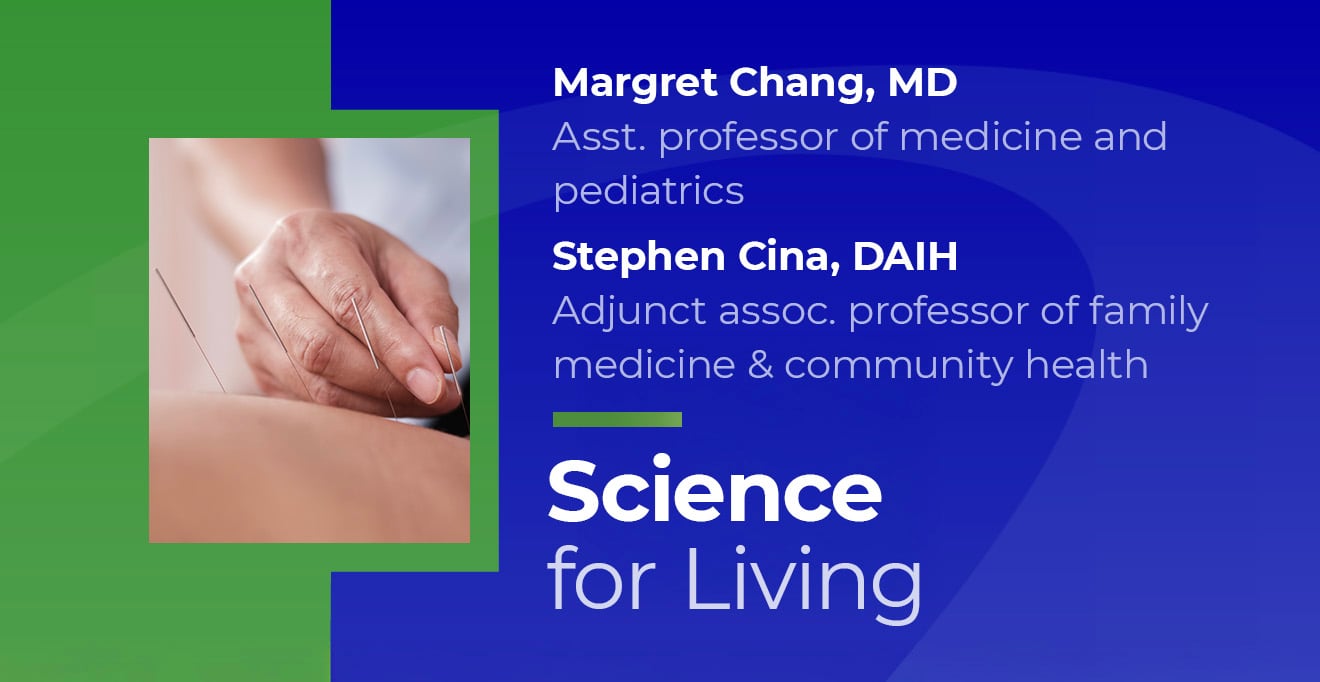
Photo: Shutterstock
A growing body of scientific evidence is helping explain how the centuries-old practice of acupuncture works.
At UMass Chan Medical School, researchers are studying the biological mechanisms underlying the treatment.
“We’ve seen an explosion in research over the last decade,” said Margret Chang, MD, assistant professor of medicine and pediatrics. “We’re now able to capture changes that occur from the moment a needle enters the skin all the way to how the brain processes pain.”
Understanding chronic pain
Chronic pain affects millions of Americans and often involves changes throughout the nervous system, said Dr. Chang.
“Patients with chronic pain rarely look the same,” she said. “Pain often overlaps with mental health concerns, sleep problems and other medical conditions, so there’s no single treatment that works for everyone.”
While medications may help reduce inflammation or calm irritated nerves, they don’t always address the changes that occur in the brain as chronic pain persists, Chang said, and that’s where acupuncture may provide some relief.
It is increasingly being used alongside medications, physical therapy and behavioral health services as part of a comprehensive approach to pain management, she said.
Research into acupuncture
According to UMass Chan researchers, studies suggest acupuncture may reduce inflammation at the site of treatment, trigger the release of naturally occurring pain-relieving chemicals, activate pathways that help regulate the body’s inflammatory response and change how the brain processes pain signals.
“There isn’t one pain center in the brain,” explained Stephen Cina, DAIH, adjunct associate professor of family medicine & community health and acupuncture coordinator at UMass Memorial Health. “Pain is influenced by many different regions involved in emotion, memory and sensory processing. Acupuncture appears to help the brain process those signals differently, essentially turning down the volume of pain.”
Advanced imaging techniques, including functional MRI, have allowed researchers to observe changes in brain activity following acupuncture treatment, providing new insight into why some patients experience lasting relief.
Although acupuncture is best known for treating chronic back and neck pain, evidence now supports its use for a growing list of conditions, Dr. Cina said.
Research has demonstrated benefits for knee osteoarthritis, migraines, cancer-related fatigue, menopausal symptoms, and post-operative nausea and vomiting, according to Cina. Scientists are also investigating its role in treating fibromyalgia, digestive disorders, post-traumatic stress disorder and other chronic conditions, as well as in stroke rehabilitation.
A role in the opioid era
As healthcare systems seek safer ways to manage chronic pain, acupuncture is gaining attention as one tool that may help reduce reliance on opioid medications.
This comes at a time when opioid-related overdose deaths in the U.S. are beginning to show signs of improvement in some regions. According to the Massachusetts Department of Public Health, opioid-related fatalities in the commonwealth fell below 1,000 in 2025 for the first time in more than a decade, down from a peak of more than 2,300 in 2022.
Chang, who also serves as medical director of the Office Based Addiction Treatment Program at Tri-River Family Health Center, said acupuncture has the potential to become an increasingly important part of pain and addiction care.
“We simply don’t have enough effective tools for chronic pain,” she said. “Learning acupuncture gave me another way to help patients who had exhausted many traditional treatment options.”
What does the future hold for acupuncture?
Chang and Cina said the future of acupuncture lies in integrative medicine, combining conventional medical care with complementary therapies supported by evidence.
“Patients are looking for options,” said Cina. “As the science continues to evolve, we’re seeing acupuncture become another important piece of the puzzle for helping people live with less pain and better quality of life.”