

Photo: Bryan Goodchild
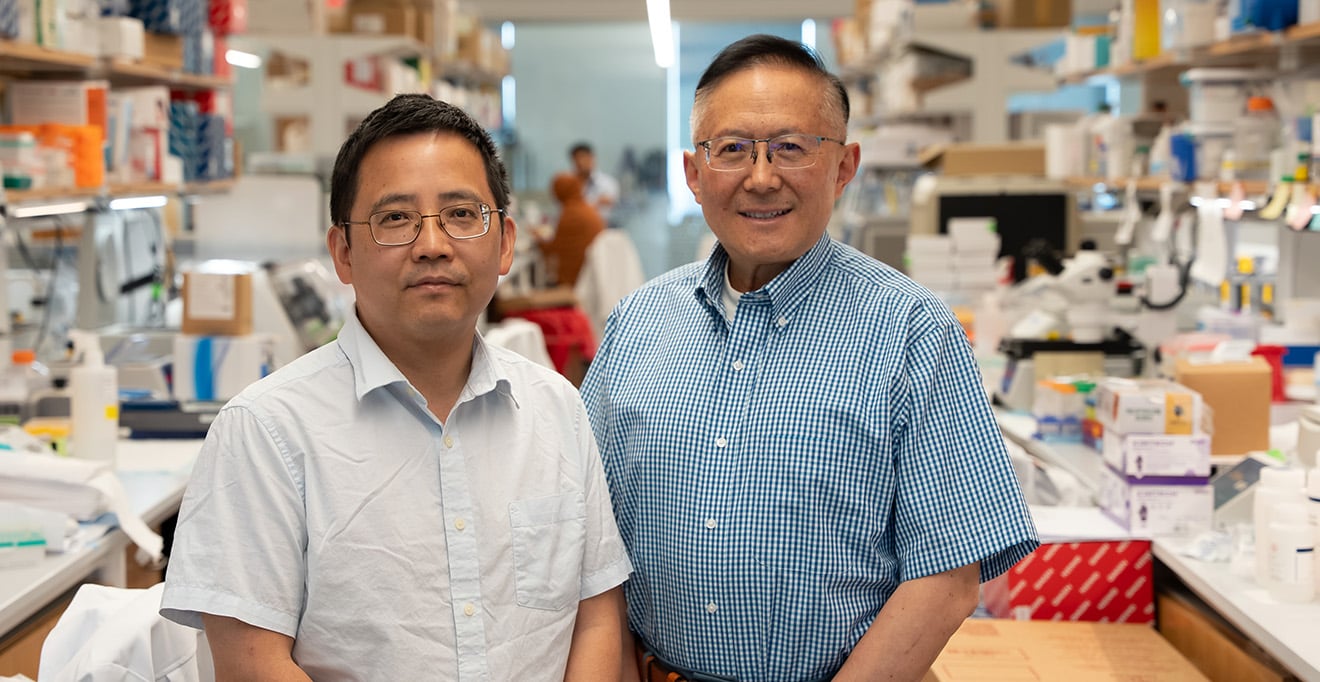
A single IV injection of a microRNA-based biologic developed by Guangping Gao, PhD; Robert H. Brown Jr., DPhil, MD; Jun Xie, PhD; and Zuoshang Xu, MD, PhD, suppressed production of the mutant SOD1 protein that causes amyotrophic lateral sclerosis (ALS); delayed disease onset by 60 days; and extended lifespan by 100 days, more than triple the average survival time, in mice models of the disease.
The gene therapy, delivered via adeno-associated virus (AAV) vector, preserved motor neurons and maintained neuromuscular connections in treated animals, which translated into improved muscle and respiratory function, motor performance, and lifespan in pre-clinical studies. These findings, published in Nature Communications, have the potential for clinical application in patients with SOD1-caused ALS, as well as other neurodegenerative diseases caused by toxic, gain-of-function gene mutations.
“These therapeutic benefits, from a single IV injection, are unprecedented among gene therapy approaches in this mouse model,” said Dr. Gao, the Penelope Booth Rockwell Chair in Biomedical Research, chair and professor of genetic & cellular medicine, and director of the Horae Gene Therapy Center and the Li Weibo Institute for Rare Diseases Research. “No other studies have been able to achieve this kind of survival extension. This makes us very optimistic that our approach could have a meaningful impact for patients suffering from this horrible disease and warrants further clinical evaluation.”
ALS is a fatal neurodegenerative disorder characterized by loss of motor neurons, leading to muscle weakness and eventual paralysis. Most patients face mortality within five years of disease onset due to respiratory failure.
More than 40 genetic mutations have been shown to cause ALS, which can be either sporadic cases in which there is no family history of the disease; or familial, when a genetic mutation is inherited from the parents. Approximately 10 percent of ALS cases have a known genetic driver. Mutations to the SOD1 gene, which was first identified in 1993 by study Dr. Brown, the Donna M. and Robert J. Manning Chair in Neuroscience and professor of neurology, are believed to account for 10 to 20 percent of inherited forms of the disease.
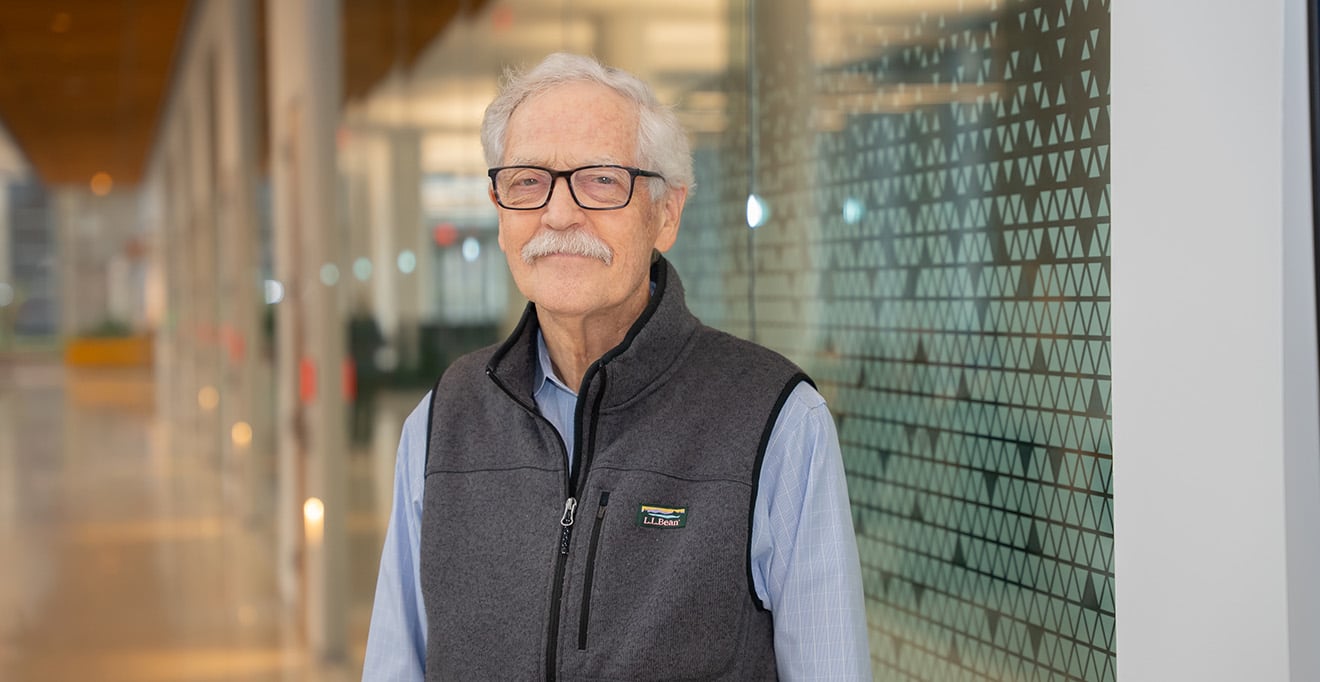
Photo: Bryan Goodchild
“These results are very encouraging,” said Brown. “This study provides a proof-of-concept that a single infusion in the arm of a microRNA therapeutic can effectively and safely suppresses mutant SOD1 levels in mice, while conferring observable benefits and improved survival rates,” said Brown. “Our findings strongly encourage further exploration for clinical benefit.”
Key to the current study’s findings is a substantially improved design of the biologic used to potentially treat the disease that can be delivered via a single IV infusion, according to Dr. Xie, associate professor of genetic & cellular medicine. “This is the culmination of years of research; refinement of the viral vector; and understanding the fundamental biology of AAV gene therapies,” he said.
Therapeutic strategies aimed at suppressing production of the mutation SOD1 protein have been tried using a range of different technologies including short hairpin RNAs (shRNA), and artificial microRNAs (amiR), which can be delivered via AAV. However, it’s been observed that shRNAs and amiRs also have a negative impact on the AAV manufacturing process, causing errors in the viral vector that can impact production consistency and efficiency, which ultimately limits therapeutic efficacy and hinders the development of the AAV strategies. Meanwhile, other treatment strategies such as antisense oligonucleotides (ASOs), which are currently in clinical trials, require repeated intrathecal injections delivered to the spinal canal via lumber puncture.
To solve this problem, a team of scientists embedded an artificial SOD1 microRNA (amiR-SOD1) within the scaffold of the cholesterol miRNA, miR-33. Because of its stem and loop structure, this miRNA avoids many of the manufacturing challenges that hinder other potential gene silencing strategies, thereby improving both efficiency and efficacy of the drug.
“This study demonstrates the potential for AAV-delivered mutant SOD1 silencing as a complementary treatment with the current clinical ASO therapy,” said Dr. Xu, professor of biochemistry & molecular biotechnology. “If proven to be as powerful a treatment in clinical trials as it is in the mouse model, it offers a once-and-done alternative to ASO treatment, which must be delivered repeatedly by invasive injections.
“A great advantage of AAV-delivered gene silencing could be that it can be implemented simultaneously or sequentially with ASO therapy, either as an alternative to those who cannot tolerate ASO, or to improve further the clinical outcomes,” said Xu.
The next step for clinical development includes a pre-investigational new drug meeting between the researchers and the Food and Drug Administration.