
At a glance |
|---|
|
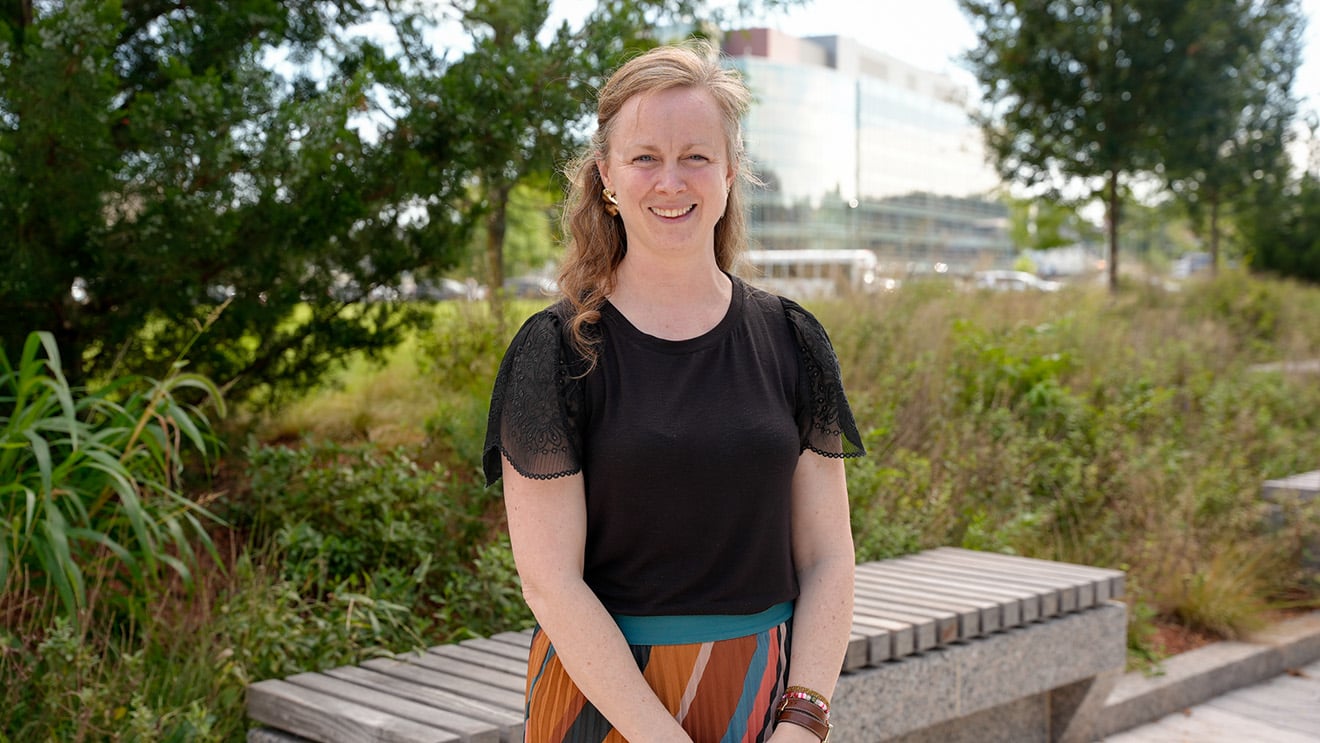
Photo: Hallie Leo
A UMass Chan Medical School research program is helping autistic adults navigate the challenges of dating through personalized coaching designed to help them build confidence, improve communication skills and pursue opportunities for romantic relationships.
“Let’s Make a Match,” a program at the Eunice Kennedy Shriver Center developed by Eileen Crehan, PhD, associate professor of pediatrics, and collaborators, combines in-person dating events with individualized coaching.
“People with disabilities want relationships,” Dr. Crehan said. “They want connection. They want to have the same opportunities as everyone else.”
The idea grew from Crehan’s clinical work with autistic teens and adults, where questions about relationships frequently arose. Her interest in healthy relationships and sexuality education led her to adapt sex education curricula for autistic teens and provide education for families and professionals.
The project took shape after Crehan connected with Liz Fahey, a former UMass Chan Leadership Education in Neurodevelopmental and Related Disabilities fellow and mother of an adult son with a disability. Fahey had developed a project focused on expanding dating opportunities for people with disabilities and approached Crehan about bringing the idea to life. Through Fahey’s connection with Work Inc., a disability services organization in Dorchester, the team organized its first dating event, which resulted in a successful match between two participants.
That initial success also highlighted the need for ongoing support beyond the event itself, leading the team to incorporate individualized dating coaching and to develop a research study examining how a dating coach shapes the dating experiences of adults with disabilities.
More than a dating event
What sets Let’s Make a Match apart is what happens after participants meet.
The program pairs participants with a dating coach who provides individualized support.
Coaches begin by learning about each participant’s goals, preferred communication style and comfort level. Coaches meet with them about once a week for a half hour, helping with everything from drafting a text message to preparing for a date or figuring out what comes next in a developing relationship.
“It’s supposed to be really tailored,” Crehan said.
The support can be highly practical. If a participant likes someone but is unsure how to communicate that interest, a coach can help brainstorm specific things they could say or do.
Dating coaches have even accompanied some participants on dates, remaining in the background to provide reassurance when anxiety is particularly high.
“Many folks have a coach when they go to work or something,” Crehan said. “That’s the same exact thing.”
The goal, she said, is to recognize romantic relationships as an important part of adult life.
Demand has outpaced capacity
The response to the program has been robust. More than 350 people have expressed interest in participating as daters, while more than 60 have expressed interest in becoming dating coaches.
There are more potential participants than the program currently has the capacity to serve.
“This is a good problem to have, but it’s a problem,” Crehan said.
The program received a pilot grant from the Bailey Foundation for Autism to develop its dating coach training program, including a training manual. Additional funding would allow the team to train and supervise more coaches and serve more participants.
Creating opportunities for connection
The program also aims to address a fundamental challenge: meeting new people.
At the end of each in-person event, participants can indicate whether they are interested in dating someone, becoming friends or not pursuing a connection. The research team identifies mutual interests and shares contact information when two people express interest.
Every participant who has indicated an interest in making a friend so far has had at least one friendship match.
“That, I think, highlights that people are lonely,” Crehan said.
Events are also intentionally structured to introduce participants to people outside their existing social circles. When an event is hosted by a particular service provider, the team aims to have no more than about one-third of participants come from that same program.
“Meeting new people can be really hard if you’re living a very routine-oriented life, or you’re only in your day program or your job,” Crehan said. “The whole idea is to introduce new faces.”
Measuring the impact
The research team is also examining changes in anxiety and depression, social engagement and participants’ perceptions of whether having a dating coach was helpful.
Dating coaches document their sessions, allowing researchers to examine what types of support participants receive and how the coaching component functions.
Success does not necessarily mean a relationship lasts.
“We’ve had some people break up already, and that’s also fine,” Crehan said. “That’s part of dating.”
The long-term goal is to explore ways to expand the model to adults with a broader range of disabilities. Crehan and her collaborators are part of a statewide coalition that includes self-advocates, service providers and members of the Massachusetts Department of Developmental Services, which is exploring approaches to making dating support more widely available. The team hopes that demonstrating positive outcomes could help establish dating and relationship coaching as a recognized support service, similar to other clinical or behavioral services such as job coaching or speech therapy. This could help lay the groundwork for making the service more widely available in the future.
“If we’re able to show that we have these outcomes with enough people, then we could really advocate for the creation of this code, and then the system could sort of just live,” Crehan said. “We could keep training the coaches.”