
At a glance |
|---|
|
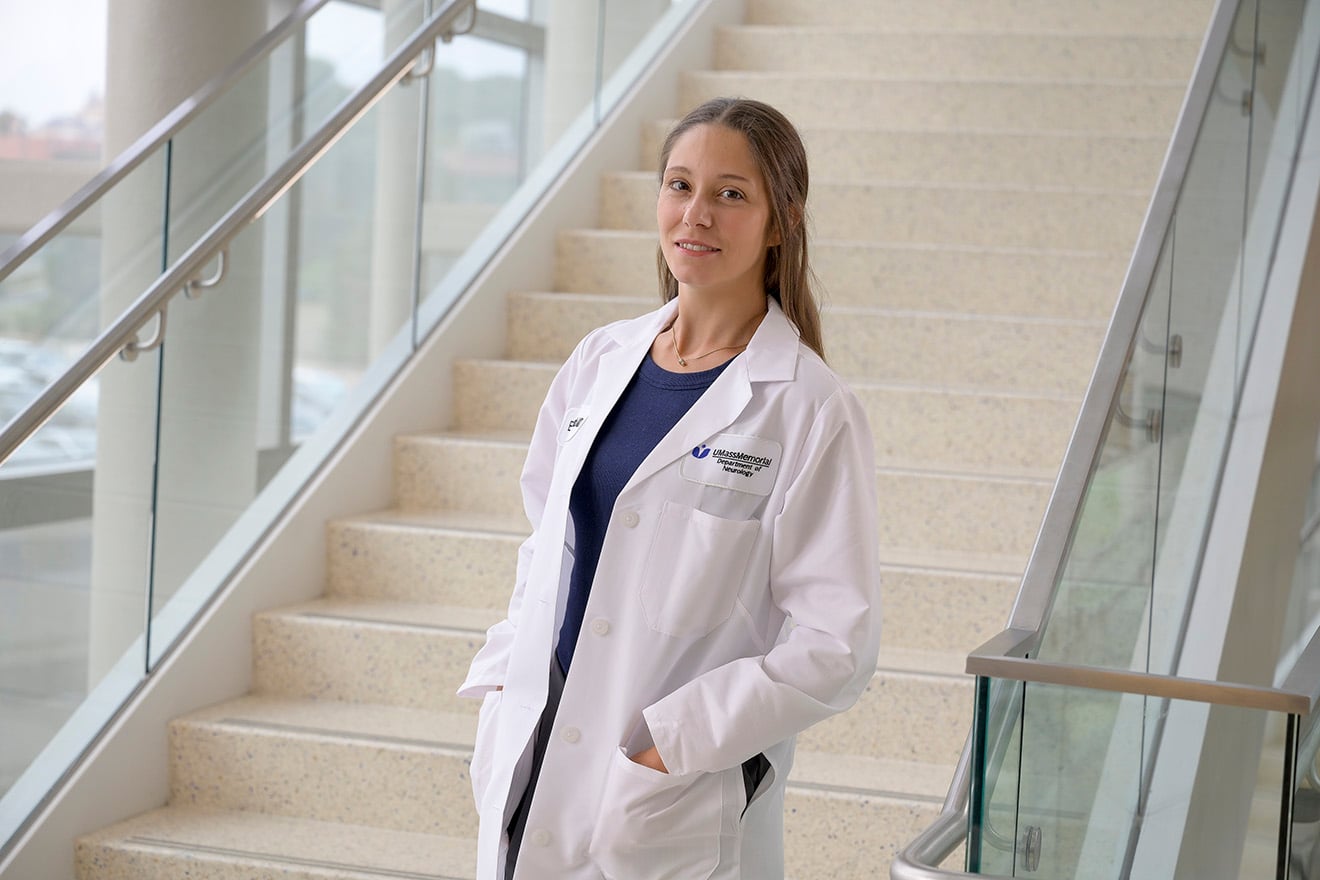
Photo: Faith Ninivaggi
Scientists from UMass Chan Medical School and Mass General Brigham received authorization from the U.S. Food and Drug Administration (FDA) to proceed with a Phase I/II safety and efficacy clinical trial of a gene therapy treatment for Mucolipidosis Type IV (MLIV), a devasting, ultra-rare, lysosomal storage disorder.
The Phase I/II clinical trial will evaluate an AAV-based gene therapy designed to treat MLIV by delivering a functional copy of the MCOLN1 gene directly into the cerebrospinal fluid. The trial will be conducted at UMass Chan and is led by Elenora D’Ambrosio, MD, assistant professor of neurology at UMass Chan, and Amanda Nagy, MD, pediatric neurologist at Mass General Brigham. Oguz Cataltepe, MD, professor of neurological surgery at UMass Chan, who pioneered an intracranial surgical technique for delivery of AAV gene therapy to the brain, will be lead neurosurgeon on the trial.
“Translational science is about taking discoveries from the laboratory to the clinic,” said Dr. D’Ambrosio. “Our goal at UMass Chan’s Translational Institute for Molecular Therapeutics is to turn advances in gene therapy into safe, effective treatments for patients and their families.”
What is MLIV?
MLIV is caused by mutations in the MCOLN1 gene, which encodes the transient receptor potential mucolipin-1 (TRPML1) protein. TRPML1 is located on lysosomes, the cell’s recycling centers, where it helps regulate the breakdown and recycling of cellular materials. In the absence of functional TRPML1, lysosomes accumulate waste products and become unable to perform their normal recycling functions. The nervous system is particularly vulnerable to this dysfunction, leading to impaired myelin development in the brain and progressive degeneration of the retina, which contribute to the severe neurological and vision loss experienced by individuals with MLIV.
The disease is typically diagnosed during the first year of life and is characterized by delayed psychomotor development, progressive vision loss and neurological issues. Most affected individuals do not learn to walk or talk and typically reach a maximum development age of 18 to 24 months, though many live into adulthood.
Treatments for MLIV do not exist. Disease management is limited to supportive therapies, such as physical and occupational therapy, speech therapy and ophthalmological care, aimed at improving quality of life but do not alter the underlying neurodegenerative trajectory of the disease.
The long road to a gene therapy
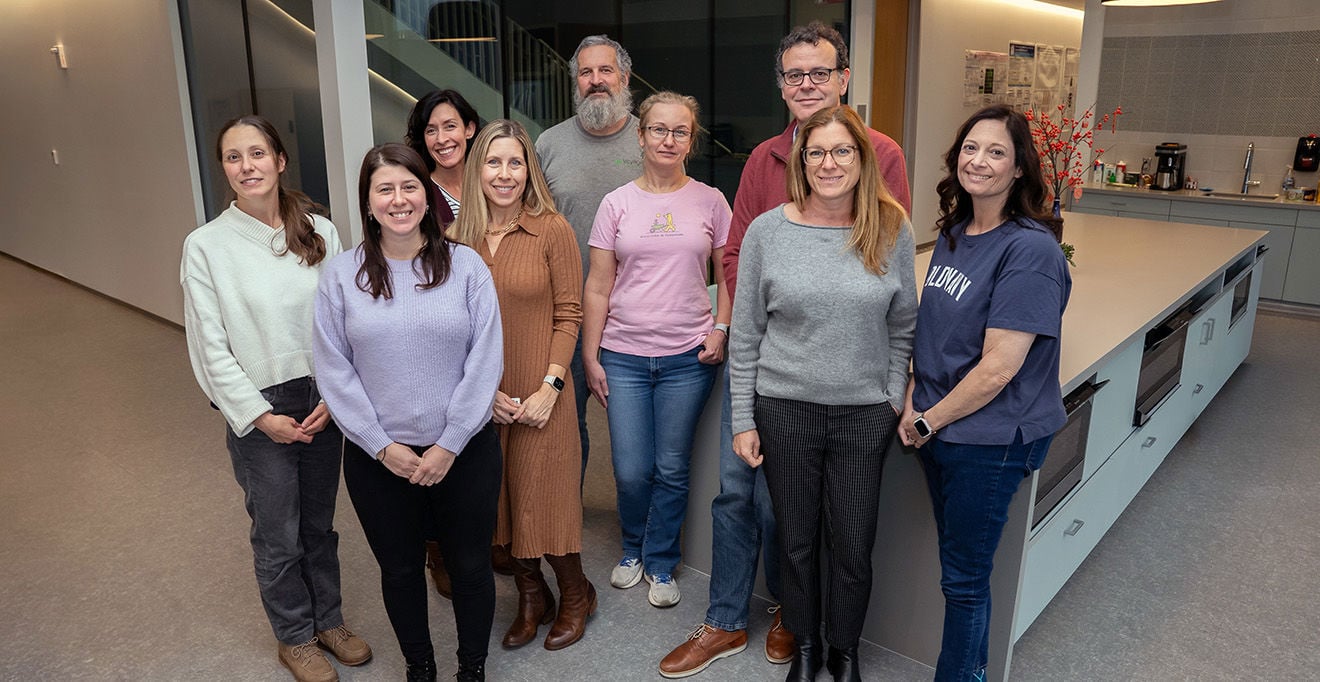
Founded in 2022, the Translational Institute for Molecular Therapeutics (TiMT) leverages UMass Chan’s extensive experience in researching and developing gene therapies for early-stage clinical trials and includes infrastructure to assist investigators with manufacturing, regulatory matters and investigational new drug-enabling studies needed to conduct first-in-human clinical trials.
“This is an important milestone for our team of researchers, clinicians, funders and patient advocates,” said Miguel Sena-Esteves, PhD, associate professor of genetic & cellular medicine at UMass Chan and director of the TiMT. “This moment is the culmination of two decades of research, collaboration and fortitude. We are energized to take this next step toward evaluating this investigational gene therapy in a clinical trial.”
The trial builds on decades of research. Susan A. Slaugenhaupt, PhD, professor of neurology at Mass General Brigham and Harvard Medical School, led one of the teams that first discovered the genetic cause of MLIV in 2000 and went on to develop the first animal model of MLIV. Yulia Grishchuk, PhD, assistant professor at Mass General Brigham and Harvard Medical School, developed the AAV gene therapy vector and led the initial proof-of-concept studies.
Dr. Slaugenhaupt said, “I have worked with the MLIV Foundation for nearly 30 years, and I’m thrilled to see that our early foundational work has led to a breakthrough for MLIV patients.”
Patricia Musolino, MD/PhD, associate professor of neurology at Mass General Brigham and Harvard Medical School, has led the MLIV natural history study since 2023, generating critical longitudinal data that defined the disease trajectory and clinical manifestations of MLIV. These findings, which are built on the initial work of Albert Misko, MD, former pediatric neurologist at Mass General Brigham and now director of translation medicine at Novartis, have been instrumental in developing and validating clinical rating scales that will serve as key outcome measures in the upcoming clinical trial.
Heather Gray-Edwards, DVM, PhD, associate professor of genetic & cellular medicine and associate director of the TiMT at UMass Chan, and Dr. Sena-Esteves, led the preclinical efficacy and translational studies, including additional work requested by the FDA that ultimately supported approval of the investigational new drug application and initiation of the Phase I/II clinical trial.
“This first interventional clinical trial marks a historic milestone for the MLIV community,” said Dr. Grishchuk. “It represents years of scientific progress driven by an extraordinary partnership among families living with MLIV, patient advocates, clinicians, researchers and funding partners. This milestone gives us hope that we are moving closer to meaningful therapies for individuals affected by this devastating disease.”
Dr. Gray-Edwards added, “This is an exciting moment for the TiMT and MLIV community, we are grateful to them for trusting UMass Chan with the development and this gene therapy.”
“Today is a momentous day in the history of MLIV,” said Randy S. Gold, president of the Mucolipidosis Type IV Foundation board of trustees. “So many people worked tirelessly to bring this opportunity to fruition, it is difficult to express the gratitude, awe and excitement we are all feeling right now.”