
Q&A with Allana Schooley
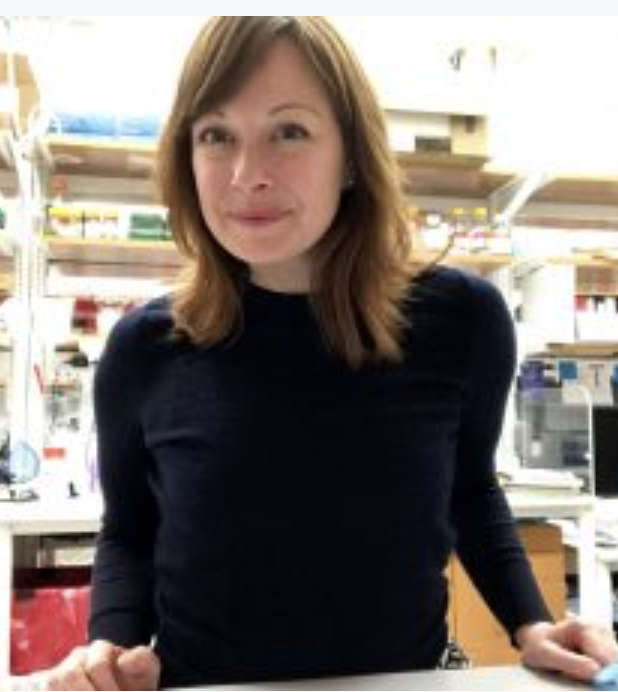
Allan Schooley is a postdoctoral fellow in Job Dekker’s Lab.
Tell us a little bit about yourself. Where are you from? Tell us about your journey to your current position and what motivated you to become a scientist.
I grew up in a big family just outside of Ottawa Canada. I have always had a tendency to become obsessed with a particular topic and my parents had an amazing way to ardently support any idea or direction. I went to an arts high school, danced in a youth ballet company, and for many years had every intention of pursuing dance or choreography. With better feet I might not have decided to study biochemistry in University.
I was interested in a wide range of topics during my undergrad and did not lean towards biology until I learned about the experimental side: Basic techniques like DNase footprinting or yeast two hybrid assays that were invented to answer foundational questions about chromatin and protein-protein interactions, for example. That was when it clicked for me that the quantitative logic of the natural world could be understood through not only innovative but also creative approaches. Although my honors biochemistry lab project did not advance much past the molecular cloning stage, I was hooked and have enjoyed the process of tinkering in the lab ever since.
My obsession with the cell nucleus came from confocal microscopy, working in John Ngsee’s lab at the University of Ottawa after my Master’s degree. I was imaging the endoplasmic reticulum in a cell model of ALS and was mesmerized by the system of membranes connecting cytoplasmic functions directly to the nuclear envelope, which surrounds the genome for most of the cell cycle. During mitotic cell division, the chromosomes condense and this entire system is disassembled. After many discussions with John, I became sure that I wanted to understand what is important about nuclear structure for cell function by studying how it is newly built every time the cell divides.
I began my doctoral studies working in Wolfram Antonin’s lab at the Friedrich Miescher Laboratory of the Max Planck Society in Tübingen, Germany. My PhD years in Wolfram’s lab were intense and stimulating. I spent most of my time assembling nuclei in a cell-free system based on Xenopus Laevis extracts that allowed us to efficiently query the contributions of various factors and pathways to nuclear structure. A big part of my work focused on the connection between nuclear assembly and changes to chromatin structure during the cell cycle, which naturally led me to Job Dekker’s lab for postdoc. Job was studying chromosome structure with unforeseen resolution using chromosome conformation capture-based methods and I was inspired by his commitment to continually advance our understanding of genome folding across genomics, biochemistry, and biophysics.
Why did you start working on this project? What first drew you to the question?
When I started my postdoc, Job’s lab had recently published an amazing paper demonstrating the 3-dimensional internal organization of human mitotic chromosomes and they were already studying how, mechanistically, this relatively condensed structure is formed. For most of the cell cycle chromosomes are folded to promote cell type-specific functions (i.e. transcription) but the mitotic chromosome structure is rather optimized for accurate chromosome segregation and appears to be cell type-invariant. I knew I wanted to study how the condensed cell type-invariant mitotic chromosomes are re-folded to promote interphase cell function. We approached this by preventing nuclear transport during mitotic exit, which insulated the genome from cytoplasmic input and essentially fractionated the contributions of cellular factors to folding after mitosis. Very little was known about chromosome organization during post-mitotic decondensation and, using Hi-C, I hoped to identify new folding intermediates that could help us better understand the inheritance and syntax of the interphase structure.
In 3-4 sentences can you tell us what you think the key main findings from your work are.
Interphase chromosome conformation is specified by distinct folding programmes inherited through mitotic chromosomes or the cytoplasm
By preventing nucleo-cytoplasmic transport during mitotic exit it was possible to: i. identify the existence of two distinct inherited chromosome folding programs, ii. to study the chromosome-intrinsic program in the absence of the cytoplasmic program, and iii. to demonstrate how their combined action determines the ultimate interphase folded state in normal unperturbed cells. We found that affinity-based compartmentalization of active and inactive genomic regions is an intrinsic capacity of mitotic chromosomes while cohesin loop extrusion and transcriptional machinery rely on nuclear import of factors inherited from the cytoplasm. Remarkably, we found that the chromosome-intrinsic folding program specifies a natural but transient conformation; A microcompartment of mitotically bookmarked active cis regulatory elements (CREs) that interact indiscriminately during mitotic exit, and are later constrained by loop extrusion.
What was the most exciting moment for you, or was there a particular result that surprised you?
The first discovery was the segregation of the two major known chromosome folding mechanisms based on whether they require nuclear import during mitotic exit. We had set out to effectively fractionate folding factors but did not expect that compartment formation could be largely recapitulated from factors present on mitotic chromosomes, while the second major type of folding program, loop extrusion, would be fully dependent on nuclear import. Being able to separate these mechanisms based on nuclear-import was kind of a gift from nature that can allow us to understand how they work both separately and together.
We later found that there is a moment during mitotic exit, in telophase, when chromosomes also fold based entirely on the chromosome-intrinsic information, confirming that we were studying a normally occurring phenomenon. This folding intermediate, the CRE microcompartment, was what I had hoped to find and demonstrates that the capacity for cell type-specific active elements to interact is encoded and inherited on mitotic chromosomes. The implications of this transient folding state itself largely remain to be seen.
What was the most difficult experiment to carry out successfully?
Optimizing the cell synchronization was crucial and physically taxing. It is not conceptually difficult but needs to be robust if you are going to compare replicates and different types of genomic features. This was particularly true for telophase, an exceptionally brief moment of the cell cycle that required a long and continuous protocol to enrich sufficient cell numbers for deep Hi-C analysis, and which allowed us to see microcompartment formation in normal unperturbed cells.
Otherwise, I think our biggest challenge was to quantify the microcompartment we saw in Hi-C interaction heatmaps. This would not have been possible without Sergey Venev. We spent an entire year just analyzing the data and he came up with the computer vision-inspired approach to identify the regions of the genome that give rise to the CRE microcompartment based on local enrichment of Hi-C interaction frequencies. He has since complemented this analysis with spectral clustering of Hi-C data. Identifying the relevant genomic loci with this approach allowed us to quantitatively assess their nature in a relatively unbiased way and make predictions about the biology.
Collaboration was important for the project. Can you tell us about the collaboration and why it was especially important for the current project?
This project started as a collaboration. The CRISPR-generated cells we used for this study were constructed and rigorously characterized by Vasilisa Aksenova in Mary Dasso’s lab at the NIH. Their cell lines, which enabled selective degradation of essential nuclear transport factors during mitotic exit, were invaluable for this work and Vasilisa and Mary have provided important insight throughout the study.
We also collaborated with Jesse Lehman and Athma Pai here at UMass Chan in order to understand the relationship between microcompartment formation and post-mitotic gene re-activation. We are fortunate to have such great colleagues in the neighboring RNA Therapeutics Institute who are experts in SLAMseq and nascent transcription quantification. The dynamics of gene re-activation after mitosis are relatively unexplored and it was exciting to be able to measure these dynamics in our cell system.
In your opinion, what are the most pressing questions for the field currently?
The deterministic relationship between genome folding and function remains a major question in our field. On the one hand there is still much to decipher experimentally regarding the molecular pathways that drive chromosome folding and how their interplay results in the final 3D conformation. In this context, datasets and analyses at single cell resolution and with increasingly greater genome resolution continue to inform our understanding about the processes that regulate genome structure. At the same time, understanding the dynamics of genome folding in a variety of biological contexts, such as during development and cell fate transitions, will be crucial to link form to function. Ultimately the ability to accurately predict 3D conformation from sequence, and perhaps some minimal epigenetic data, and to link predictions to functional consequences like gene expression will reveal the extent to which we have solved this problem and will of course hold substantial therapeutic implications.
Do you have any advice for other young scientists at any career stage from undergraduate through postdoc?
To me, this career requires a balance of total commitment and the ability to move on from approaches that are not working. When you cannot commit completely to an idea or project it is probably time to consider a different approach. Equally, commitment must not overrun your ability to change directions. The latter is harder for me. Having mentors and peers you trust are essential to making those critical decisions and pivots.
What do you like to do outside of work?
I try to be on the water whenever I can; Paddleboarding, snorkeling, sailing; Anything by the sea. Otherwise, I love almost all forms of live music and time spent laughing with family and friends. I am currently on the job market with the goal of launching my independent research group focused on understanding how chromosome folding is remembered and propagated in dynamic cell systems. I am fortunate to have been mentored by many incredible scientists and it is also my hope to contribute what I have learned through these experiences to the next generation of scientists.
And finally, what’s next for you?
I am currently on the job market with the goal of launching my independent research group focused on understanding how chromosome folding is remembered and propagated in dynamic cell systems. I am fortunate to have been mentored by many incredible scientists and it is also my hope to contribute what I have learned through these experiences to the next generation of scientists.