

Understanding Adipose Tissue to Advance Treatments for Metabolic Disease
The Corvera Lab investigates how human adipose tissue develops, functions and influences metabolic health, with the goal of identifying new approaches to treating type 2 diabetes and related conditions.
Adipose tissue does much more than store energy. It helps regulate blood glucose, insulin sensitivity, inflammation and energy metabolism. When adipose tissue does not function properly, it can contribute to insulin resistance, type 2 diabetes, fatty liver disease and cardiovascular disease.
Our research combines cellular and molecular biology with studies of human adipose tissue to better understand these processes and explore their therapeutic potential.
Corvera Lab Research Focus
Human Adipose Tissue Development and Function
We study how adipocytes, or fat cells, develop from progenitor cells and how different adipocyte populations contribute to metabolic health.
Our laboratory developed methods to grow human adipose tissue progenitor cells while preserving their ability to differentiate into multiple cell types. These advances have made it possible to study adipocyte development, identify distinct adipocyte populations and investigate how they function under different physiological conditions, including pregnancy and metabolic disease.
Beige Fat and Metabolic Health
A major focus of our research is beige adipocytes, specialized fat cells that burn energy and influence glucose metabolism.
Our laboratory helped establish the relationship between reduced mitochondrial content in adipose tissue, obesity and insulin resistance. We also showed that insulin-sensitizing medications can promote mitochondrial development and characteristics associated with beige fat.
These discoveries contributed to the early understanding of adipose tissue browning and the role of mitochondria in metabolic health.
Exploring the Therapeutic Potential of Beige Fat for Type 2 Diabetes
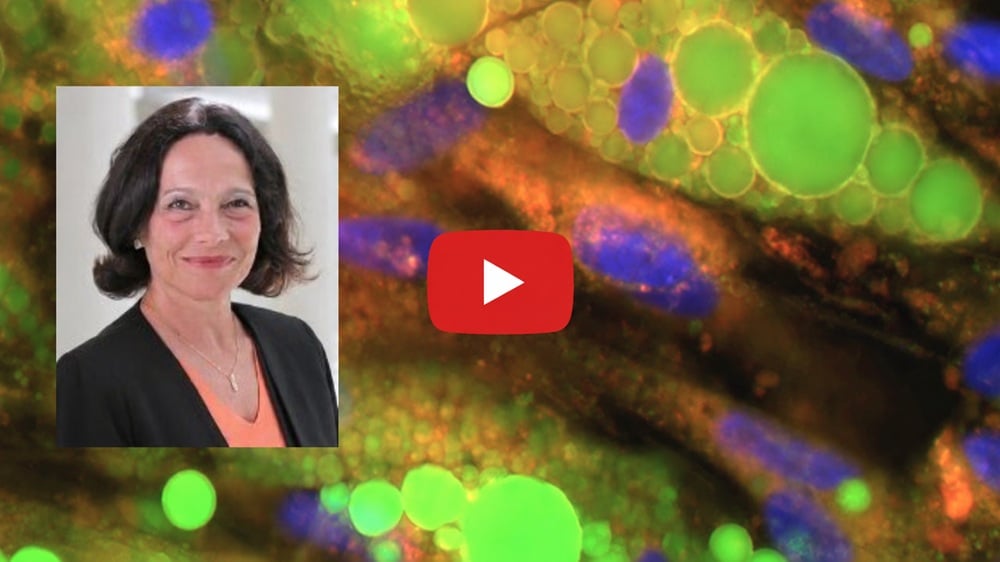
In this video, Dr. Corvera explains how beige fat cells burn energy, why they may play an important role in metabolic health and how her laboratory’s ability to grow human beige adipocytes has opened new possibilities for investigating treatments for insulin resistance and type 2 diabetes.
Adipose Tissue Blood Vessels and Metabolic Disease
We study how blood vessels support healthy adipose tissue growth and function.
Our research has identified changes in adipose tissue capillary networks associated with obesity and insulin resistance. We have also investigated how blood vessel development contributes to adipose tissue expansion, including changes that occur during pregnancy and gestational diabetes.
This work has helped identify adipocyte progenitor cells associated with the vascular system and provided new models for studying human adipose tissue.
Adipocytes as Potential Cell-Based Therapies
Our laboratory is exploring how adipose-derived cells could be used to develop new treatments for metabolic disease.
We have shown that human beige adipocytes generated from progenitor cells can be implanted into mice and influence systemic glucose metabolism. Building on these findings, we are investigating ways to enhance the beige phenotype and explore adipocyte-based therapies for improving glucose regulation and addressing complications of diabetes, including impaired wound healing.
Foundational Discoveries and Contributions to Science
Research in the Corvera Lab builds on decades of discoveries in cellular signaling, mitochondrial biology and human adipose tissue development.
Cellular Signaling and Membrane Trafficking
Early research in the Corvera Lab helped establish how phosphoinositide 3-kinases regulate intracellular membrane trafficking and signaling. The laboratory identified important interactions between phosphoinositides and protein-binding domains, including the FYVE domain, advancing our understanding of fundamental cellular processes involved in metabolism and cell function.
Advances in Adipose Tissue Biology
The laboratory's subsequent discoveries helped establish connections between mitochondrial function, obesity and insulin resistance; identified relationships between adipocyte development and blood vessel networks; and led to methods for generating functional human beige adipocytes from progenitor cells.
Together, these advances have expanded opportunities to study human metabolism and investigate potential cell-based treatments for type 2 diabetes and its complications.