






|
|
|
Phillip Zamore, Ph.D.
Academic Role: Professor
Faculty Appointment(s) and Affiliations:

Gretchen Stone Cook Professor of Biomedical Sciences
Dissecting the RNAi and miRNA pathways
RNA interference (RNAi) is the surprising ability of double-stranded RNA — but not antisense RNA — to target a corresponding mRNA for destruction. RNAi likely represents an ancient cellular defense against viral infection, a mechanism for preventing the ‘jumping’ of transposons, and perhaps even a pathway by which cells regulate endogenous genes. RNAi has become an important tool for studying gene function in worms, flies, and cultured mammalian cells, and may lead to new drugs to treat human genetic disorders. Our laboratory studies the mechanism that underlies RNAi in plants and animals. The laboratory combines biochemistry with genetics and cell biology to understand the biological functions and the molecular basis of the RNAi pathway.
We also study a related pathway, the microRNA (miRNA) pathway. miRNAs are small RNAs found in animals and plants; they regulate gene expression by mechanisms intimately related to those that underlie RNAi. We are particularly interested in how miRNAs find identify their target genes and how they repress their expression.
Understanding the molecular mechanisms of post-transcriptional gene regulation.
How do animal embryos regulate the localization, translation, and stability of mRNAs?
In Drosophila, mRNA encoding the transcription factor, hunchback, is present throughout the embryo, but is translated into protein only in the anterior half of the cell. Two proteins, NANOS and PUMILIO. are required to repress hunchback translation in the posterior half of the fly embryo. PUMILIO binds RNA through a novel RNA-binding motif found in proteins that control developmental decisions in yeast, slime mold, and worms, and is more than 80% identical to a protein of unknown function in humans. A major goal of our laboratory is to learn how PUMILIO and NANOS control hunchback mRNA translation and to determine the biological role of the human PUMILIO protein.
For more information, visit his Howard Hughes Medical Institute web page at: http://www.hhmi.org/research/investigators/zamore_bio.html
Recent Publications
Schwarz, D.S., Ding, H., Kennington, L., Moore, J.T. Schelter, J., Burchard, J., Linsley, P.S., Aronin, N., Xu, Z., Zamore, P.D. "Designing siRNA That Distinguish between Genes That Differ by a Single Nucleotide." Plos Genetics (2006) 2(9) e140 1-12.
Vagin, V.V., Sigova, A., Li, C., Seitz, H., Gvozdev, V., Zamore, P.D. (2006) A distinct small RNA pathway silences selfish genetic elements in the germline . Science 313 320-324.
Seitz, H., Zamore, P.D., (2006). Rethinking the Microprocessor. Cell 125 887-901
Tomari, Y., Zamore, P.D., (2005). MicroRNA biogenesis: drosha can’t cut it without a partner. Current Biology 15, R61-4.
Förstemann, K., Tomari, Y., Du, T., Vagin, V.V., Denli, A.M., Bratu, D.P., Klattenhoff, C., Theurkauf, W.E., and Zamore, P.D. (2005). Normal microRNA maturation by Dicer-1 and germ-line stem cell maintenance requires the double-stranded RNA-binding domain protein, Loquacious. PLoS Biology 3, e236.
Matranga, C., Zamore, P.D. (2005). Plant RNA interference in vitro. Cold Spring Harbor Symp. Quant. Biology 69, 403-8.
Zamore, P.D., Haley, B. (2005). Ribo-gnome: the big world of small RNAs. Science 309, 1519-24.
Du, T, Zamore, P.D., (2005). MicroPrimer: the biogenesis and function of microRNA. Development 132, 4645-52.
Matranga, C., Tomari, Y., Shin, C. Bartel, D.P., Zamore, P.D. (2005). Passenger-Strand Cleavage Facilitates Assembly of siRNA into Ago2-Containing RNAi Enzyme Complexes. Cell, 123 1-14.
Tomari, Y., Du, T., Haley, B. Schwarz, D.S., Bennett, R. Cook, H.A. Koppetsch, B.S., Theurkauf, W.E., and Zamore, P.D. "RISC assembly defects in the Drosophila RNAi mutant armitage". Cell, (2004) Mar 19;116(6):831-41
Hutvágner, G., Simard, M.J., Mello, C.C., and Zamore, P.D. (2004). "Sequence-specific inhibition of small RNA function". PLoS Biology, in press .
Tomari, Y., Matranga, C., Haley, B,. Martinwz, N., and Zamore, P.D. (2004). "A Protein Sensor for siRNA Asymmetry". Science Vol. 306 (5700) 1377-1380 (2004)
Tomari, Y., Du, T., Haley, B. Schwarz, D.S., Bennett, R. Cook, H.A. Koppetsch, B.S., Theurkauf, W.E., and Zamore, P.D. (2004). RISC assembly defects in the Drosophila RNAi mutant armitage. Cell, in press.
Hutvágner, G., Simard, M.J., Mello, C.C., and Zamore, P.D. (2004). Sequence-specific inhibition of small RNA function. PLoS Biology, in press.
Sigova, A., Rhind, N., Zamore, P.D. “A single Argonaute protein mediates both transcriptional and posttranscriptional silencing in Schizosaccharomyces pombe”. Vol 18(19) 2359-67. (2004)
Schwarz, D.S., Tomari, Y., Zamore, P.D. “The RNA-induced silencing complex is a Mg2+-dependent endonuclease”. Curr Biol. Vol 14(9) 787-91. (2004)
Haley, B., Zamore, P.D. “Kinetic analysis of the RNAi enzyme complex”. Nat Struct Mol Biol. Vol. 11(7) 599-606 (2004)
Mallory, A.C., Reinhart, B.J., Jones-Rhoades, M.W., Tang. G., Zamore, P.D., Barton, M.K., Bartel, D.P. “ MicroRNA control of PHABULOSA in leaf development: importance of pairing to the microRNA 5' region”. EMBO J. Vol 18 23(16):3356-64. (2004)
Zamore, P.D. “Plant RNAi: How a viral silencing suppressor inactivates siRNA” . Curr Biol. Vol 14(5) 198-200 (2004)
Tang, G., Zamore, P.D. “Biochemical dissection of RNA silencing in plants”. Methods Mol Biol. Vol 257. 223-44 (2004)
Schwarz, D.S., Hutvágner, G., Du, T., Xu, Z., Aronin, N., and Zamore, P.D. (2003). "Asymmetry in the Assembly of the RNAi Enzyme Complex" . Cell 115, 199-208.
Ding, H., Schwarz, D.S., Keene, A., Affar, E., Fenton, L., Shi, Y., Zamore, P.D., and Xu, Z. (2003). Selective silencing by RNAi of a dominant, disease-causing ALS allele. Aging Cell 2, 209-217.
Tang, G., Reinhardt, B.J., Bartel, D.P., and Zamore, P.D. (2003). A Biochemical Framework for RNA Silencing in Plants. Genes & Development 17, 49-63.
Haley, B., Tang, G., Zamore, P.D. “In vitro analysis of RNA interference in Drosophila melanogaster”. Methods. Vol. 30(4) 330-6 (2003)
Schwarz, D., Hutvágner, G., Haley, B., and Zamore, P.D. (2002). Evidence that siRNAs Function as Guides, Not Primers, in the Drosophila and Human RNAi Pathways. Molecular Cell 10, 537-548.
Hutvágner, G. and Zamore, P.D. (2002). The miRNA let-7 is a Component of a Multiple-Turnover RNAi Enzyme Complex. Science 297, 2056-2060.
Wang, X., McLachlan, J., Zamore, P.D., and Hall, T.M.T. (2002). Modular Recognition of RNA by a Human Pumilio-Homology Domain. Cell 110, 501-512.
Nykänen, A., Haley, B., and Zamore, P.D. (2001). ATP Requirements and siRNA Structure in the RNA Interference Pathway. Cell 107, 309-321.
Hutvágner, G., McLachlan, J., Pasquinelli, A. E., Bálint, Tuschl, T., and Zamore, P. D. (2001). A Cellular Function for the RNA-Interference Enzyme Dicer in the Maturation of the let-7 Small Temporal RNA. Science 293, 834-838. [full-text]
Wang, X., Zamore, P.D., and Hall, T.M.T. (2001). Crystal Structure of a Pumilio-Homology Domain. Molecular Cell 7, 855-865.
Zamore, P.D., Tuschl, T., Sharp, P.A., and Bartel, D.P. (2000). RNAi: double-stranded RNA directs the ATP-dependent cleavage of mRNA at 21 to 23 nucleotide intervals. Cell 101, 25-33.
Potential Rotation Projects
Our laboratory uses a combination of biochemistry, cell biology, and genetics to dissect the RNAi pathway. A rotation project is available to explore the mechanisms that underlie the RNAi phenomenon or the biological pathways in which RNAi enzymes participate in flies and humans.
Also see the PDF format document. 
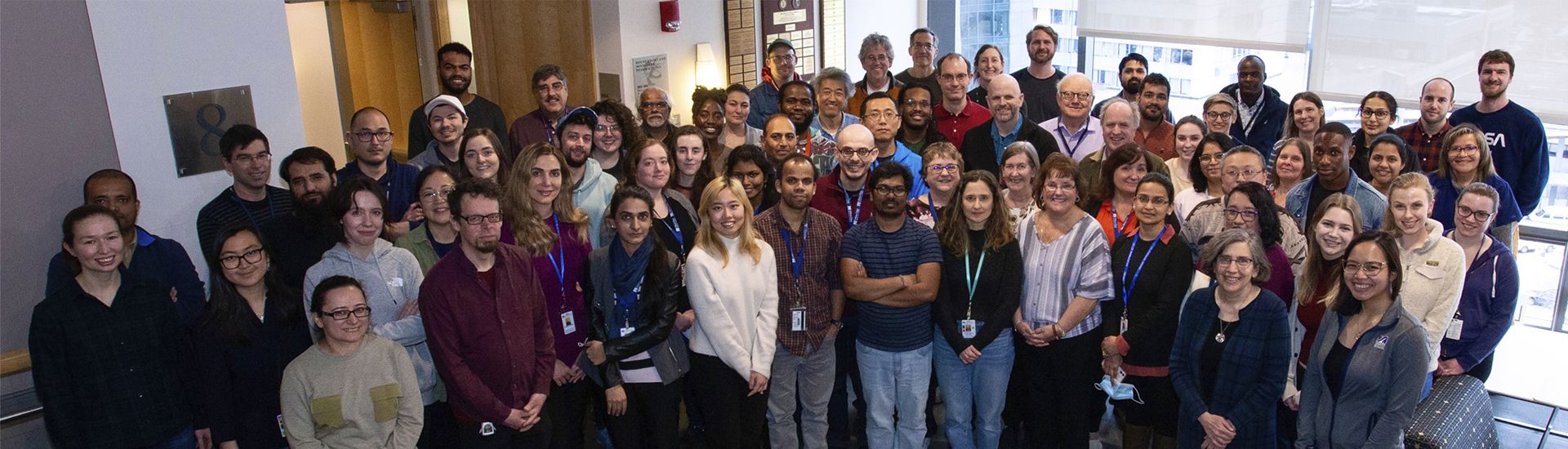
Administrative Assistant
Tiffanie Covello
Lab Technicians
Gwen Farley- Manager
Alicia Boucher
Graduate Students
Elif Sarinay
Chengjian Li
Timothy Chang
Liang Meng Wee
Megha Ghildiyal
Jennifer Broderick (Aronin Lab)
Post-Doctorals Fellows
Carlos Fabian Flores, Ph.D.
Irena Pekker, Ph.D.
Jogender Singh, Ph.D.
Stefan Ameres, Ph.D.
Hervé Seitz, Ph.D.
Former Lab Members
Gyorgy Hutvágner
Lecturer, Principal Investigator
Division of Gene Regulation and Expression
The University of Dundee
www.dundee.ac.uk/biocentre/SLSBDIV3gh.htm
Guiliang Tang
Assistant Professor
Plant Gene Suppression and Natural Products Laboratory
University of Kentucky
www.uky.edu/KTRDC/tang-area.html
Benjamin Haley
Post Doc
Molecular & Cell Biology
University of California, Berkeley
Dianne Schwarz
Post Doc
Molecular & Cellular Biology
Harvard University
Klaus Foerstemann
Post Doc
Universitat Munchen
Yukihide TOMARI, Ph.D.
Lecturer
Institute of Molecular and Cellular Biosciences
The University of Tokyo
E-mail: tomari@iam.u-tokyo.ac.jp
Phillip D. Zamore received his A.B. (1986) and his Ph.D. (1992) from the Department of Biochemistry and Molecular Biology at Harvard University. He received a Life Sciences Research Foundation and a Charles H. Hood Fellowship to do postdoctoral work at the Whitehead Institute at the Massachusetts Institute of Technology. He joined the Department of Biochemistry and Molecular Biology at the University of Massachusetts Medical School as a faculty member in November 1999 and is a 2000 Pew Scholar in the Biomedical Sciences. In 2002, he became a W.M. Keck Foundation Young Scholar in Medical Research.
Office: LRB 822, Lab 870 L-P
Phone: 508-856-2191
E-mail: Phillip.Zamore@umassmed.edu
Keywords:
RNA Biology,
RNA Interference (RNAi),
Developmental Biology,
Biochemistry,
Chemical Biology
|
|