






GRAPHIC: UMass Medical School logo (6kb) Header Graphic
 

BMP Home

About Us

Faculty

Graduate Program

Chemical Biology

BioInformatics

Core Facilities

Seminars & Events

Courses

Laboratory Rotations

Postdoctoral Training Opportunities

Useful Links

UMASSMED users onlyBMP Intranet

spacer graphic

Section: Research

Mark Dershwitz, M.D., Ph.D.

Academic Role: Professor

Faculty Appointment(s) In:
   Anesthesiology

Joint Faculty In:
   Biochemistry and Molecular Pharmacology

Clinical Pharmacology of Intravenous Anesthetics and Antiemetics

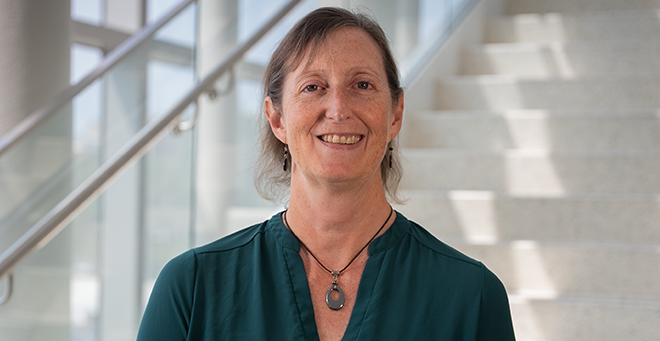
Photo: Mark Dershwitz M.D., Ph.D.Although anesthetics have been given primarily via the inhalational route throughout the history of anesthesiology, I am interested in the pharmacokinetics (PK) and pharmacodynamics (PD) of intravenous anesthetics.  I was involved in the initial clinical trial of the opioid remifentanil whose novel pathway of elimination, via tissue esterases, causes it to have an extremely short duration of action.  That study demonstrated that the pharmacological effects of the drug can be expected to wear off within a few minutes regardless of the cumulative dose administered.  Subsequently I studied remifentanil in persons with severe hepatic failure or with renal failure requiring dialysis.  Based on the known pathway of remifentanil metabolism, such organ dysfunction should have no effect on its PK.  These experiments, in which the persons with organ dysfunction were studied as volunteers, demonstrated that as expected remifentanil was as short-acting in these persons as in matched control subjects without organ disease.  In addition, the PD experiments showed that persons with liver failure were more sensitive to the ventilatory depressant effects of remifentanil.

Despite the use of morphine in medicine for thousands of years, until recently there was no simultaneous PK/PD study of morphine in humans.  This study, again performed in volunteers, showed that even after intravenous administration, the time required for the peak morphine effect to occur was approximately 1.5 hr.

Postoperative nausea and vomiting (PONV) remains a significant problem after anesthesia.  I have been involved in several studies on two of the new antiemetics that are antagonists at the 5-HT3 receptor, ondansetron and dolasetron.  I performed the first detailed dose-response study of ondansetron in preventing PONV, the results of which had significant economic implications considering the expense of the drug and the frequency with which it is used.  Most recently, I have been interested in demonstrating the safety of droperidol, an older antiemetic that has been unfarly burdened with a "black box" warning by the FDA.


Office: S2-743
Phone: 508-856-2480
E-mail: Mark.Dershwitz@umassmed.edu

More on Mark Dershwitz's Research
Research | Publications | Biography
View All Sections on One Page

spacer graphic
INTRANET spacer graphic top   print   spacer graphic