





GRAPHIC: UMass Medical School logo (6kb) Header Graphic
 

BMP Home

About Us

Faculty

Graduate Program

Chemical Biology

BioInformatics

Core Facilities

Seminars & Events

Courses

Laboratory Rotations

Postdoctoral Training Opportunities

Useful Links

UMASSMED users onlyBMP Intranet

spacer graphic

Section: Research
Postdoctoral
Position
Available

Dan Bolon, Ph.D.

Academic Role: Assistant Professor

Faculty Appointment(s) In:
   Biochemistry and Molecular Pharmacology

The role of molecular chaperones in biology and disease.

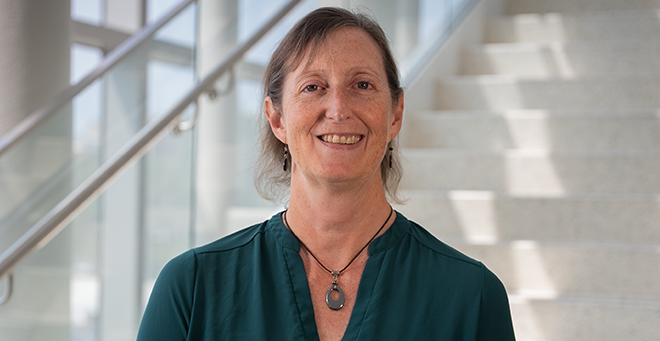
Photo: Dan Bolon

Chaperones assist macromolecular folding and assembly processes in all cells.

The Hsp90 molecular chaperone is essential in eukaryotes and is involved in the maturation of a restricted set of substrates/clients that are involved in cell cycle progression (many kinases), aging (telomerase), cancer (kinases and steroid hormone receptors), and cystic fibrosis (CFTR). Because Hsp90 substrates are mutated in many different forms of cancer, Hsp90 has emerged as a promising target for drugs to treat a broad spectrum of cancer. Hsp90 is clearly involved in many different essential processes in both healthy and diseased cells. However, how Hsp90 affects these processes is poorly understood.

Mechanism of substrate maturation by Hsp90

A major goal of our research is to elucidate the ATPase driven conformational cycle of Hsp90 that orchestrates the dynamic assembly of Hsp90/co-chaperone/substrate complexes and the maturation of substrates to their active conformation. To probe the physical mechanism of this dynamic protein system we are developing biophysical and biochemical tools to dissect the conformation and protein-protein interactions of Hsp90 during substrate maturation. We rely on computational modeling, structural-guided mutagenesis, biochemistry and biophysical probes including FRET and circular dichroism. We correlate our in vitro investigations with in vivo studies in yeast where Hsp90 function is essential for growth. The goal of this work is to delineate the physical mechanism by which Hsp90 matures substrates including those involved in cancer progression.

Role of chaperones in preventing substrate aggregation

Hsp90 (and many other chaperones) inhibit substrate aggregation. Aggregation events are correlated with many different human diseases including Alzheimer’s disease, Amyotrophic Lateral Sclerosis (ALS), Huntington’s disease, and Creutzfeldt-Jakob disease. Understanding how chaperones prevent aggregation may lead to improved treatments of these human diseases. Aggregation occurs when the interaction energy between two or more particles is more favorable than the interaction of those particles with the surrounding solvent. We are exploring the physical properties of chaperones that enables them to bind to substrates in a manner that improves the solubility of the substrate/chaperone complex relative to free substrate.


Office: LRB 922
Phone: 508-856-3588
Fax: 508-856-6231
E-mail: Dan.Bolon@umassmed.edu
Keywords: Protein Folding, Biophysics, Structural Biology, Biochemistry, Systems Biology

More on Dan Bolon's Research
Research | Publications | Rotations | Biography
View All Sections on One Page

Postdoctoral Position Available

A postdoctoral position is available in this laboratory, experience with mammalian cell culture is preferred. Contact Dr. Bolon for additional details.

spacer graphic
INTRANET spacer graphic top   print   spacer graphic