Getting to Know David Pagliarini, PhD
Date Posted: Monday, November 17, 2025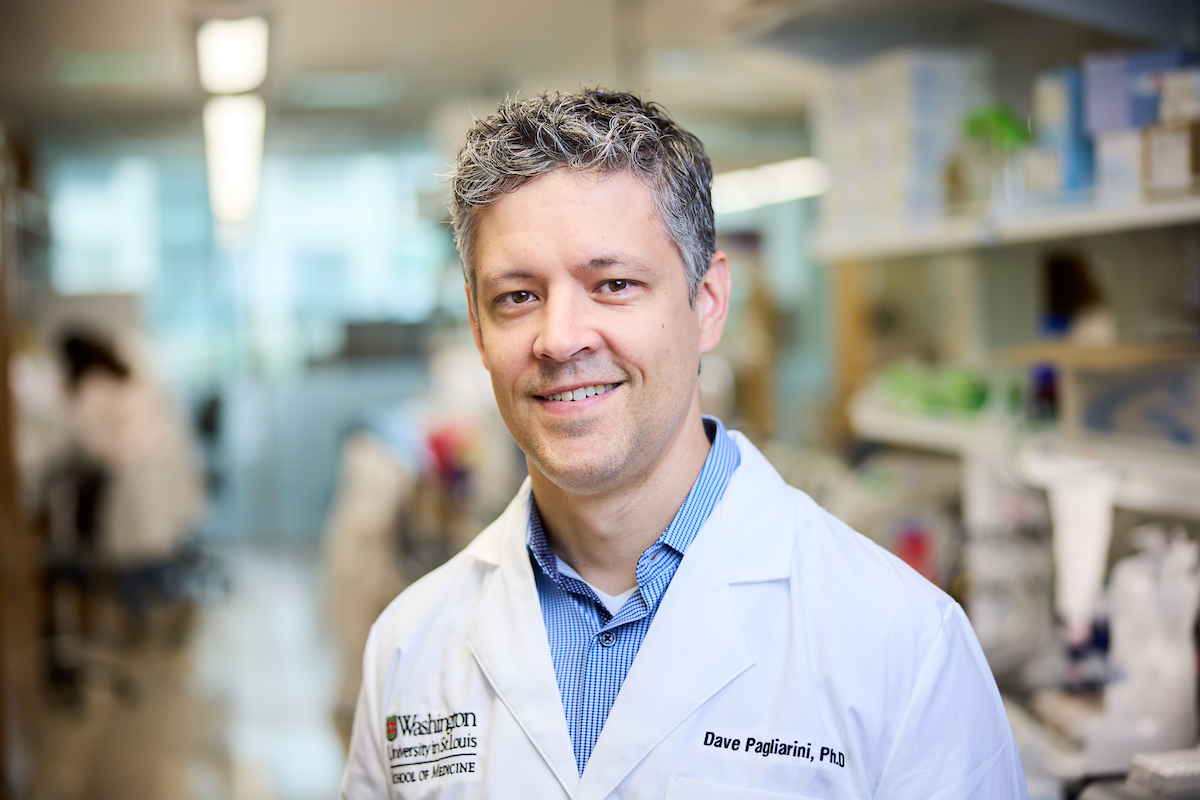
After a brief break, MetNet welcomes David Pagliarini of Washington University School of Medicine, who will present on November 20. David completed his PhD at UC San Diego before joining Vamsi Mootha’s lab at Harvard Medical School for his postdoctoral training, where he created the MitoCarta compendium of mitochondrial proteins. Now an HHMI Investigator and one of the field’s leading mitochondrial biologists, his lab continues to uncover the functions of previously uncharacterized mitochondrial proteins and their roles in health and disease.
His contributions have earned him widespread recognition, including the Searle Award, the Glenn Award for Research in Aging, the Stadtman Young Scholar Award, and the Presidential Early Career Award.
In keeping with MetNet tradition, we asked David a series of science and non-science questions about his path, his work, and what drives his curiosity.
What would you be doing if you weren’t a scientist?
I think it would be something involving design and craftsmanship. Maybe an architect. I'm a Frank Lloyd Wright fan.
Favorite movies, TV series and/or bands?
Some of my favorite movies that come to mind are: A Few Good Men, Goodfellas, Shawshank Redemption, and Pulp Fiction.
I grew up listening to a lot of Billy Joel, Elton John, Paul Simon, the Beatles, Bob Dylan. Later it was U2, Dave Matthews, (and Cake!). In recent years, I've become a big fan of The Decemberists.
What are some unique or funny Pagliarini Lab traditions?
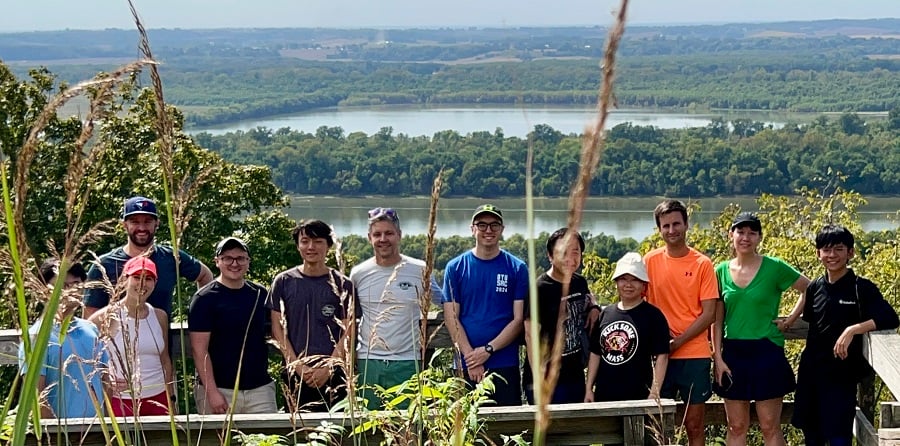
I think celebrations are important. It's easy to move right on to the next thing, but we have to stop and acknowledge accomplishments when they happen. We've had a "pinning the board" celebration that involves the lead author adding the first page of new paper to our publication wall the day it comes out. This is coupled to 50ml conical tube shots (beverage of choice), followed by some words of wisdom for those earlier in the process. We also have an annual overnight retreat/canoe trip.
Tell us a memorable moment from your research training.
As a graduate student, I discovered a phosphatase that I thought would prove to be involved in phosphoinositide signaling. I did some immunofluorescence to see where it lived but didn't recognize the cellular pattern it showed. A postdoc in the lab took a look and immediately said, "Dude, those are mitochondria!" Watershed moment.
Favorite activities outside of work?
I come from a culinary family, and I like to cook when I have time to do it right. I think it replaces the hands-on lab work I don't get to do anymore. I really like board games/card games/video games — whichever my teenage boys are into! — and decided to learn the guitar recently. I also like traveling with my family (Spain, Australia, and Germany recently) and doing anything outdoors.
How would you describe your best science-related and non-science habits?
Science-related: I tend to ask questions until I understand something, even if they seem like "dumb questions." I'm no longer afraid to look bad because, over time, I've gained confidence in my abilities. I think we should all be like this and I wish I was like that earlier on. A lot of knowledge is missed by staying silently ignorant.
Non-science: I do some sort of exercise most days and also walk in the beautiful Forest Park on the edge of campus most afternoons. Leaving the office to go for a walk sounds like wasted time, but it's just the opposite. It's such a great way to clear your mind or reset.
Looking back on your path so far, what advice would you offer for trainees?
Enjoy each stage. It's important to periodically think about where your career is heading, but don't obsess about it. Focus on learning to be a better scientist and enjoy the discovery process. Don't get caught up in comparisons. Reduce social media time to a minimum. Do science you find innately interesting. Err on the side of basic, fundamental science — better to lock in a single unassailable fact than report many phenomenological observations. Learn to read, write, and think — the rest of the biological information will come as you need it. Relentlessly hone your communication skills. Seek mentorship at all stages and learn how to give and receive criticism.