
About the Department of Systems Biology
One of the defining features of living organisms is their astonishing complexity. Even seemingly simple single cell organisms such as microbes display exceedingly complex behaviors, determined by intricate molecular networks in which large numbers of molecular components, pathways and chemical reactions act together. These behaviors have fascinated scientists for decades and include development, response to pathogenic and environmental insults and interactions with other organisms. Understanding how complexity of living systems arises and coordinates cellular function and pathologies continues to be one of the principal goals of biomedical research today. Read more about how the Department of Systems Biology tackles these questions on our Research and About pages.
The Department of Systems Biology (DSB) studies how biological complexity can be derived and understood from the interplay between individual components and processes that make up living organisms.
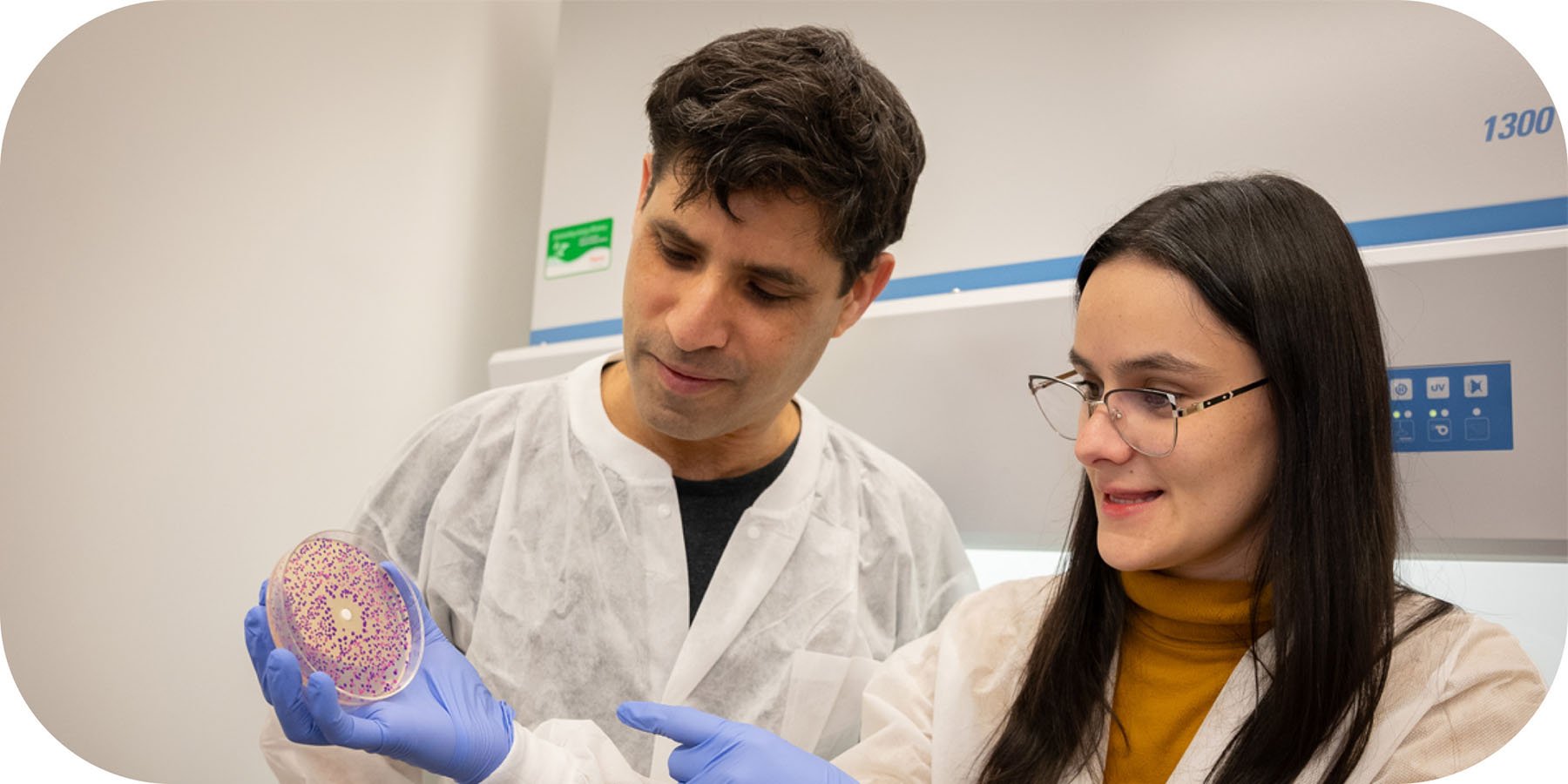
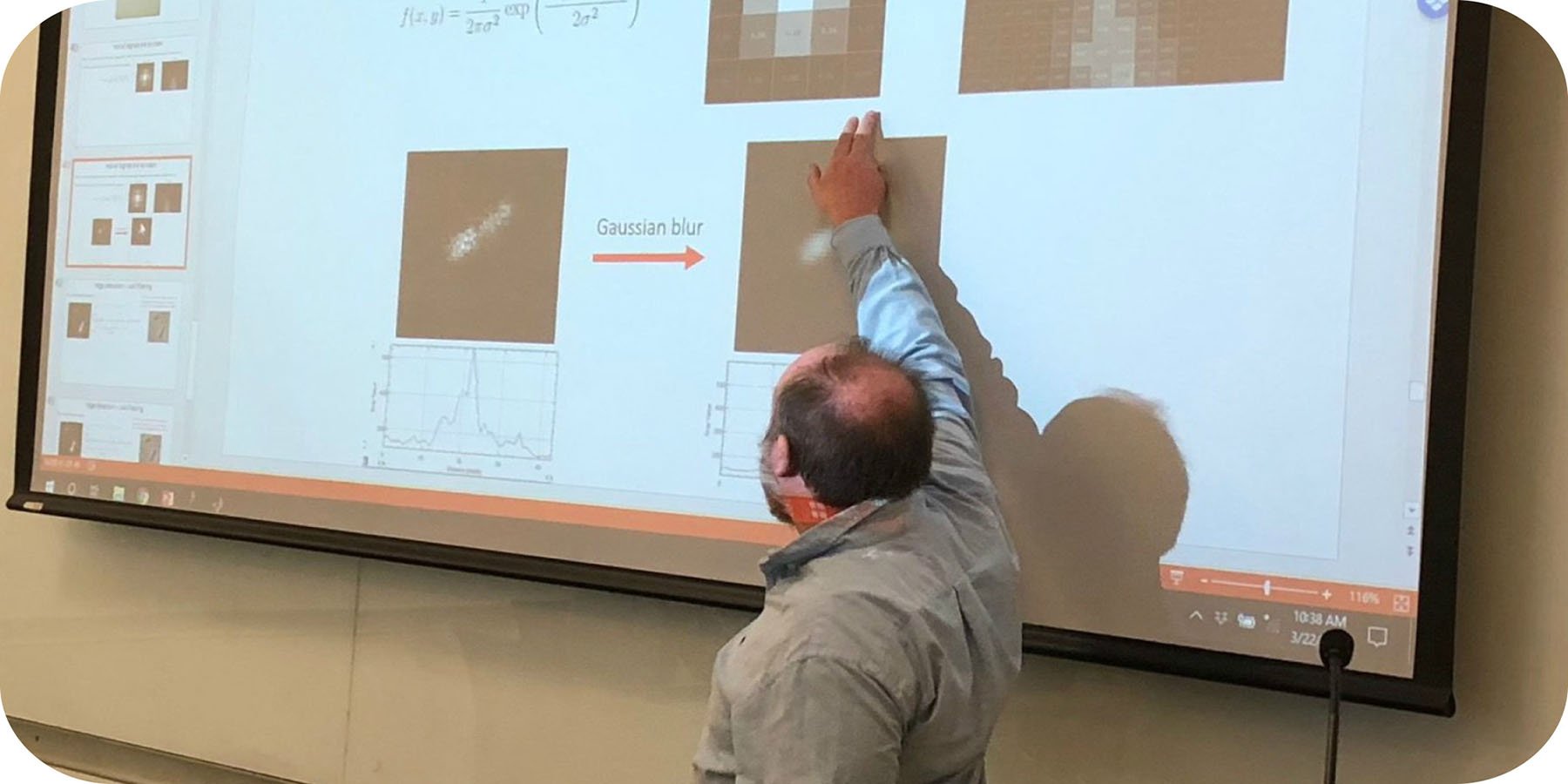

For information about our Graduate Programs as well as the application process, please see our Education Page.
DSB Spotlight
Two recent DSB graduates took top honors at the 2026 Graduate School of Biomedical Sciences Award ceremony.
Congratulations to Nick Harper who did his thesis work in Mike Lee’s Lab and Mariana Noto Guillen who did her thesis work in Amir Mitchell’s Lab!
Read more about the ceremony here: ‘Science essential to society’: PhD candidates honored at 2026 award ceremony
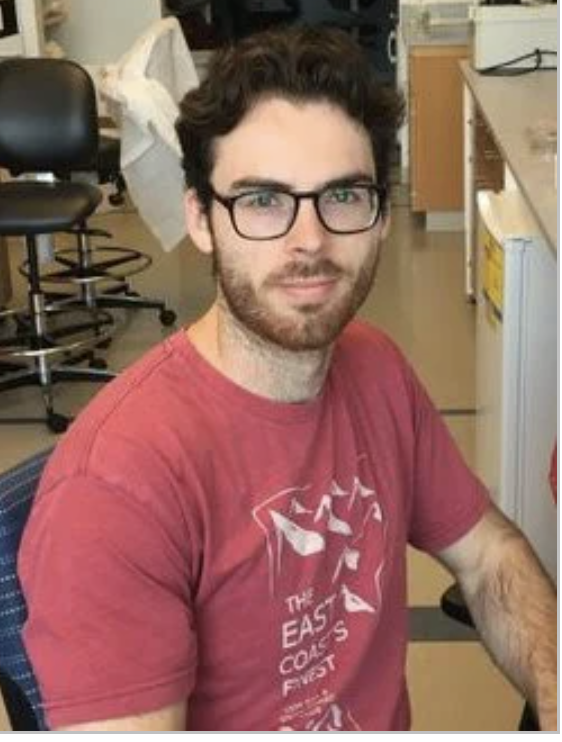
Nick received the Chancellor’s Award for his research identifying an unexpected cell death pathway activated upon RNA Pol II inhibition.
Read a Q&A where Nick discusses his work, highlights from his experimental journey and more here.
Mariana received the Dean’s Award for her research identifying mechanistic principles of how many non-antibiotic drugs kill bacteria.
Read a Q&A where Mariana discusses her work, highlights from her experimental journey and more here.

Arshia Kaur who is member of Emma Watson's lab received a Ruth L. Kirschstein National Research Service Award Individual Predoctoral Fellowship (F31) from the NIH for her project: "Exploring autophagy as a cellular response to fusion oncogene-induced stress". Congratulations Arshia!
Read a Q&A where Arshia discusses some of her work, highlights from her experimental journey and more here.
Recent Publications
|
Bacteria producing the bioplastic polyhydroxybutyrate kill the nematode Caenorhabditis elegans |
| PLoS Biology, 2026 April 10 |
| Gabrielle E Giese, Daniel M Richards, Jeremy T Florman, Alyxandra N Starbird, Ann A Xu, Daniel J Durning, Mark J Alkema, Albertha JM Walhout |

|
Genome-wide profiling identifies the genetic dependencies of cell death following EGFR inhibition |
| Journal of Biological Chemistry, 2026 April 1 |
| Sydney A Porto, Gavin A Birdsall, Nicholas W Harper, Megan E Honeywell, Scott M Leighow, Tiana E Naylor, Kelly M Ward, Mika K Wesley, Justin R Pritchard, Michael J Lee |


AssiST: convolutional neural network for analysis of antibiotic susceptibility testing
| Bioinformatics Advances, 2026 Feb 18 |
| Carmen Li, Sydney Schock, Abigail Costa, Amir Mitchell |
|
|
| Cell Systems, 2026 Mar 2 |
| Amandine Batte, Nuria Bosch-Guiteras, Carles Pons, Marina Ota, Maykel Lopes, Sushma Sharma, Nicolo Tellini, Claire Paltenghi, Michelle Conti, Kwan Ting Kan, Uyen Linh Ho, Michael Wiederkehr, Jonas Barraud, Mark Ashe, Patrick Aloy, Gianni Liti, Andrei Chabes, Leopold Parts, Jolanda van Leeuwen |

|
Model-guided design of regulatable promoters for synthetic biology |
| Current Opinion in Microbiology, 2026 Feb |
| Robert C Brewster, Vinuselvi Parisutham |

|
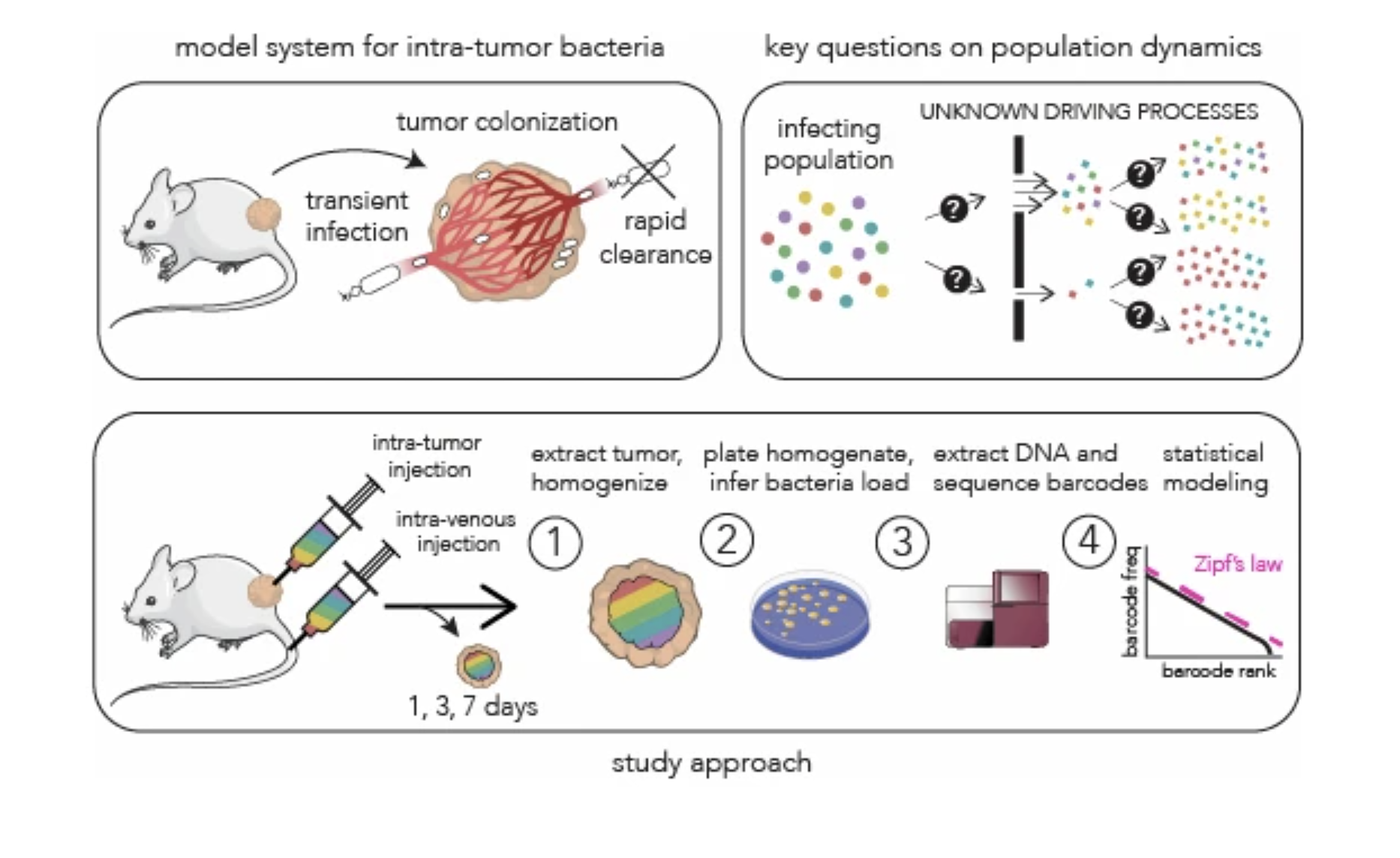
Bacterial population dynamics during colonization of solid tumors |
| Molecular Systems Biology. 2025 Dec 15 |
| Serkan Sayin, Motasem ElGamel, Brittany Rosener, Michael Brehm, Andrew Mugler, Amir Mitchell |
|
|
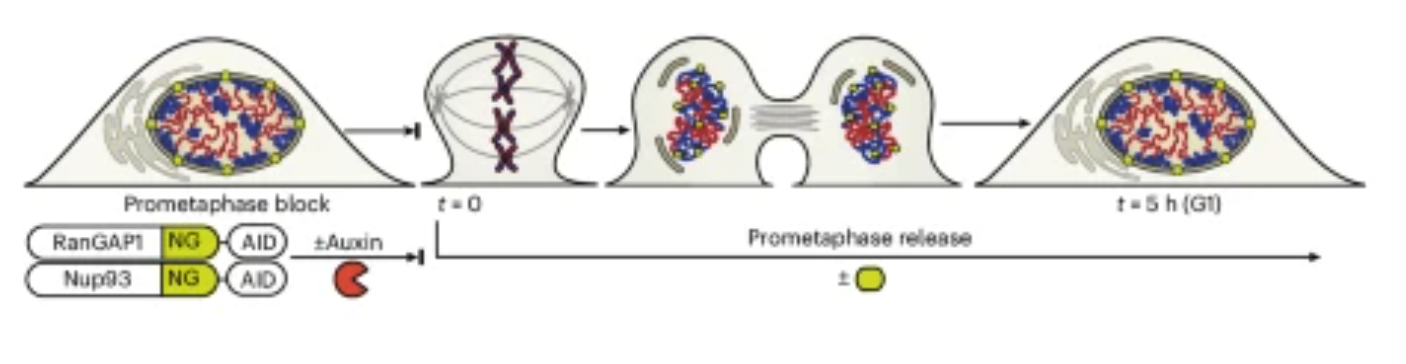
| Nature Cell Biology. 2025 Dec 22 |
| Allana Schooley, Sergey V Venev, Vasilisa Aksenova, Jesse W Lehman, Emily Navarrete, Athma A Pai, Job Dekker |
| Also see accompanying News & Views: Inheriting chromosome conformation |

|
An integrated view of the structure and function of the human 4D nucleome |
| Nature. 2025 Dec 17 |
| Job Dekker, Betul Akgol Oksuk,...., Liyan Yang, Johan H Gibcus,....Sergey V Venev |
| Also see accompanying News & Views: Systematic maps reveal how human chromosomes are organized & Research Highlight from UMASS Chan News: 4D Nucleome Consortium produces detailed models of the 3D genome over time in cells |

|
E. coli transcription factors regulate promoter activity by a universal, homeostatic mechanism |
| Science. 2025 Sept 11 |
| Vinuselvi Parisutham, Sunil Guharajan, Melina Lian, MD Zulfikar Ali, Hannah Rogers, Shannon Joyce, Mariana Noto Guillen, Robert C Brewster |

|
Predicting drug inactivation by changes in bacterial growth dynamics |
| npj Antimicrobials and Resistance. 2025 Sept 9 |
| Carmen Li, Serkan Sayin, Ethan Hau Chian Chang, Amir Mitchell |
